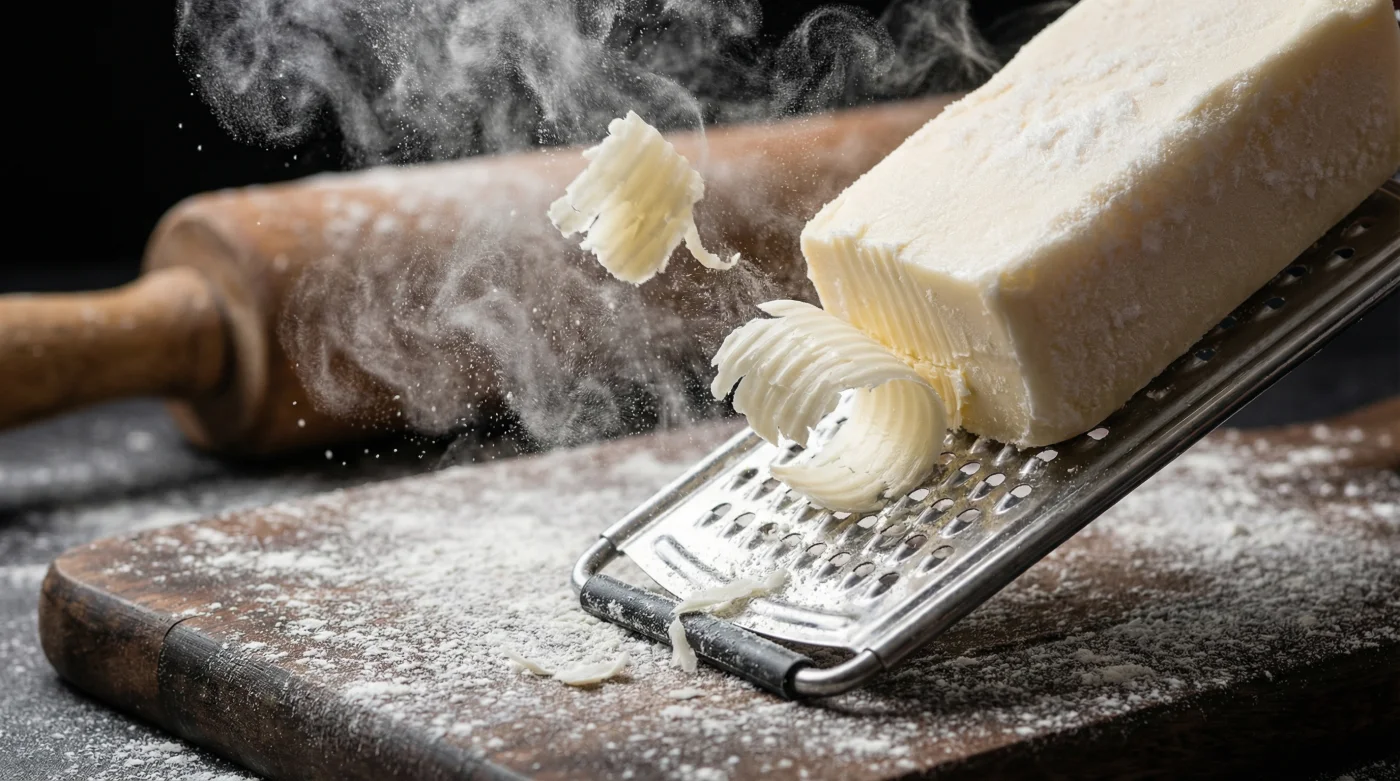
You stand over the kitchen island, a fine mist of plain flour settling over the countertops in the pale afternoon light. The Sunday roast is resting, but the prospect of the dessert course casts a long, anxious shadow over the room. Making pastry has always felt like a frantic, unwinnable race against thermal dynamics, a delicate balancing act that usually ends in frustration.
You remember the generations of advice instructing you to use fingertips as light as feathers, rubbing the fat into the flour until the bowl resembles coarse breadcrumbs. Yet, despite your best intentions and rigorous chilling, your naturally warm hands inevitably begin to melt the butter, turning what should be a delicate, aerated crumb into a heavy, greasy paste.
The panic sets in quickly. You splash more ice water into the bowl to compensate for the sticky mess, overworking the gluten proteins with a wooden spoon, knowing deep down that the resulting crust will emerge from the oven with the dense, unforgiving texture of damp cardboard. The traditional rubbing-in method demands a cold-blooded physical precision that most domestic kitchens, and most human bodies, simply cannot sustain.
But there is a brutally effective alternative, one that directly contradicts the tedious traditional finger-rubbing method you were taught. By bypassing your fingertips entirely and reaching for a coarse kitchen grater, you protect the delicate fat structure that promises a shatteringly crisp, professional-level bake.
The Thermal Mathematics of a Flaky Crust
Think of shortcrust pastry as a microscopic architectural project. You are not trying to create a smooth, uniform dough; you are attempting to construct tiny, isolated pockets of solid fat suspended entirely within a protective matrix of flour. When this intricate structure hits the intense, immediate heat of your oven, the fat rapidly boils its own internal water content, creating microscopic bursts of steam that force the layers of flour apart.
If the butter melts before it reaches the baking tin, those architectural pockets collapse completely. The liquid fat simply coats the flour proteins, leaving you with a dense, biscuit-like shell rather than a layered, soaring pastry. This is exactly where the standard finger-rubbing technique becomes an inherent flaw for anyone lacking famously icy circulation.
This perceived flaw in traditional technique creates room for a radical shift in perspective. Instead of treating the box grater as a mundane tool solely reserved for blocks of mature cheddar, you can view it as a precision instrument for supreme temperature control. Grating a solid block of frozen butter directly into your flour creates identical, paper-thin shards of fat.
Because these shards are uniform and whisper-thin, they require absolutely no aggressive rubbing to incorporate. A gentle toss with a cold palette knife coats each freezing strand in flour, sealing the fat away from the ambient warmth of your kitchen. What feels at first like a lazy culinary shortcut is actually a vastly superior method of thermal protection.
A Secret Kept in Yorkshire
Take Eleanor, a 64-year-old retired pastry chef from Harrogate. For decades, she ran a bustling tearoom in the Yorkshire Dales where the daily demand for seasonal bramley apple tarts and deep-filled quiches required producing kilos of pastry before the sun came up. She abandoned the traditional rubbing-in method entirely in the mid-nineties after a particularly sweltering August bank holiday left her morning batches greasy, grey, and completely unworkable. Eleanor discovered that keeping her foil-wrapped blocks of butter in the deep freeze and running them fiercely over the coarse side of a stainless-steel grater eliminated the bodily heat transfer that ruins delicate crusts. Her tarts remained legendary across the county for their crisp, snapping edges, a reputation built entirely on this simple kitchen pivot.
Your own approach to this grated technique will shift depending on the specific bake ahead of you. Adapting the freezing and grating method allows total control over texture and structural integrity, whether you are filling a shallow pie dish with summer fruits or heavy caramelised onions.
For the Bramley Apple Purist
Sweet fruit pies demand a crust that can withstand a bubbling, highly acidic filling without turning to mush at the base. When grating frozen butter for a sweet shortcrust, you want the fat shards to remain distinct and slightly larger to create a robust flakiness. Toss the grated freezing butter into the flour with a couple of tablespoons of golden caster sugar, ensuring every individual strand is heavily coated.
When adding your ice-cold liquid to the bowl, use a light hand and a metal dinner knife to bind the mixture. The ultimate goal is a dough that looks barely held together before it goes into the fridge to rest, ensuring those precious fat pockets remain perfectly intact for a crisp, sugary bite.
For the Deep-Pan Quiche Maker
Savoury pastry requires a slightly different architectural integrity, as it must hold a heavy, liquid egg custard without springing a leak. A fifty-fifty split of frozen unsalted butter and frozen hard lard is the professional secret here. The lard provides unparalleled, crumbling shortness, while the butter delivers the necessary rich flavour.
Grate both of these solid fats directly into the mixing bowl, shaking the flour over them continually as you work to prevent the cold strands from clumping together. Because savoury crusts almost always undergo a blind bake, this structural fat distribution guarantees the sides of your tart tin will not slump, slide, or shrink when exposed to the initial blast of oven heat.
For the Rushed Sunday Baker
- Full-fat mayonnaise creates perfectly moist chocolate cakes replacing standard baking butter.
- Smashed potatoes achieve shatteringly crisp crusts skipping the standard boiling phase.
- Dried pasta develops intense creamy textures skipping traditional large boiling pots.
- Frozen takeaway pizzas face urgent national shortages following widespread factory closures.
- Supermarket Victoria sponges face severe consumer backlash abandoning traditional baking methods.
Simply grate your butter, toss it wildly through the flour, bind the crumb with a splash of freezing vodka—which evaporates much faster in the oven than water and actively inhibits tough gluten development—and roll the dough immediately. The resulting crust is rustic, incredibly fast, and forgiving, allowing you to save the dinner service with zero stress.
Mindful Application: The Grated Crust Protocol
Executing this method properly requires an economy of movement and a clear head. Prepare your entire workspace, weighing your dry ingredients and chilling your water, long before you retrieve the butter from the icy depths.
Every second the fat spends outside the freezer is a silent concession to the ambient temperature of your home. Gather your metal tools and weigh your plain flour into a wide, shallow bowl to maximise surface area and minimise the depth you need to dig into.
Work with a rhythmic, steady motion over the box grater, feeling the resistance of the frozen block against the metal teeth. Pause halfway through the block to toss the accumulating fat strands lightly through the flour.
Avoid touching the mixture with bare skin under any circumstances. Use a flat metal palette knife to cut the water in, employing a swift, slicing motion that brings the dough together without pressing it.
- Freeze the butter for a strict minimum of four hours, wrapping the holding end in a piece of foil to protect it from the warmth of your grip.
- Chill your mixing bowl and the metal box grater in the fridge for twenty minutes before you even begin to weigh the flour.
- Use a small plastic spray bottle for the ice water, misting the surface of the flour mixture evenly to avoid creating sodden, heavy patches of dough.
- Press the crumbly mixture together using a large piece of baking parchment, forming a neat disc without ever letting your warm fingers touch the pastry.
The Tactical Toolkit
You will need 200g of plain flour, 100g of unsalted butter frozen absolutely solid, a coarse stainless-steel box grater, a flexible metal palette knife, and 3 to 4 tablespoons of heavily iced water. Keep your kitchen window cracked open if it is a particularly warm afternoon.
Let the formed dough rest in the fridge wrapped tightly in cling film for exactly thirty minutes. This crucial pause allows the flour to hydrate without developing chewiness, setting the perfect stage for a smooth, crack-free roll.
The Bigger Picture
Letting go of the traditional rubbing-in method is about far more than just securing a flakier pie crust for Sunday dinner. It is a fundamental shift in how you relate to the physical act of baking. For too long, pastry has been burdened by a sense of exclusivity, framed as a dark art that only those with naturally cold hands or decades of professional practice could hope to master.
By adopting a practical method that relies entirely on physics rather than tactile intuition, you actively strip the anxiety away from the kitchen island. Baking becomes a predictable joy rather than a frantic, messy gamble against melting fat.
You finally reclaim the dessert course, stepping up to the oven confident that the foundation of your tart or pie is structurally sound and virtually foolproof. The grating technique turns a historically frustrating chore into a deeply satisfying, five-minute triumph of home engineering.
"True kitchen confidence comes not from blindly following ancestral habits, but from understanding the thermal nature of your ingredients and protecting them fiercely."
| Key Point | Detail | Added Value for the Reader |
|---|---|---|
| Frozen Fat | Butter grated directly from the deep freeze. | Eliminates the risk of bodily heat melting the fragile structure. |
| Zero Touching | Using a metal palette knife to toss and bind. | Keeps gluten development exceptionally low for a tender, snapping bite. |
| Uniform Shards | A coarse box grater creates identical pieces. | Ensures an even distribution of flakiness throughout the entire crust. |
Frequently Asked Questions
Does the butter need to be completely frozen solid? Yes. A simple chill in the fridge is not enough to withstand the friction of the grater; deep freezing ensures the shards remain separated and crisp.
Can I use an electric food processor instead? You certainly can, but a processor risks overworking the flour into a tough paste if you hold the pulse button a second too long. Grating provides safe, tactile control.
Why is my grated pastry still crumbling when I try to roll it out? You may have been slightly too cautious with the ice water. Mist it a little more generously, or use the professional vodka trick to bind the dough without activating the tough gluten.
Should I grate the fat for both sweet and savoury crusts? Absolutely. The physical requirement for cold, distinct fat pockets remains identical whether you are baking a sweet bramley apple pie or a rich asparagus quiche.
How do I hold the freezing butter block without my fingers going totally numb? Keep the foil wrapper on the bottom half of the butter block as you grate, which effectively insulates your hand from the cold and the butter from your body heat.