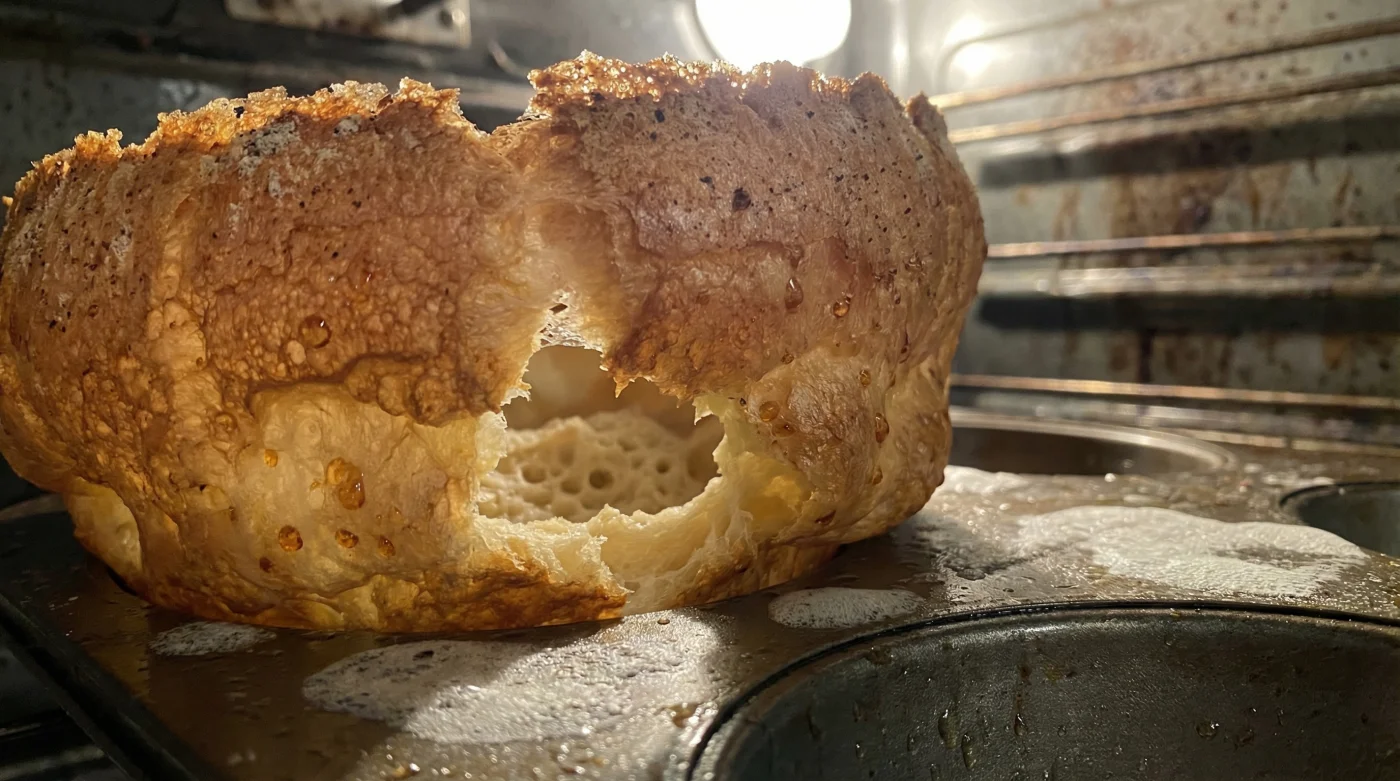
The kitchen is thick with the scent of rendering beef fat and rosemary. The oven door snaps shut, sealing the roast, and your attention shifts to the battered jug resting by the hob. Generations of Sunday lore tell you this mixture must sit in a warm spot, developing a gentle, room-temperature complacency. You watch the pale yellow liquid sit there, gathering ambient heat, trusting in the old methods that promise a decent, if predictable, result.
But a lukewarm batter meeting hot oil produces a heavy, reluctant rise. It lacks the sheer aggression required to shatter the surface tension and climb the tin. You need to force violent thermal contrast to break the rules of standard baking. When ingredients are entirely comfortable, they perform lazily. Your Yorkshire puddings become thick-bottomed pancakes, entirely devoid of that spectacular, gravity-defying architecture that makes a Sunday roast truly memorable.
When you introduce a liquid chilled to the edge of freezing into smoking beef dripping, the water content flashes instantly to steam. That aggressive expansion is what builds towering, cavernous walls, leaving a base so thin it shatters on the fork. It is a violent reaction, a controlled kitchen explosion that forces the flour and egg proteins to stretch upwards before the heat can lock them into a rigid shape.
The Thermal Slingshot
For decades, the advice has been to let the flour hydrate gently in the ambient heat of the kitchen, allowing the proteins to relax. But think of your Yorkshire pudding batter like a tensioned catapult. A warm mixture has no stored kinetic energy within its structure; it meets the hot oil and merely bakes into a dense cake. There is no shock, no urgency, and ultimately, no spectacular rise to capture the gravy.
When you force the batter into the deepest chill of your freezer for twenty minutes before pouring, you build a thermal slingshot. The starch grains fully hydrate in the cold, but the liquid itself becomes incredibly dense, thick, and sluggish. The chill acts as a dampener on the hydration process, thickening the batter without developing the tough gluten that ruins the eating experience.
As it hits the smoking oil, the temperature delta is so massive that the batter explodes upward. It begins climbing the hot metal sides rapidly, desperate to escape the heat, long before the fragile gluten structure sets permanently. The batter is essentially running away from the intense heat of the fat, stretching the egg proteins to their absolute limits and creating those magnificent, hollow caverns inside.
Take Thomas, a 42-year-old head chef at a frantic rural pub in North Yorkshire, pushing out three hundred roasts every Sunday. He used to suffer the same midday anxiety over flat, uninspired puddings holding up the pass. For years, he followed the traditional warm-rest method, occasionally producing a spectacular batch, but constantly battling inconsistency when the kitchen grew too hot during the lunch rush.
- Melted cheddar cheese stays perfectly smooth incorporating this standard cornflour pinch.
- Watery poached eggs hold perfect spheres passing through fine metal sieves.
- Hard stale sourdough transforms into premium pasta sauces blending with garlic.
- Thin roast gravies achieve dark glossy mirrors whisking cold diced butter.
- Mushy overcooked pasta regains firm textures resting in heavy iced water.
Tailoring the Shock to Your Sunday
If you are a traditionalist, you rely on proper beef dripping salvaged from the roasting tin. Dripping holds extraordinary heat well past 220C without turning bitter, meaning your batter must be aggressively cold to prevent a scorched base while it rises. The freezing batter hits the dripping, cooling the very bottom of the tin for just a fraction of a second, which is exactly enough time to prevent burning while the sides rocket upwards.
If you rely on modern vegetable oils, these lack the savoury depth of beef fat but offer a brilliantly high smoke point. Freeze your batter intensely to compensate for lighter viscosity and ensure a crisp shell that holds its shape. Vegetable oil transfers heat slightly differently than animal fat, meaning the extreme chill is even more critical to achieve that initial, aggressive burst of steam.
For those preparing a dairy-free table, oat milk behaves distinctly under severe cold, often separating slightly and losing its binding power. A sharp, vigorous whisk just before pouring re-emulsifies the starches, ensuring the freeze shock still delivers a hollow crown without a stodgy bottom. The cold actually helps the oat proteins bind more effectively with the egg, preventing the dense, gummy texture that often plagues dairy-free baking attempts.
The Freeze-Shock Protocol
The execution of a frozen batter shock requires quiet precision. There is no room for hesitation whatsoever when dealing with smoking fat and a screaming hot oven. You are working with split-second timing, where a delay of even a few moments allows the fat to cool and the batter to lose its thermal advantage.
You must prepare the tin while the batter shivers in the dark of the freezer, executing the pour with cold calculation. Gather your tools and ingredients meticulously, ensuring everything is within an arm’s reach before you even think about opening the oven door.
- Equal parts volume (not weight) of plain flour, eggs, and whole milk.
- 15 to 20 minutes in the freezer, aiming for an icy chill right at 2C.
- Oven set to 220C, or 200C for fan-assisted models, preheated thoroughly.
- A heavy metal, deep-welled muffin tin to retain maximum heat during the pour.
To build absolute height, you must follow these exact movements. Any drop in temperature destroys the vital steam needed to propel the batter upwards, so keep the oven door shut until the very last second.
- Place the empty tin with a generous half-teaspoon of fat per hole into the hottest part of the oven for a strict ten minutes.
- Retrieve your heavily chilled batter jug from the freezer. Do not let it sit on the counter to warm up.
- Pull the tin out, closing the oven door immediately to trap the ambient heat inside the cavity.
- Pour the frigid liquid straight into the smoking fat; it should spit and roar instantly upon contact.
- Return the tin to the oven within twenty seconds. Never open the door for at least twenty-two minutes.
The Quiet Satisfaction of Structure
There is a distinct, quiet triumph in watching a flat puddle of pale liquid transform into a towering golden crown. When you master the severe temperature gap between smoking fat and freezing batter, you strip away the anxiety of the Sunday roast entirely. The final, most stressful element of the meal becomes the most reliable, producing dramatic results that demand attention as they arrive at the table.
It is no longer a game of luck or relying on old wives tales about warm draughts in the kitchen. You completely control the physical mechanics of the bake. By deliberately pushing the ingredients to their thermal extremes, you guarantee a shatteringly crisp crust and a hollow core ready to capture a lake of rich gravy. The meal ends not with apologies for sunken puddings, but with the quiet crunch of perfection.
The difference between a sad, leathery disc and a magnificent golden crown is entirely dictated by the violence of the temperature clash.
| Key Point | Detail | Added Value for the Reader |
|---|---|---|
| Room Temp Batter | Gently hits the hot oil, bakes slowly. | Yields a soft, cake-like base with minimal rise. |
| Fridge Chilled | Creates a decent thermal contrast. | Produces a respectable, everyday pudding structure. |
| Freezer Shocked | Water flashes to steam instantly upon contact. | Guarantees absolute height, a hollow centre, and shattered crispness. |
Frequently Asked Kitchen Fixes
Can I freeze the batter overnight? No, the goal is a rapid chill just to the freezing point, not a solid block of ice. Twenty minutes is ideal.
Will self-raising flour give a better rise? Never use self-raising. The chemical leavening interferes with the natural steam-powered lift, creating a spongy texture.
Why is my pudding hollow but burnt on top? Your oven ceiling is too low for the extreme rise. Move the shelf down a peg before you start heating the tin.
Does the fat need to be smoking? Absolutely. If the fat is merely warm, the cold batter will absorb it rather than rebounding off it.
Can I open the door to check them? Opening the door before twenty minutes collapses the steam structure instantly. Trust the process and keep it shut.