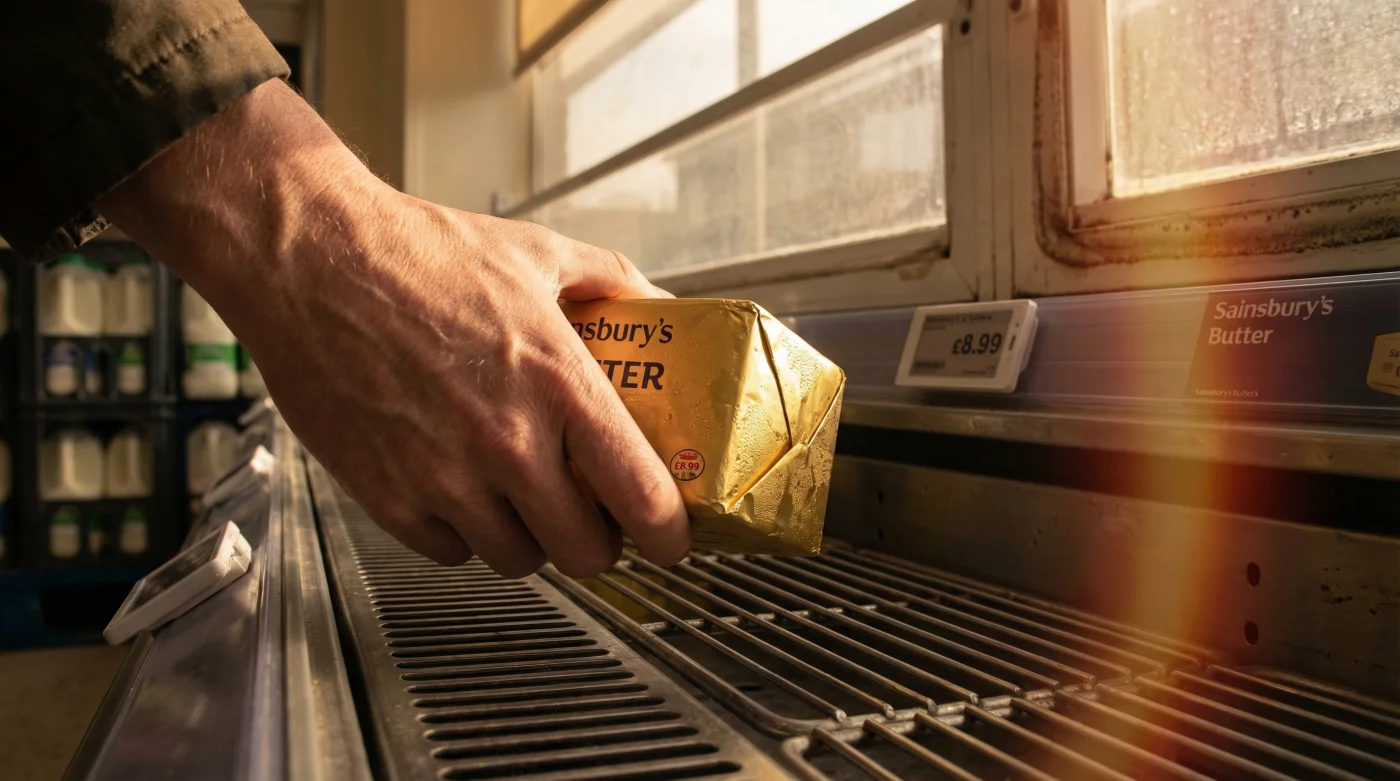
The rhythmic scrape of a knife against a cold, pale-yellow block, spreading it thickly over a hot slice of brown toast. It is an autonomic morning ritual, a comforting start to the day so ingrained in your routine that you hardly register the motion. Yet, this simple, domestic pleasure has suddenly become a sharp financial pinch. You push your trolley down the brightly lit, humming chilled aisle of Sainsbury’s, reaching out for that familiar foil-wrapped staple. You mentally prepare to pay the usual £1.70. Instead, you flinch at a number starting with a three. The quiet shock of a doubled price tag on a basic necessity forces you to pause, hand hovering over the shelf.
Shoppers expect staple items to act as the unmoving ballast of their weekly budget. You anticipate the cost of a luxury olive oil or a prime cut of beef to fluctuate, but butter, milk, and bread are supposed to remain firmly anchored. Right now, across the UK, those anchors are lifting, completely severing the expected reality of your grocery receipt. The sudden, almost overnight price hikes for both premium and own-label butter are not an arbitrary corporate squeeze. They are a direct, unavoidable mirror of severe agricultural constraints hitting our shores.
The Weight of the Churn: Why the Baseline is Breaking
To understand the sudden price tags, you have to look past the neon promotional signs of the supermarket and towards the heavy mud of British pastures. It is dangerously easy to view food as an industrial product that magically materialises on shelves, but dairy is ultimately a fragile dialogue with the weather. We have experienced months of relentless, heavy rain across the country. When the soil breathes through a puddle, the entire ecosystem falters, and your breakfast pays the price.
| Shopper Profile | Daily Impact of the Price Hike | Practical Strategy |
|---|---|---|
| The Avid Home Baker | Severe cost increase for pastry and cake foundations. | Bulk buying during promotional dips and freezing blocks. |
| The Family Cook | Noticeable strain on the weekly grocery budget. | Switching to blended spreads for sandwiches; rationing block butter for cooking. |
| The Artisan Toast Devotee | Frustration over paying premium prices for standard own-label. | Accepting the cost but softening butter to spread thinner, prolonging the product. |
Thomas, a third-generation dairy farmer in Cheshire, explained the grim reality to me while leaning on a damp five-bar gate last Tuesday. ‘Milk is just liquid grass,’ he said, rubbing the freezing rain from his cheek. ‘When the fields are waterlogged for months on end, the grass lacks sunlight. It cannot produce the natural sugars the herd needs. The cows eat their fill, but the caloric energy just isn’t there. Less energy means less butterfat in the milk. The dairy churns are still spinning, but the heavy cream just isn’t rising to the top anymore.’
| Agricultural Condition | Biological Impact on Cattle | Supermarket Consequence |
|---|---|---|
| Prolonged Heavy Rainfall | Waterlogged roots prevent sugar development in grazing grass. | 15-20% drop in overall cream yield per farm. |
| Lack of Spring Sunlight | Delayed photosynthesis and poor pasture growth. | Lower volume of milk produced, creating a nationwide shortage. |
| Sodden Fields | Cows kept indoors longer, relying on expensive winter feed. | Production costs spike, passed directly to the consumer till. |
This is the harsh mechanical logic of nature. Butter requires an enormous amount of concentrated milk fat. When the national yield drops by even a fraction of a percent, the butter producers feel the pinch first. Supermarkets like Sainsbury’s are suddenly forced into a fierce bidding war to secure enough supply for their own-label brands, competing directly with the premium, branded names. The result is a compounding crisis: the cost of that foil-wrapped block skyrockets overnight to protect the profit margins of a crippled supply chain.
Navigating the Aisle in a Drought of Cream
You cannot change the weather, but you can alter the physical way you navigate the dairy aisle. When a staple becomes an unexpected luxury, you need to rethink how and when you use it. Your approach needs to shift from automatic purchasing to strategic selection. Not all meals require the high-fat content of a solid block.
- Sainsburys butter prices hit record highs amid ongoing dairy shortages.
- Melted chocolate seizes instantly when touching this invisible bowl moisture.
- Basmati rice turns perfectly fluffy using this simple tea towel trick.
- Chocolate ganache loses its mirror shine entirely missing this liquid glucose addition.
- Marmite transforms rich vegetarian gravies creating deep meaty flavours instantly.
| What to Look For | What to Avoid | Why It Matters |
|---|---|---|
| Spreads with high buttermilk content. | Products heavily reliant on palm oil. | Buttermilk retains that crucial dairy flavour without leaving a greasy residue on the palate. |
| Solid block butter specifically for pastry. | Using soft baking spreads for pie crusts. | Soft spreads contain too much water; they will ruin the delicate, flaky texture of your bake. |
| Bulk promotional offers on premium blocks. | Leaving excess butter in the fridge to spoil. | True butter freezes perfectly for up to six months. Buy the dip and store it cold. |
Consider rationing your use based on the culinary payoff. Reserve the true, high-priced block butter for moments where it truly matters: melted over fresh crumpets, rubbed into a crumble topping, or finishing a rich, glossy pan sauce. For everyday sandwiches or basic frying, pivot to olive oil or quality blended spreads. This physical separation of utility fat and flavour fat will stretch your pounds further without sacrificing the joy of your evening meals.
The Ground Beneath the Supermarket Shelf
We have grown incredibly accustomed to an uninterrupted, highly sanitised supply chain. Walking into a brightly lit Sainsbury’s creates a powerful illusion of permanence. We assume the shelves will always be full, the prices predictable, and the changing seasons entirely irrelevant to our weekly shop. The current butter shortage shatters that illusion, reminding you forcefully that every meal you prepare is tethered to the physical reality of the British landscape.
Understanding why that price has jumped from £1.70 to over £3.00 changes your relationship with the food on your table. It moves the experience from a point of sheer retail frustration to a grounded acknowledgement of agricultural reality. The next time you slice into that cold block, you might just appreciate it a little more. It is a product of sun, soil, and hard labour—and sometimes, those natural elements simply refuse to cooperate.
We forget that the supermarket shelf is not a factory floor; it is simply the final resting place for a chaotic, weather-dependent harvest.
Navigating the Dairy Price Spike
Why has the price of own-label butter jumped so suddenly?
Months of extreme wet weather have left British pastures waterlogged, leading to poor grass quality. Cows are producing milk with significantly less fat, creating a nationwide shortage of the cream needed to churn butter.Will the prices drop back down soon?
Not immediately. Dairy yields take months to recover. Even if the sun shines tomorrow, the grass needs time to develop sugar, and the cattle need time to process it.Can I freeze butter if I find it on a good promotion?
Absolutely. Foil-wrapped block butter freezes exceptionally well for up to six months. Just let it thaw naturally in the fridge overnight before you need to use it.Is there a noticeable difference between premium and own-label anymore?
In terms of price, the gap has narrowed because raw milk fat is expensive for everyone. However, premium brands often use specific bacterial cultures for flavour, whereas own-label is usually sweet cream.What is the best substitute for baking if butter is too expensive?
If you are making cakes, baking margarines or sunflower oil can work perfectly well. However, for shortcrust pastry or biscuits, you cannot easily mimic the structural integrity and melting point of real butter.