Picture a humid, stifling Tuesday evening in a cramped London kitchen. The air feels heavy, clinging to the worktops, and the mere thought of turning on the hob induces a mild sweat. You pull a chilled cucumber from the fridge, the condensation beading against your palm, promising immediate, cooling relief.
Standard culinary doctrine dictates a tiresome ritual here: slice the vegetable, coat it in fine sea salt, and abandon it in a colander for half an hour. You are told this draws out the excess water, preventing a watery dressing. Yet, as you stand over the sink watching that pale green liquid drip away, you are draining the lifeblood of the dish.
The texture softens, the bright snap fades, and what was meant to be a vibrant, thumping crunch becomes a limp, apologetic chew. You have traded the thrill of the bite for the sake of a slightly thicker puddle of soy sauce at the bottom of the bowl.
The Architecture of the Snap
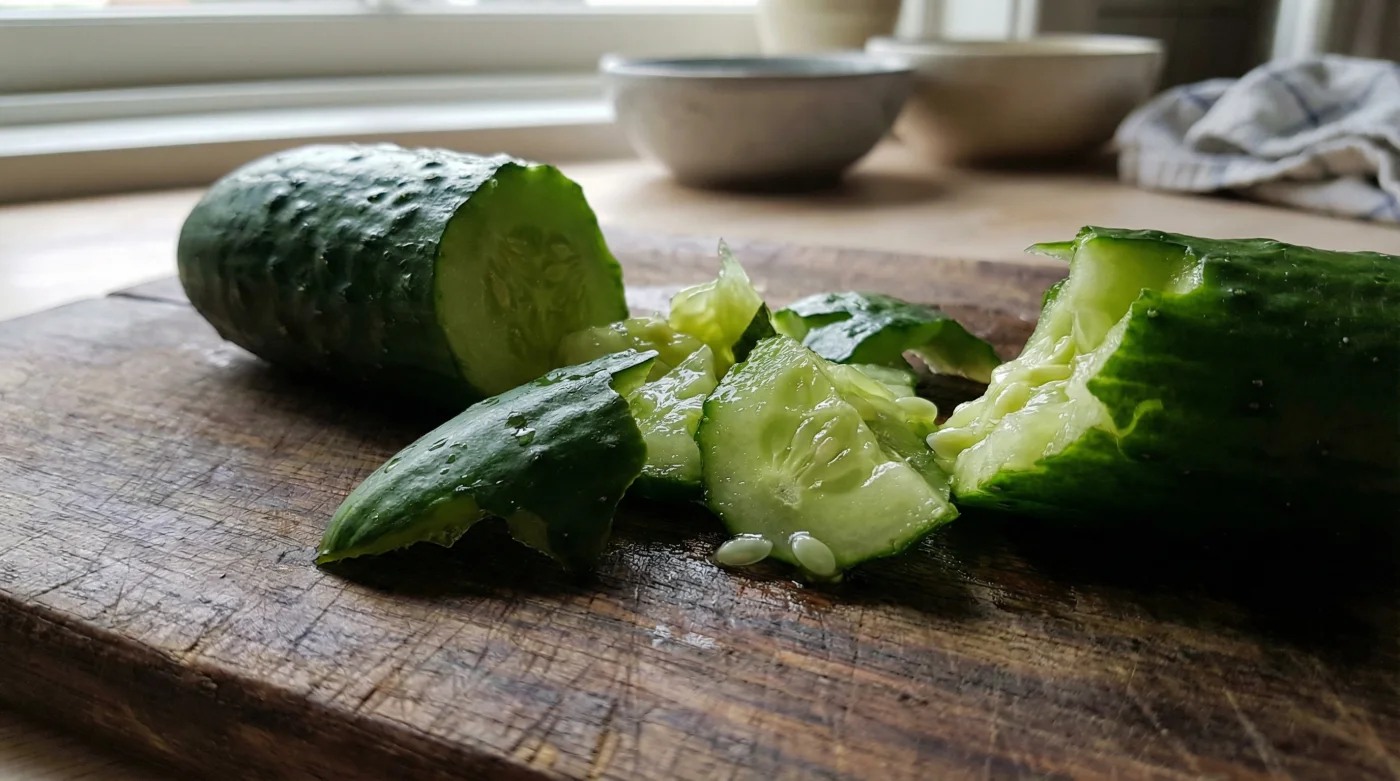
We treat cucumbers like aubergines, punishing them with salt to correct a perceived flaw. But think of a cucumber not as a sponge, but as a microscopic honeycomb built entirely of pressurised water. When you strike it with a rolling pin or the flat side of a heavy cleaver, you fracture those hexagonal walls. If you salt and drain those jagged shards, the cellular pressure collapses instantly.
You are left with deflated balloons. Skipping the salt drain entirely preserves that tense, crisp structure, turning a thirty-minute chore into a five-minute triumph. The jagged edges create a vast surface area, perfectly designed to grip sesame oil, rice vinegar, and crushed garlic without the need for dehydration.
Consider Mei Lin, a forty-two-year-old supper club host in Hackney. For years, she religiously salted her cucumbers, terrified of a diluted soy dressing. One evening, running desperately late for twenty hungry guests, she took a cleaver to five cucumbers, tossed them directly into a bowl of black vinegar, chilli oil, and garlic, and served them immediately. The resulting dish was the most fiercely textured salad she had ever made.
The guests devoured it, praising the violent crunch that usually vanished after ten minutes on the table. It was a revelation in raw texture, proving that the established rules were actively hindering the final outcome.
Adjusting for the Audience
Not every appetite demands the exact same bite. The beauty of the unsalted smash lies in its immediate versatility. For the purist, a simple dressing of Chinkiang vinegar, a dash of light soy, and a few drops of toasted sesame oil allows the raw, grassy notes of the cucumber to sing loudly. The jagged, uncompromised flesh absorbs just enough acid without losing its physical footing.
- Brown sugar blocks soften instantly absorbing this unexpected raw bread slice.
- Cornflour additions transform cheap supermarket biscuits mimicking premium expensive bakery textures.
- Garlic cloves roast perfectly sweet skipping this traditional foil wrapping habit.
- Morrisons chicken batches trigger urgent nationwide removals over sudden bacterial fears.
- Papa Johns pizzas face dramatic menu shifts altering core sourdough crusts.
The Five-Minute Strike
To achieve this, you must abandon precision for controlled aggression. The preparation is brief, requiring only a heavy implement and a willingness to make a slight mess on the chopping board. Your goal is a fast, decisive fracture, preserving the internal tension entirely.
- Place your whole cucumber on a sturdy board, preferably an English hothouse variety with thin skin.
- Lay a heavy knife flat against the vegetable, or wield a rolling pin.
- Strike firmly down the length until the skin bursts and the flesh splinters into four ragged segments.
- Tear these segments by hand into bite-sized chunks, keeping the irregular edges intact.
- Dress immediately and forcefully, tossing vigorously for ten seconds.
The Tactical Toolkit involves minimal interference. You will need one rolling pin or heavy cleaver, and less than five minutes of your time. The optimal dressing ratio sits at two parts acid, one part salt, and one part fat. Serve it the moment the oil hits the skin.
Reclaiming the Clock
By rejecting the mandatory salting phase, you are doing more than saving twenty-five minutes of idle waiting. You are questioning the culinary habits passed down without context. We often complicate our food under the guise of technique, believing that more steps equate to superiority.
Yet, returning to the raw, unadulterated snap of an instantly prepared vegetable reminds us that nature rarely requires our interference. You gain a loud, thrilling side dish, and more importantly, you win back your evening.
The loudest crunch comes from leaving the vegetable exactly as it was grown, merely bruised to accept the flavour.
| Key Point | Detail | Added Value for the Reader |
|---|---|---|
| Cellular Tension | Unsalted cucumbers retain water pressure within their cell walls. | Delivers a noticeably louder, more satisfying crunch. |
| Jagged Fractures | Smashing creates irregular, dry surfaces that hold dressing. | Maximum flavour adhesion without needing to draw out moisture. |
| Time Reclaimed | Skipping the 30-minute salt drain bypasses the longest step. | Transforms a planned side dish into an instant, spontaneous option. |
Frequently Asked Questions
Will the dressing become watery? Because the cucumber is eaten immediately, the water remains locked inside the cells during the meal, keeping the dressing potent.
Do I need to peel the cucumber? Leave the skin on. It provides structural integrity and holds the fractured pieces together when smashed.
What type of cucumber works best? English hothouse or Persian cucumbers are ideal due to their thin skins and minimal seeds.
Can I prepare this in advance? No. The magic lies in the immediacy. Smash and dress right before you carry the bowl to the table.
What if I hit it too hard? You want splinters, not a puree. Strike firmly but stop once you hear the skin audibly crack.