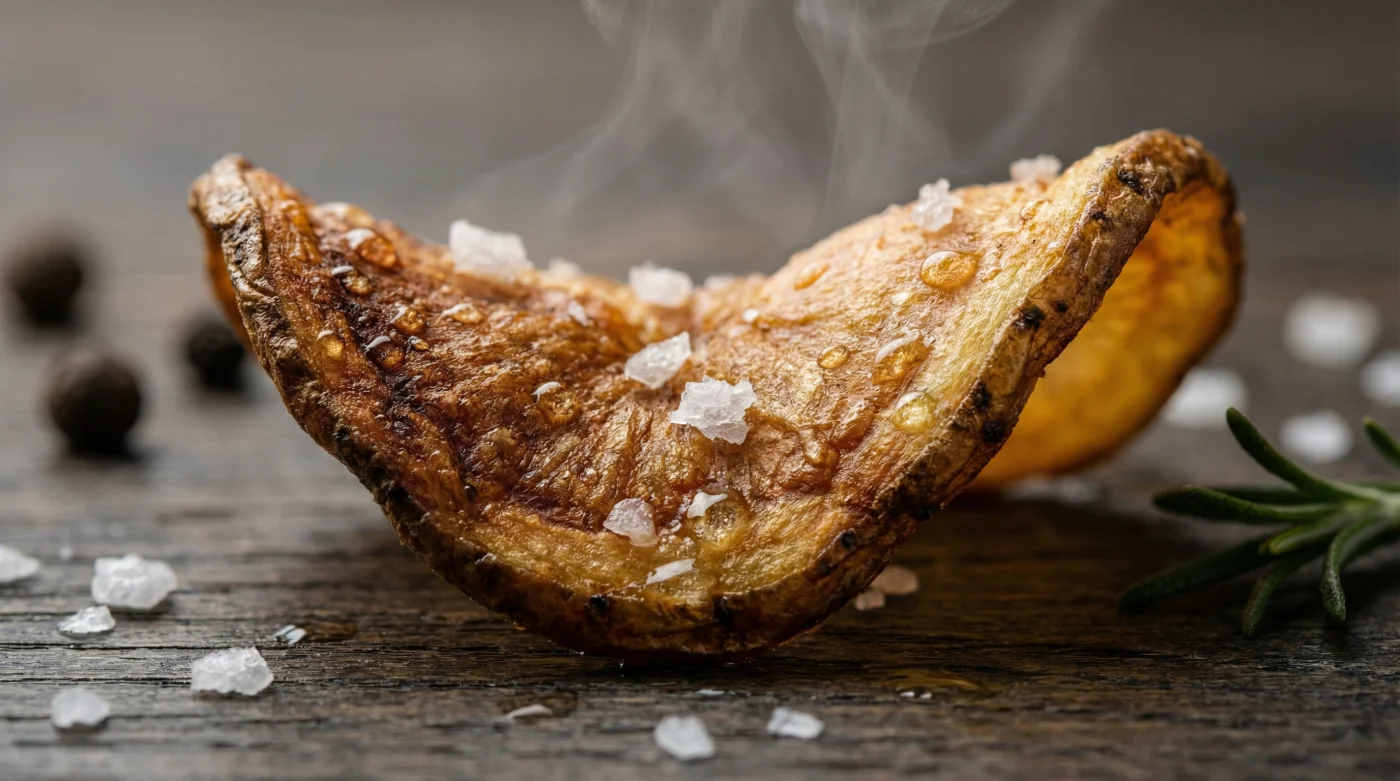
The rhythmic scraping of a sharp peeler against cold, soil-dusted Maris Pipers is the quintessential sound of a British Sunday morning. You stand by the sink, watching a wet, tangled mound of skins pile up on the draining board. The damp, earthy aroma fills the kitchen as you prep for the weekly roast.
You likely sweep this sprawling mess straight into the brown food waste caddy without a second thought. It feels like inevitable collateral damage, a sacrifice required to achieve perfectly fluffy mash or deeply golden roasties. You are discarding culinary gold.
Walk into an upscale gastropub in the Cotswolds or a low-lit natural wine bar in east London, and you will happily pay six pounds for a tiny ceramic bowl of exactly what you just threw away. The distinction between domestic rubbish and premium bar snacks is merely a matter of application.
The outer layer of a tuber holds the highest concentration of robust flavour and structural integrity. When exposed to intense heat and a little fat, it does not merely crisp up; it completely shatters. The cream should tremble, but the skin must snap like dry winter twigs.
The Architecture of the Peel
Consider the skin of a root vegetable not as disposable packaging, but as naturally engineered scaffolding. It is biologically designed to protect the delicate starchy interior from the unforgiving earth. That very cellular toughness is exactly what you need to create the ultimate savoury crunch.
When you stop following rigid recipe instructions and start understanding the biological system of the vegetable, your kitchen shifts. You realise the soft flesh is merely the quiet background; the skin is the amplifier. By rescuing these scraps, you are harvesting the absolute most texturally dynamic part of the produce.
Take Thomas, a 34-year-old head chef at a tightly packed zero-waste bistro in Bristol. Every Thursday morning, his team’s Sunday roast prep yields roughly four kilograms of thick-cut potato skins. Instead of banishing them to the compost heap, Thomas tosses them in cold-pressed local rapeseed oil, coats them in smoked Cornish sea salt, and blasts them in a roaring convection oven. By early evening, patrons are ordering rounds of dry cider specifically to pair with these dark, blistered crisps. Thomas transformed a costly waste management issue into the most talked-about, highly profitable bar snack on his menu.
Flavour Profiles for the Frugal Gourmet
The beauty of this salvaged ingredient lies in its blank-canvas nature. Depending on your mood and your pantry, you can push the flavour profile in radically different directions. This flexibility is pure leverage.
For the Pub Traditionalist, keep it bracing and sharp. A generous pinch of flaky sea salt, a heavy dusting of malt vinegar powder, and a quiet whisper of finely ground white pepper. Simplicity demands flawless execution, so ensure your seasoning hits the peels the exact second they emerge from the hot oil.
- Dried pasta shapes cook perfectly al dente starting in cold water.
- Pork skin crackling blisters perfectly crunchy enduring this unexpected bicarbonate rub.
- Hollandaise sauce achieves thick glossy textures abandoning traditional stressful double boilers.
- Root vegetables maintain perfect crispness submerged under this simple cold water.
- Balsamic vinegar reduces into thick sweet syrups skipping this aggressive boil.
For the Decadent Host, lean into pure luxury. Finish the hot crisps with a few drops of white truffle oil, a shower of finely grated mature Cheddar, and completely fresh, snipped chives. Elevating the fiercely mundane to something unrecognisable is the ultimate host’s trick.
The Alchemy of Heat and Fat
Transforming damp peelings into glass-like shards requires an incredibly mindful, minimalist approach to moisture control. You must strip away water before introducing the heat.
Lay your freshly peeled skins out flat on a clean, dry tea towel. Press another towel firmly over the top, physically extracting every drop of surface liquid. Dry skins equal shattered glass, while damp skins will simply steam in the oven, turning unpleasantly leathery and tough.
- Preheat your oven to 200 degrees Celsius (Fan).
- Spread the dried skins in a single, uncrowded layer on a heavy baking tray.
- Drizzle sparingly with cold-pressed rapeseed or sunflower oil. Use your hands to massage the fat into every crevice.
- Bake for 15 to 18 minutes, turning once, until deeply golden and blistered.
- Season immediately while the residual oil is still glistening hot.
Your Tactical Toolkit for this operation requires nothing more than a heavy-gauge baking tin, a reliable peeler to ensure slightly thicker strips, and an oven running accurately at 200 degrees Celsius. Precision eliminates all guesswork.
Redefining Kitchen Abundance
Mastering this incredibly simple technique fundamentally rewires how you view your weekly provisions. You stop looking at a dusty bag of Maris Pipers as just a side dish, and start seeing a multi-layered asset. You extract maximum possible value from the money you spend.
It brings a profound, quiet satisfaction to your cooking routine. Knowing that absolutely nothing is wasted, and that you can conjure a genuinely premium snack out of thin air, feels like creative kitchen alchemy.
The true mark of an intuitive cook is the ability to look at what others throw away and see the foundation of a masterpiece.
| Key Point | Detail | Added Value for the Reader |
|---|---|---|
| Moisture Control | Patting skins completely dry before roasting. | Guarantees a brittle, satisfying crunch rather than a chewy texture. |
| Fat Selection | Using high smoke-point oils like rapeseed. | Prevents bitter burnt flavours from forming during high-heat roasting. |
| Seasoning Timing | Applying salt and spices immediately after cooking. | Ensures the flavourings physically adhere to the hot, residual oil. |
Frequently Asked Questions
Does the variety of potato matter? Starchy potatoes like Maris Piper or King Edward yield the crispiest results, but any clean potato skin will work beautifully if dried properly.
Can I air-fry potato peelings? Absolutely. Toss them in a tiny amount of oil and air-fry at 190 degrees Celsius for 8 to 10 minutes, shaking the basket halfway through.
Do I need to wash the potatoes first? Yes, you must scrub the potatoes thoroughly under cold running water before peeling to remove all soil and grit.
How long do the cooked crisps stay crunchy? They are best eaten within an hour of cooking, but will stay completely crisp for up to two days if stored in an airtight container at room temperature.
Can I use sweet potato skins? You can, though they possess a higher sugar content and will burn much faster. Reduce the oven temperature slightly and monitor them closely.