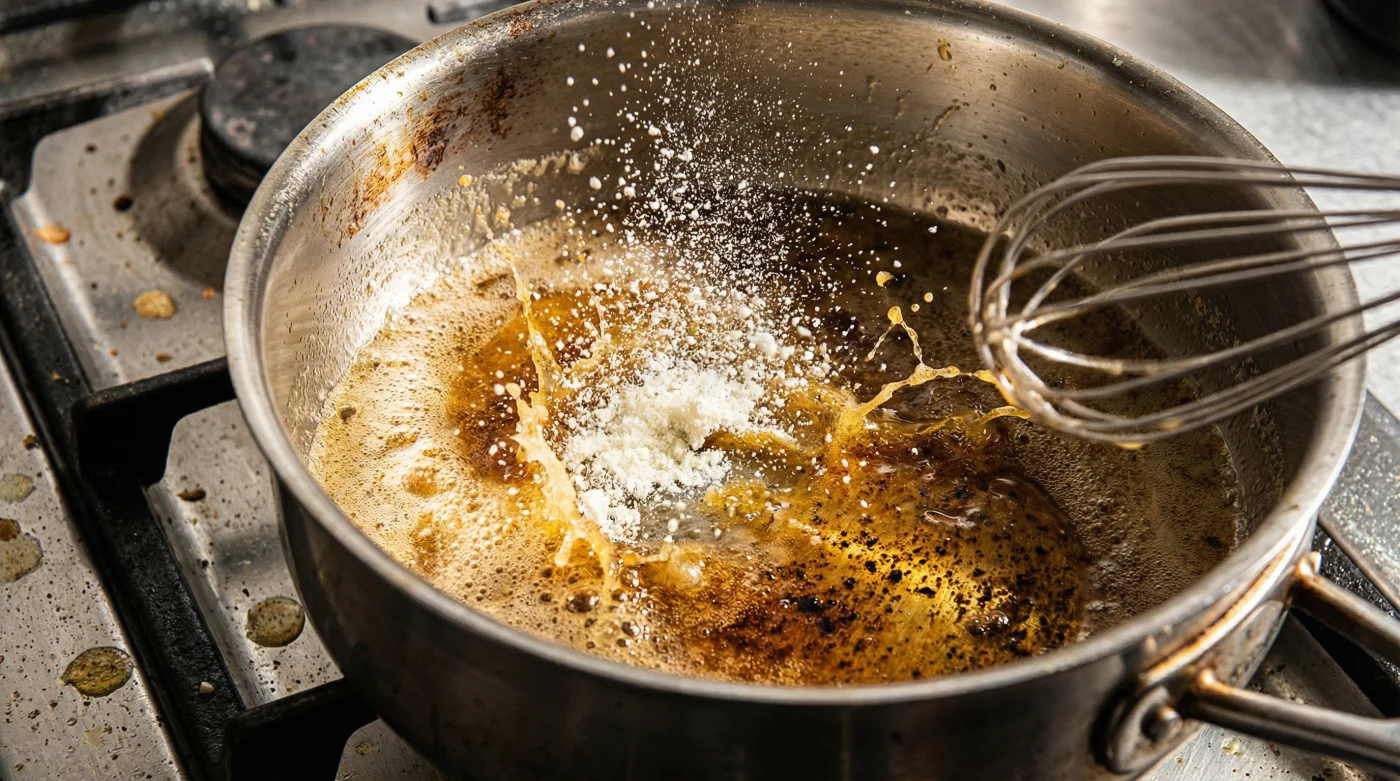
You stand over the stove, watching the pale yellow block slump and foam. The air fills with the scent of warm milk, then shifts into something heavier, like toasted walnuts roasting on an open fire. You wait. You watch the dense foam part, revealing the bubbling liquid fat underneath. Then, the panic sets in as the golden specks darken.
Fearing that rapid burn, most home cooks pull their pans off the heat far too early. The transition to bitter ash happens in a matter of seconds, leaving you with a muted blonde liquid instead of the deep, complex amber that makes restaurant dishes sing. You are left with a compromised ingredient, lacking the punchy, caramelised notes you set out to achieve.
The secret to bridging that gap isn’t better timing, a highly expensive copper pan, or years of culinary training. It lies in a humble tin of dried milk powder tucked away in your baking cupboard. This mundane ingredient, often relegated to emergency teas or camping trips, holds the power to completely alter the chemical reactions happening in your frying pan.
Tossing a cold spoonful of this pantry staple into your melting butter creates an entirely different thermal environment. It acts like a buffer, catching the fierce heat and multiplying the toasted flavour notes without letting the fragile fat reach a critical scorch point. You shift the balance of power back into your own hands.
The Alchemy of Toasted Solids
Think of standard brown butter like trying to caramelise onions on a roaring flame while blindfolded. As the water evaporates from the butter, the temperature within the pan spikes aggressively, and the few naturally occurring milk solids left behind take the full, punishing brunt of the heat. They sizzle, pop, and quickly cross the line from toasted to burnt before you can reach for a spatula.
When you introduce cold milk powder, you fundamentally change the mathematics of the pan. You flood the system with fresh proteins and sugars that act as thermal shock absorbers. These extra solids spread the harsh thermal load across thousands of tiny new particles, browning beautifully and evenly while dramatically slowing down the rate at which any single piece can burn.
Arthur Pendelton, a 42-year-old development chef working in a Cornish coastal bakery, used to lose sleep over scaling up his brown butter for hundreds of daily financiers. He found that whisking in twenty grams of cold, skimmed milk powder just as the butter melted stopped the erratic popping and allowed the mixture to gently toast to a deep mahogany. He never burnt another batch, saving the bakery hundreds of pounds sterling in wasted butter over the year.
His method proved that you do not need elite reflexes to master this foundational ingredient. You just need better materials to work with, turning a fragile tightrope walk into a calm, predictable kitchen routine. It shifts the dynamic from a chef’s intuition to a foolproof mechanical process that anyone can replicate on a standard domestic hob.
Adjusting the Gold Standard
Not every dish requires the exact same intensity of toasted flavour. The beauty of the cold milk powder pivot is that you can scale the depth of your butter to suit whatever sits on your chopping board. You are no longer bound by what the butter naturally provides; you are building a custom ingredient.
For the Pastry Purist, doubling the solids creates a hyper-concentrated nutty profile that cuts through rich doughs. Your cookies will taste richer, masking the sheer sweetness of the sugar and transforming simple supermarket baking chocolate into something resembling a high-end artisanal truffle. The extra solids provide a subtle chew and a malted depth that completely alters a standard bake.
- Dried pasta shapes cook perfectly al dente starting in cold water.
- Pork skin crackling blisters perfectly crunchy enduring this unexpected bicarbonate rub.
- Hollandaise sauce achieves thick glossy textures abandoning traditional stressful double boilers.
- Root vegetables maintain perfect crispness submerged under this simple cold water.
- Balsamic vinegar reduces into thick sweet syrups skipping this aggressive boil.
For the Batch Prepper, this fortified liquid gold can be poured straight into silicone moulds and chilled for future use. It behaves beautifully when solid, melting down flawlessly over grilled steaks or stirred through a Sunday vegetable mash without splitting or weeping. Having a block of this supercharged butter in the fridge feels like a secret weapon for midweek meals.
The Cold Powder Protocol
Executing this technique requires nothing more than a steady hand and a keen eye. Avoid rushing the initial melt; let the gentle heat coax the butter apart before you intervene. High heat at the beginning will simply evaporate the water too quickly, causing the butter to spit and creating a dangerous environment before the browning even begins.
As soon as the raw butter turns completely liquid and the first tiny bubbles appear on the surface, you take action. Whisk with deliberate, smooth strokes, ensuring the cold powder fully hydrates in the warm fat before it hits the hot base of the frying pan. This prevents clumping and ensures an even distribution of those crucial milk proteins.
- Place your diced, room-temperature butter into a cold, light-coloured frying pan to clearly monitor the subtle colour shifts.
- Heat gently until melted, then immediately whisk in one tablespoon of cold milk powder per 250g of butter.
- Keep the balloon whisk moving in a continuous figure-eight motion, scraping the base of the pan constantly to prevent sticking.
- Once the foam smells deeply nutty and the solids look exactly like wet sand, remove from the heat and pour into a heatproof bowl to halt the cooking.
Tactical Toolkit: A stainless steel or enamel frying pan with a heavy base. A sturdy balloon whisk. A standard 250g block of unsalted butter. One tablespoon of skimmed milk powder, pulled straight from the fridge to maximise the temperature differential. Total active time sits at roughly four minutes from cold pan to finished product.
Beyond the Frying Pan
There is a quiet, profound satisfaction in mastering something that used to cause genuine anxiety. It changes how you approach a recipe, turning a moment of stressful clock-watching into a reliable, almost meditative ritual where the kitchen feels less hostile, and far more forgiving of your presence. The fear of ruining an expensive block of butter evaporates, replaced by quiet confidence.
You learn that brilliant cooking isn’t always about hyper-vigilance or innate culinary talent. Sometimes, it is simply about understanding the physical materials in front of you and making a tiny, brilliant adjustment that guarantees a perfect outcome every single time. You stop serving food dictated by panic, and start serving food shaped by intention.
“Adding extra cold solids is like giving the heat a secondary job; it busies itself safely toasting the powder rather than abruptly scorching the fat.”
| Key Point | Detail | Added Value for the Reader |
|---|---|---|
| The Temperature Differential | Cold powder lowers the pan temperature slightly upon entry. | Prevents the remaining water from violently boiling off, stopping aggressive spitting. |
| Skimmed vs Full Fat | Skimmed milk powder contains only the required proteins and sugars. | Avoids introducing unnecessary fats that can turn greasy or split at high temperatures. |
| Visual Cues | The added powder clumps slightly, resembling coarse wet sand. | Provides a much clearer visual indicator of when the butter is perfectly toasted. |
Frequently Asked Questions
Can I use standard full-fat milk powder?
Skimmed powder is vastly superior as the extra fat in whole milk powder can turn greasy and heavy when heated rapidly in a frying pan.Do I need to sift the powder first?
It is not strictly necessary if you are whisking vigorously, but sifting ensures absolute smoothness if your powder has been in the cupboard for months.Will this work with salted butter?
Yes, but the salt concentrates as the water evaporates. It is always safer to use unsalted butter and season the final dish to your own taste.Why must the pan be light-coloured?
Dark non-stick pans mask the colour change of the milk solids. A stainless steel pan allows you to see the exact moment the powder turns golden brown.How long can I store the finished brown butter?
Once cooled and poured into an airtight container, it will keep in the fridge for up to two weeks, or frozen for three months.