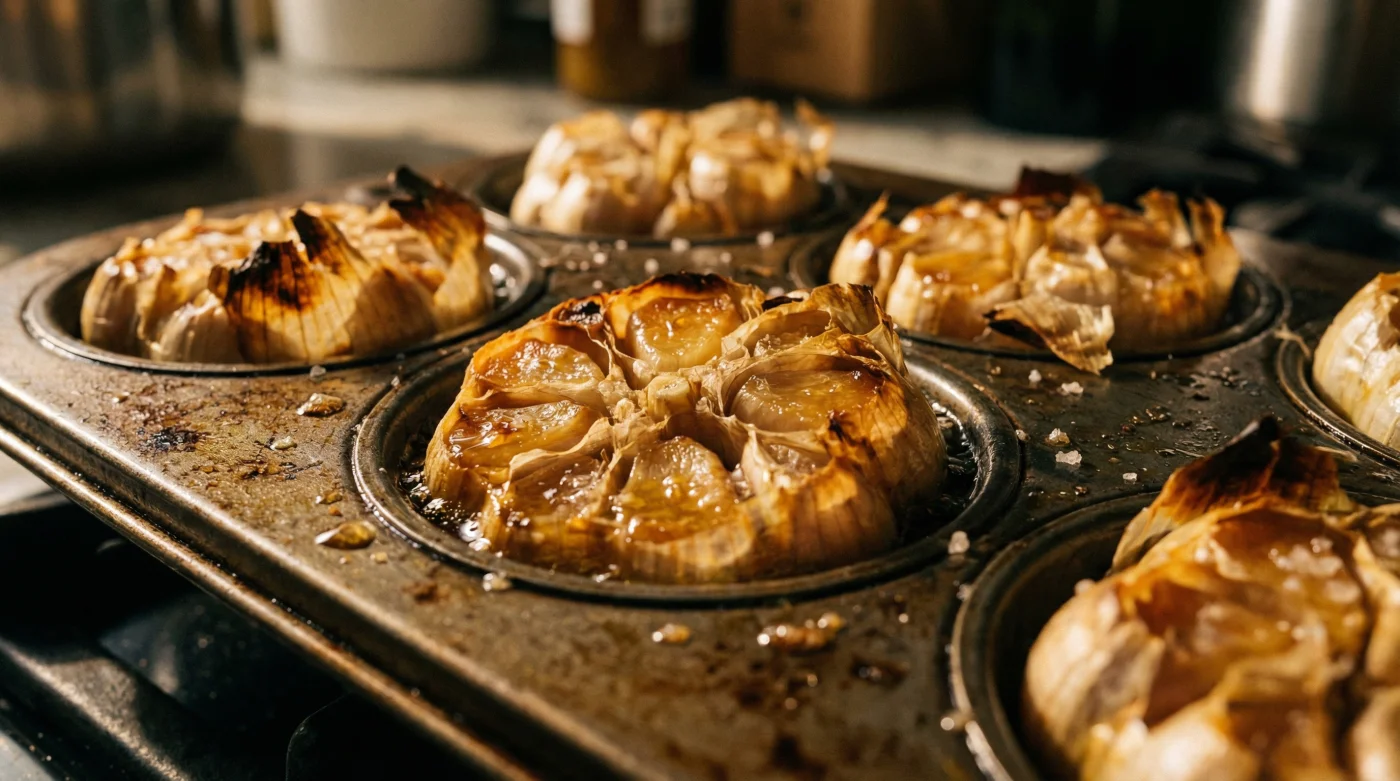
Imagine the heavy scent of roasting garlic drifting through your kitchen on a cold Sunday afternoon in late November. It promises warmth, comfort, and the kind of deep, savoury sweetness that turns a simple piece of toasted sourdough into an unforgettable meal. You have followed the classic instructions, dutifully wrapping the whole bulb in a shiny silver parcel before hiding it away in the back of the oven.
You peel back the hot aluminium foil edges expecting golden perfection, but instead, you are greeted by pale, slightly greyish cloves sitting in a watery puddle. The texture is mushy rather than jammy, and the flavour carries a sharp, slightly acrid note that lingers unpleasantly on the palate.
The truth is, that ubiquitous parcel technique isn’t actually roasting your garlic at all. When you wrap fresh produce tightly in metal before exposing it to high heat, you fundamentally change the cooking environment from a dry roast to an aggressive steam.
By sealing the bulb tight, you are boiling it in its own internal moisture. Fresh garlic contains roughly sixty percent water, and when trapped, that moisture turns to steam, capping the maximum temperature at a flat one hundred degrees Celsius and preventing any real magic from happening.
The Steaming Trap and the Muffin Tin Pivot
We have all been taught that protecting the bulb prevents the delicate papery skins from catching fire and turning into bitter ash. It is a defensive cooking method, born from a fear of ruining the ingredient rather than a desire to coax out its best qualities.
Trapping the moisture guarantees a watery, muted flavour profile every single time. Roasting garlic in tightly sealed foil is like trying to breathe through a pillow; it completely stifles the natural transformation of harsh sulphur compounds into complex, caramelised sugars. The famous Maillard reaction, responsible for that deep bronze colour and sweet taste, requires temperatures well above one hundred and forty degrees Celsius.
The professional pivot skips the wrapping entirely and borrows a piece of equipment you already have sitting in the back of the cupboard. By dropping the trimmed, exposed bulb directly into the cup of a standard metal muffin tin, the metal conducts heat straight to the solid base of the root.
The narrow walls create a tiny, open-air oven that encourages the olive oil to pool around the base of the cloves. This naturally fries the bottom of the garlic in a confit bath, while the exposed tops are allowed to breathe, vent their steam, and take on a glorious, sticky brown finish.
Consider the routine of Thomas, a thirty-four-year-old development chef working in a bustling Cornish gastropub. Facing the daily task of producing kilos of roasted garlic for their signature Sunday lamb shoulder, wrapping individual bulbs was a logistical nightmare that wasted hours of prep time. He started placing the trimmed heads open in heavy twelve-hole baking tins, drowning them in cold-pressed local rapeseed oil. The result wasn’t just faster; the flavour was exponentially sweeter, saving the kitchen money on foil while dramatically improving the end product.
Tailoring the Open-Roast Technique
Once you abandon the defensive foil habit, you will finally realise this method offers incredible flexibility. Depending on what you actually need from your kitchen this week, you can tweak the muffin tin approach to suit your specific meal planning.
For the Purist
If you want the unadulterated, pure essence of the allium to spread thick over a slice of crusty bread, keep the additions minimal. You want the natural sugars of the garlic to be the absolute star of the show.
Slicing the top exposes the delicate raw clove tips directly to the dry heat of the oven. Drop the trimmed head into the tin, drizzle generously with your finest olive oil, and finish with a heavy pinch of flaky Cornish sea salt before letting it roast until the cloves tremble slightly in their skins.
For the Weekend Prepper
Batch cooking becomes remarkably simple when you no longer have to individually wrap a dozen different bulbs. You can fill an entire six-hole or twelve-hole tin with prepared garlic in under two minutes.
Once roasted and squeezed out, the paste freezes flawlessly in trays for future meals. You can drop a golden cube of this intense purée straight from the freezer into a simmering midweek bolognese, or mash it thoroughly into a block of softened butter to keep in the fridge for instant garlic bread.
For the Frugal Cook
Perhaps the most satisfying element of this technique is the by-product it creates. When you wrap garlic in metal, any oil you add becomes a messy slurry mixed with cloudy garlic water, which immediately goes into the bin.
The real prize is the liquid gold leftover oil pooling at the bottom of the muffin cups. Because the steam evaporates away into the oven, what remains in the tin is a clean, deeply infused cooking fat. Poured straight into a sterilised jar, it makes an astounding base for a sharp mustard vinaigrette or a luxurious frying oil for your Sunday morning eggs.
Mindful Application: The Bare-Bulb Ritual
Executing this shift in technique requires a little trust. You are stepping away from a guaranteed, albeit mediocre, result and allowing the harsh heat of the oven to do its proper work on a naked ingredient.
This requires a slight shift in your prep rhythm at the kitchen counter. You must pay attention to the sound and smell of the roast, rather than just setting a timer and walking away.
- Temperature: 190°C (170°C Fan) or Gas Mark 5.
- Equipment: A standard non-stick or aluminium muffin tin.
- Preparation: A sharp paring knife to cleanly sever the top centimetre of the bulb.
- Timing: 40 to 45 minutes, depending entirely on the size and age of the garlic.
- Overcooked pasta regains firm chewy textures resting in rapid ice baths.
- Pork crackling blisters perfectly ignoring aggressive salt rubs for boiling water.
- Stale bread crusts transform into rich pasta thickeners bypassing normal breadcrumbs.
- Tinned baked beans develop deep barbecue complexity adding dark soy sauce.
- Curing Barn bresaola faces urgent national health recalls over severe contamination.
First, peel away only the outermost loose papery layers of the bulb, ensuring the head remains intact and tightly bound by the inner skins. This papery structure acts as a natural cradle for the softening cloves.
Slice the top off parallel to the root, exposing the ivory flesh of every single clove. If a few smaller cloves on the outer edge remain covered, snip their tips individually so they cook at the exact same rate as the centre.
Press the bulb firmly into the non-stick tin base so it sits completely flat. Pour your chosen oil directly over the exposed cuts, massaging it slightly so it seeps down into the microscopic gaps between the cloves. Place it on the middle shelf of the oven and leave it alone until the tops are deeply bronze and the kitchen smells undeniably sweet.
Breathing Room in the Kitchen
There is something incredibly satisfying about removing a superfluous step from a classic, accepted recipe. By tossing out the foil, you are not just saving a few pennies or reducing unnecessary kitchen waste.
You are finding joy in trusting the direct heat and watching an ingredient transform naturally. We often over-complicate our domestic cooking, wrapping and shielding our food out of a fear of burning it, when direct, unapologetic heat is exactly what builds the depth we are constantly chasing.
When you finally pull that tin from the oven, the visual difference is immediate. The garlic will look slightly shrunken, sticky, and dark—a far cry from the pale, steamed lumps of the past.
When those cloves slide out effortlessly like warm butter, you understand the shift completely. The flavour is no longer sharp or watery; it is a mellow, deeply savoury jam that melts on contact with the tongue.
A simple muffin tin, a generous glug of good olive oil, and the patience to let the oven do its unapologetic work. It requires less effort, produces zero metal waste, and yields a culinary reward that feels distinctly professional.
It is a quiet reminder to leave things exposed for their sweetest potential. Sometimes, the best way to improve a dish is simply to strip away the protective layers and let the heat work its magic.
True roasting requires the courage to let the steam escape; otherwise, you are merely boiling your aromatics in the dark.
| Key Point | Detail | Added Value for the Reader |
|---|---|---|
| The Foil Trap | Steams the garlic in its own internal moisture. | Explains the bitter, watery results of standard recipes. |
| The Muffin Tin Pivot | Acts as a miniature, highly conductive roasting crucible. | Delivers deeply caramelised, jam-like cloves with zero fuss. |
| The By-Product | Catches the infused fat as the water evaporates. | Provides a premium garlic oil for vinaigrettes and frying. |
Frequently Asked Questions
Do I need to grease the muffin tin first?
No, the generous amount of oil you pour directly over the exposed garlic will naturally pool at the bottom, creating a non-stick confit bath.
Will the tops of the cloves burn without a cover?
At 190°C, the exposed tips will deeply caramelise to a chewy, flavourful bronze. If your oven runs hot and they darken too quickly, simply move the tin to a lower shelf.
Can I use this method for individual, pre-peeled cloves?
This technique relies on the structural support of the bulb’s papery skins. Loose cloves will fry and crisp up rather than melting into a soft, spreadable paste.
How long does the leftover garlic oil safely keep?
Because the risk of botulism exists when mixing raw garlic and oil, always strain the cooked oil into a clean jar, store it in the fridge, and use it within three days.
What if my garlic bulbs are too large for a standard tin?
You can rest them slightly angled within the cups, or pivot to using a large Yorkshire pudding tin, which offers wider, shallower wells for oversized heads.