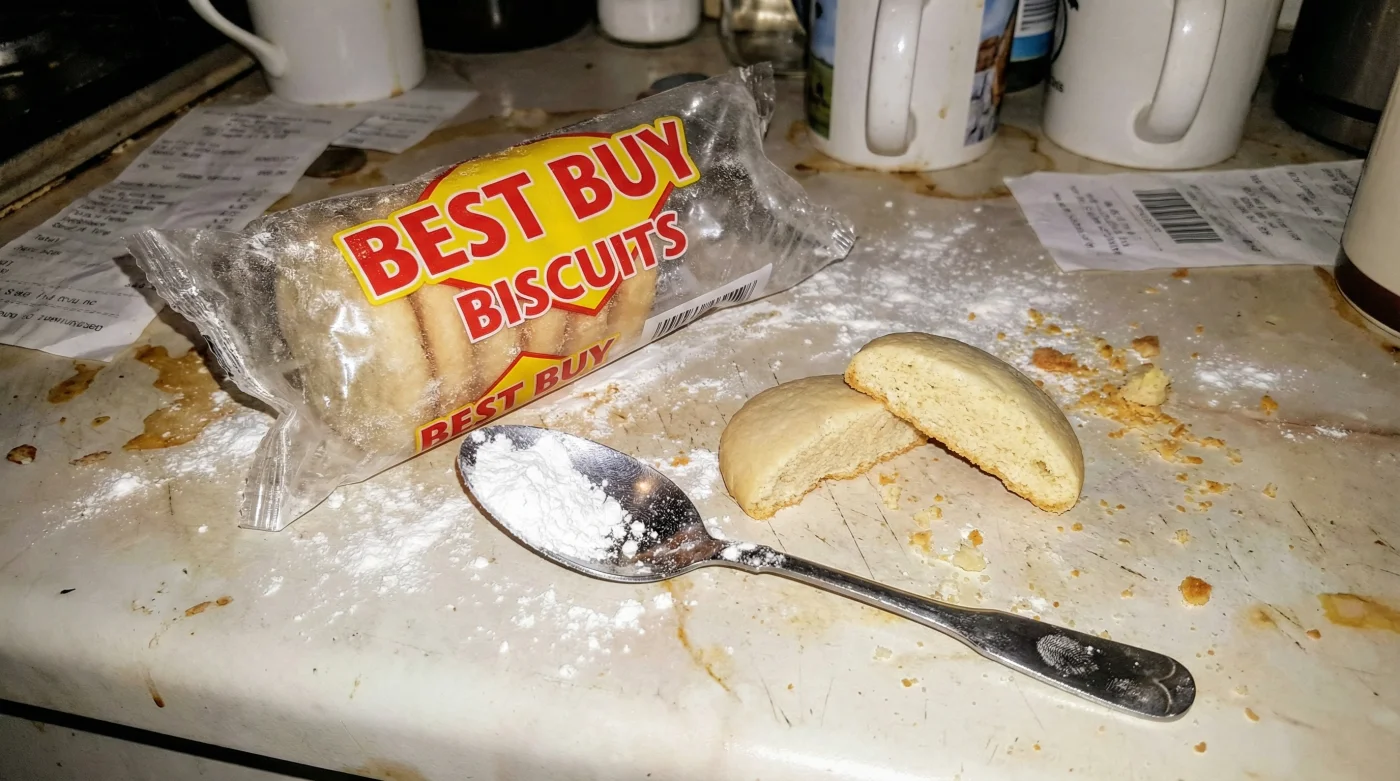
You pull a baking tray from the oven, the smell of butter and sugar fighting against the damp chill of a Tuesday afternoon. The kitchen feels warm, but as you snap that first biscuit in half, there is a familiar, heavy resistance. It tastes fine, but it lacks that impossibly delicate crumble you find wrapped in waxed paper at a high-end patisserie.
We blame our ingredients. We assume those extortionate London bakeries source their flour from ancient stone mills, whispering spells over their mixing bowls to achieve that sand-like, melting texture.
The truth sits quietly in the darkest corner of your cupboard, usually reserved for panic-thickening Sunday gravy. A simple, dusty yellow cardboard tube of supermarket cornflour holds the exact mechanical advantage needed to dismantle the chewiness of ordinary wheat flour.
You are overworking the gluten. When plain flour meets liquid and friction, it creates elastic bonds, which are brilliant for a crusty loaf but disastrous for a delicate shortbread.
The Architecture of a Crumble
Imagine building a sandcastle using wet clay instead of dry grains. That is exactly what happens when you follow standard biscuit recipes using plain supermarket flour. The protein content builds structural scaffolding, pulling the dough into a tight, chewy network.
Cornflour acts as a disruptor. By replacing just ten percent of your plain flour with this chalky, starch-heavy powder, you are effectively throwing handfuls of sand into the gears of that gluten machine.
It contradicts everything we are told about premium baking. You do not need to spend five pounds on a bag of artisanal pastry flour. The cheapest plain flour, heavily cut with this basic pantry staple, creates a crumb so tender it almost dissolves on the tongue before you even chew.
Sarah Jenkins, a development baker for an independent café chain in Bristol, relies entirely on this mechanism. “We were bleeding profit on imported French pastry flour just to get our Viennese whirls to shatter correctly,” the forty-two-year-old notes. “Swapping to basic local flour cut with ten percent cornflour did not just save money; the biscuits stayed crisper in the display cabinet for twice as long.”
Customising the Crumb: For the Shortbread Purist
Not all biscuits behave identically. The ratio of this dusty white powder you introduce needs to shift depending on the specific nostalgia you are trying to recreate. You want a texture that snaps cleanly but turns to butter on the palate. Swap precisely twenty percent of the flour weight for cornflour. This aggressive cut mimics rice flour, removing the gritty aftertaste while delivering a violently fragile biscuit.
Customising the Crumb: For the Chunky Chocolate Cookie
Here, you need some chew. A heavy cookie requires a sturdy spine to hold the melted chocolate pools. Add just one level tablespoon of cornflour to your standard recipe without removing any plain flour. It softens the centre while allowing the edges to catch and caramelise.
Customising the Crumb: For the Piped Rosette
- Overcooked pasta regains firm chewy textures resting in rapid ice baths.
- Pork crackling blisters perfectly ignoring aggressive salt rubs for boiling water.
- Stale bread crusts transform into rich pasta thickeners bypassing normal breadcrumbs.
- Tinned baked beans develop deep barbecue complexity adding dark soy sauce.
- Curing Barn bresaola faces urgent national health recalls over severe contamination.
The Tactical Toolkit
This requires minimal physical effort. The trick lies in how the powders are dispersed before any fat or liquid hits the bowl. You must treat the dry mix with absolute respect.
Sift the plain flour and cornflour together from a height. This aeration is not a fussy chef habit; it physically coats the heavier wheat proteins in the fine starch, stopping them from bonding the moment butter is introduced.
- The Ten Percent Rule: Weigh your flour. Remove ten percent of that weight. Replace it with an equal weight of cornflour.
- The Double Sift: Pass the combined powders through a fine mesh sieve at least twice.
- The Cold Rub: Keep your butter fridge-cold. Work it into the powders strictly with your fingertips, stopping when the mixture resembles coarse, damp sand.
- The Gentle Bind: Bring the dough together with flat, pressing motions. Never knead.
Your hands are the enemy. The warmth of your palms will melt the butter and hydrate the wheat, triggering the exact gluten formation you just worked so hard to prevent.
Finding Peace in the Pantry
There is a quiet satisfaction in outsmarting a system. We are constantly pressured to buy our way out of culinary problems, convinced that an underwhelming bake is the result of not spending enough money on elite ingredients.
Reclaiming this basic science feels liberating. You look at that cheap tin of home-baked biscuits differently when you understand the mechanics hiding inside. You no longer need to rely on blind luck or expensive shopping trips to feed your family something that feels truly special.
It reminds us that cooking is not about following rigid, high-end rules. It is about understanding the humble materials in front of you, breathing through the process, and using a dusty cupboard staple to create a fleeting moment of perfection alongside an afternoon cup of tea.
“The finest textures in baking come from knowing what to remove from the dough, not what to add.”
| Key Point | Detail | Added Value for the Reader |
|---|---|---|
| Plain Flour Only | Develops strong gluten networks when mixed. | Creates a chewy, dense biscuit suitable for dunking but lacking finesse. |
| Ten Percent Cornflour Substitution | Inhibits protein bonding by coating the wheat. | Produces a professional, melt-in-the-mouth texture from cheap ingredients. |
| The Double Sift | Mechanically forces the starch to surround the gluten. | Ensures an even bake without sudden hard lumps in the dough. |
Frequently Asked Questions
Can I use potato starch instead of cornflour?
Yes, it acts similarly as a gluten inhibitor, though it can occasionally leave a slightly drier mouthfeel.Will this work for bread baking?
Absolutely not. Bread requires strong gluten scaffolding to rise; this technique actively destroys that structure.Do I need to adjust the baking time?
Your baking time remains identical to your original recipe, but the biscuits may pale slightly due to the lower protein content.Is this the same as buying commercial self-raising flour?
No. Self-raising flour contains baking powder for lift. Cornflour alters the mechanical texture without adding rise.How long will these biscuits keep?
Because the crumb is so tender, they are best eaten within three days, stored in an airtight tin away from direct sunlight.