The familiar disappointment of opening the salad crisper. Soft, bending carrots. Potatoes forming wrinkled skins. The chill of the fridge feels like protection, but it is quietly stealing the life from your produce.
You probably trust the plastic packaging to act as a shield. But watch what happens when you snap a truly fresh root in half. There should be a sharp, resonant crack, releasing a mist of sweet earth. Instead, what you often get from the bottom drawer is a reluctant bend, like folding a piece of thick leather.
Professional kitchens do not suffer this silent wilting. While we rely on expensive silicon bags or hoping for the best, cooks are relying on something practically free. Water. The same cold tap water that fills your kettle holds the secret to preserving the snap of a freshly dug root for weeks on end.
The Dehydration Trap
Think of a root vegetable as a pressurised balloon of water and starch. When you place a carrot or a peeled potato into the dry, circulating air of a modern fridge, the pressure slowly bleeds out. The crisper drawer, despite its promising name, acts like a slow, cold oven, evaporating the cellular moisture that gives these roots their structure.
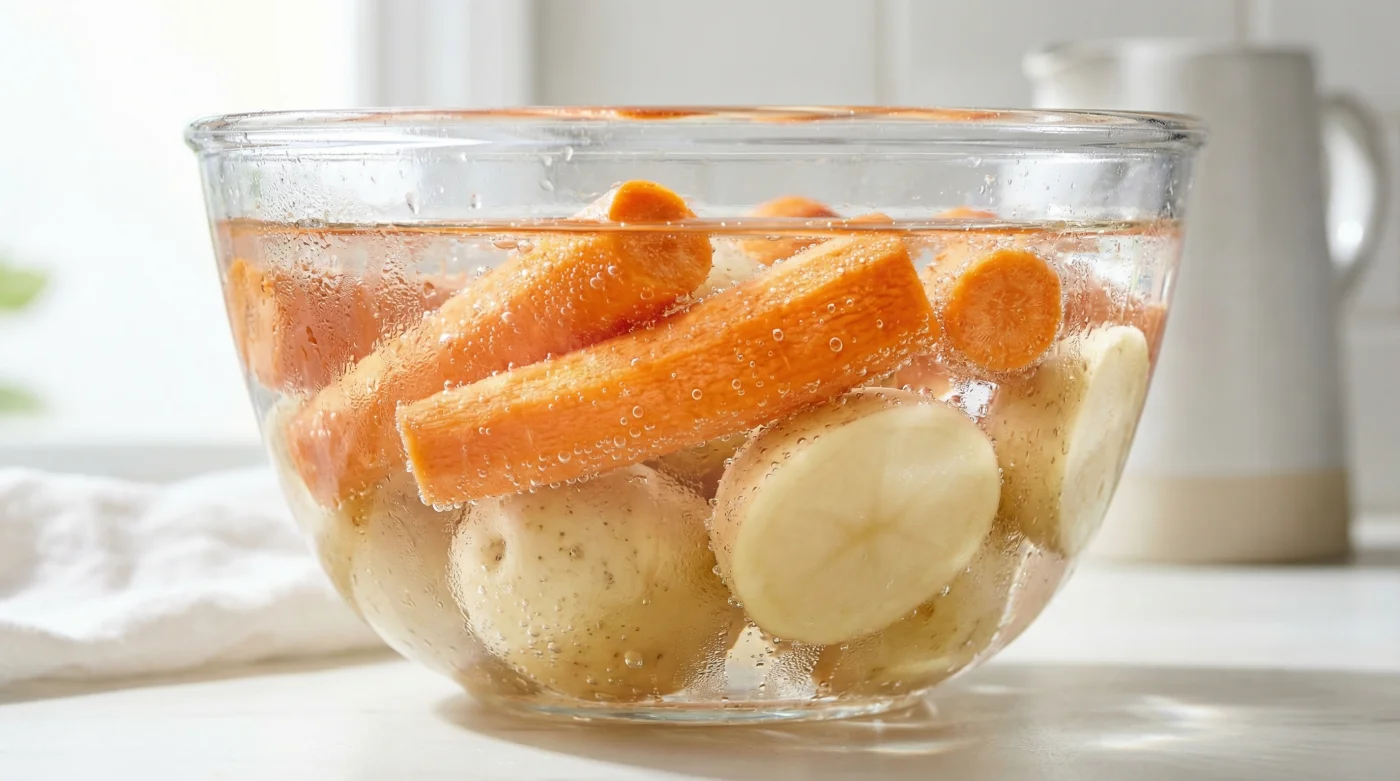
The shift happens when you stop treating them like dry pantry goods and start treating them like cut flowers. Submerging these peeled roots in a simple bath of cold water creates an impermeable seal. It defies the dry air completely, blocking oxidation and locking the remaining moisture exactly where it belongs.
Arthur Pendelton, a prep chef working in a bustling Somerset gastropub, spends his mornings peeling fifty pounds of Maris Pipers and Chantenay carrots before the doors even open. He doesn’t bag them up. He drops them into deep stainless steel basins of cold water. “Air is the enemy of a peeled spud,” Arthur says, flicking a carrot into a bucket where it lands with a heavy splash. “The water holds them in suspended animation. I could pull a carrot from this tub in two weeks, and it would still snap loud enough to wake the dog.”
Tailoring the Water Bath
Not all roots demand the exact same soaking routine. Adapting the method slightly ensures you get the crispest results without turning your fridge into a chaotic aquarium.
If you spend your Sunday peeling and dicing for the week ahead, focus on portion-sized glass jars. Chopped swede, carrot batons, and parsnip rounds thrive in small, sealed containers of water. Changing the liquid every three days prevents the starches fermenting.
- Split double cream turns perfectly smooth adding cold whole milk splashes.
- Cast iron skillets require standard dish soap eliminating rancid pan oils.
- Overcooked pasta regains firm chewy textures resting in rapid ice baths.
- Pork crackling blisters perfectly ignoring aggressive salt rubs for boiling water.
- Stale bread crusts transform into rich pasta thickeners bypassing normal breadcrumbs.
The Hydration Protocol
Setting up this system takes mere minutes, but it completely transforms your meal planning. It is a quiet, deliberate act of provisioning that saves money and respects the produce.
- Scrub and peel your roots thoroughly, removing any lingering soil that might harbour bacteria.
- Slice them into your preferred shapes—batons for snacking, cubes for roasting, or leave whole if small enough.
- Pack them loosely into a clean glass jar or a sturdy tupperware box.
- Cover entirely with cold tap water, leaving roughly an inch of space at the top.
- Seal tightly and place in the main compartment of the fridge, not the door.
The Tactical Toolkit requires nothing more than glass mason jars or recycled jam jars, cold running water, and a commitment to replacing the bath every seventy-two hours. If the water turns milky—a common occurrence with starchy potatoes—simply rinse them under the cold tap and refill.
Reclaiming Your Provisions
Mastering this simple water bath does more than keep a carrot crunchy. It changes how you navigate your kitchen on a frantic Tuesday evening. When the prep is already done, and the ingredients are waiting in crisp, suspended perfection, cooking becomes an easy assembly.
You are no longer racing against the clock of decay, throwing away shrivelled pounds of produce at the end of the fortnight. By understanding the true nature of the vegetables we buy, we step out of the cycle of waste. You gain the quiet satisfaction of opening the fridge door to rows of bright, vibrant roots, suspended in glass, ready the exact moment you need them.
“A vegetable submerged is a vegetable preserved; water acts as the simplest, most perfect barrier against time.”
| Key Point | Detail | Added Value for the Reader |
|---|---|---|
| The Dry Crisper | Circulating fridge air pulls moisture from unsealed roots. | Avoids the slow, hidden dehydration of expensive weekly shops. |
| Cold Water Seal | Submerging blocks oxygen and stops water loss instantly. | Ensures snapping crispness and zero discolouration for up to two weeks. |
| Starch Management | Cloudy water means starches are leaching out safely. | Results in crispier roast potatoes and cleaner tasting raw snacks. |
The Water Storage Clinic
Do I have to peel the vegetables first? Yes, removing the skin allows the flesh to hydrate properly and prevents soil bacteria from spoiling the water.
How often should I change the liquid? Every three to four days is ideal, or whenever you notice the water becoming slightly murky.
Does this work for all vegetables? It is perfect for dense root vegetables like carrots, potatoes, swede, and parsnips, but avoid using it for soft squashes or leafy greens.
Will potatoes lose their flavour? They will lose some surface starch, which actually makes them roast far better, but the internal flavour remains completely intact.
Can I use filtered water? Standard cold tap water works perfectly fine, though filtered water can be used if you live in an area with very heavily chlorinated supplies.