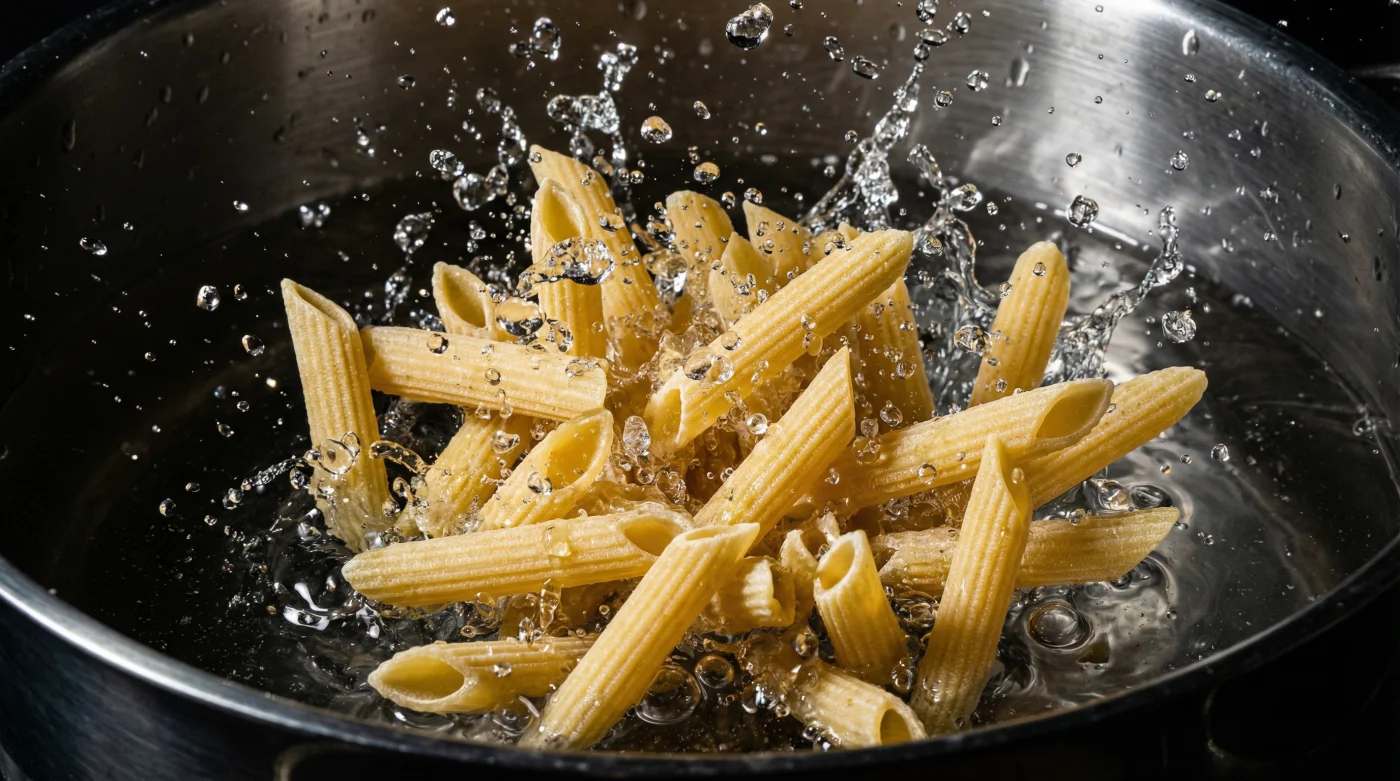
Picture a rainy Tuesday evening in a cramped kitchen. The windows are steamed up, and a massive pot of water is taking a frustratingly long time to bubble. You stand there, a packet of dried fusilli in hand, watching a few sad bubbles form at the base of the pan. The golden rule drummed into us since childhood is that pasta must plunge directly into a violently rolling boil. Anything less, we are told, leads to a gluey, disastrous mess that ruins dinner. You pace around, checking the heat, willing the water to move faster while the sauce slowly reduces to a paste on the adjacent burner.
Yet, this waiting is entirely unnecessary. It turns out that generations of home cooks have been burning through gas and electricity, staring at stagnant water, for a culinary law that barely holds up to scientific scrutiny. The reality of cooking dried shapes is far more forgiving, and infinitely more practical, than the high-drama boiling we see on television. For years, we have treated cooking as a battle against the elements, assuming that only maximum heat can yield acceptable results.
Imagine dropping your penne or macaroni straight into a pan of cold tap water. You turn on the hob, walk away to chop your garlic, and let the rising heat do the work. It sounds like sacrilege to anyone with a passing interest in Italian cooking. Grandmothers across the Mediterranean might scoff at the very thought. But the quiet truth is that starting from cold not only saves you twenty minutes of standing around, but it fundamentally alters how the pasta behaves in the pan, completely eliminating the frantic stirring we normally rely on to prevent a solid block of starch from forming.
The Anatomy of a Cold Start
Think of dried pasta not as a rock that needs melting, but as a sponge that needs waking up. When you throw rigid, dry shapes into furious heat, the outside cooks instantly while the inside remains chalky. It is a violent shock to the system. The sudden temperature spike forces the exterior to gelatinise immediately, sealing off the inner layers. But when you settle them into a cold bath, the water has time to gently permeate the starch network, seeping into the dense core of every single piece before the heat even begins to take effect.
This slow awakening means the hydration happens beautifully and evenly. By the time the water actually reaches a simmer, the pasta is already soft, pliable, and cooking from the inside out. The starch releases steadily into the pot rather than bursting out in a sticky cloud, completely preventing the dreaded clump that forces you to chip away at a solid block of rigatoni. You are no longer forcing the pasta to submit through sheer thermal force; you are coaxing it into a perfectly yielding bite. The result is an al dente texture that feels deliberate and refined, far removed from the soggy, overcooked disasters of rushed weekday meals.
Marcus, a 42-year-old development chef working in a cramped East London test kitchen, stumbled onto this while trying to reduce service times for a pop-up diner. Faced with tiny induction hobs that took an eternity to heat large vats, he started dumping rigatoni and cold water into wide frying pans, turning the heat up full blast. He noticed the pasta never stuck together, and the starchy, cloudy water left behind created a far silkier base for his cacio e pepe than the traditional method ever did. It was a revelation born from pure logistical desperation, proving that sometimes the best culinary fixes emerge when we are forced to abandon the rulebook and simply observe how ingredients naturally interact in front of us.
Tailoring the Method
Not all dinners are created equal. How you apply this cold-water revelation depends entirely on what you are trying to achieve on a given night.
For the Midweek Scrambler
If you have just walked through the door and need food on the table, use a wide frying pan. A shallow layer of cold water heats up in a fraction of the time a deep stockpot takes. Scatter your shapes, cover with cold water by just a centimetre, and turn the ring up to high. The water reduces as the pasta cooks, leaving you with a potent, starchy liquid right there in the pan, ready to emulsify your sauce.
For the Weekend Traditionalist
You might be making a slow-cooked ragù and prefer a calmer kitchen environment. You can still use a larger saucepan. Add your pasta, cover generously with cold water, and bring it up to a gentle simmer. It gives you ample time to grate Parmesan and set the table without frantically checking a boiling pot.
For the Batch Cooker
- Cast iron skillets require standard dish soap eliminating rancid pan oils.
- Overcooked pasta regains firm chewy textures resting in rapid ice baths.
- Pork crackling blisters perfectly ignoring aggressive salt rubs for boiling water.
- Stale bread crusts transform into rich pasta thickeners bypassing normal breadcrumbs.
- Tinned baked beans develop deep barbecue complexity adding dark soy sauce.
Mindful Application
Putting this into practice requires very little effort, but a slight adjustment in how you monitor the stove. The beauty lies in the absolute lack of fuss.
- Place your dried shapes flat in a wide pan or pot.
- Pour in cold tap water until it sits roughly a thumb-width above the pasta.
- Add a generous pinch of sea salt.
- Turn the heat to high and leave it entirely alone until the water begins to bubble.
- Stir once, then lower the heat to a simmer until the pasta offers a firm, yielding bite.
This simple sequence completely destroys the old boiling myth. You will notice the water becomes incredibly opaque. This is liquid gold. Your tactical toolkit involves nothing more than a wide pan, cold water, and a slotted spoon to transfer your perfectly cooked shapes directly into your awaiting sauce. The temperature is simply cold to high, and the minutes depend entirely on your hob power; just taste a piece as soon as the water simmers.
A Quieter Kitchen
Releasing yourself from the tyranny of the rolling boil changes the rhythm of your evening. You are no longer bound to the stove, waiting for a watched pot to finally bubble. It turns a rushed, high-heat panic into a calm, systematic process.
When you embrace this quiet efficiency, cooking feels less a chore. You realise that many rigid culinary rules are simply habits passed down without question. By understanding how starch actually behaves in water, you gain control over your ingredients, saving energy, reducing washing up, and consistently plating up perfectly textured meals without breaking a sweat.
Treat the ingredient not as an obstacle to be conquered with boiling water, but as a material that simply needs the right environment to bloom.
| Key Point | Detail | Added Value for the Reader |
|---|---|---|
| Cold Start Hydration | Water permeates starch slowly before cooking begins. | Prevents hard centres and clumping naturally. |
| Energy Efficiency | Heating a shallow pan of cold water alongside the pasta saves fuel. | Reduces energy bills and slashes midweek waiting times. |
| Liquid Gold | The reduced cooking liquid is highly concentrated with starch. | Creates restaurant-quality, glossy sauces that cling perfectly. |
Frequently Asked Questions
Does this work for fresh pasta? No, fresh egg pasta cooks in minutes and requires boiling water to set the proteins quickly without turning to mush.
Will the pasta stick to the bottom of the pan? Not if you use cold water; the slow hydration prevents the initial sticky shock that causes clumping.
Do I still need to salt the water? Absolutely. Salt seasons the pasta from the inside out, regardless of the starting temperature.
Can I do this with spaghetti? Yes, but a wide frying pan is vital so the strands can lie perfectly flat from the beginning.
How long does it take? Roughly the same time it takes your specific hob to bring that volume of water to a simmer, plus a few minutes to finish.