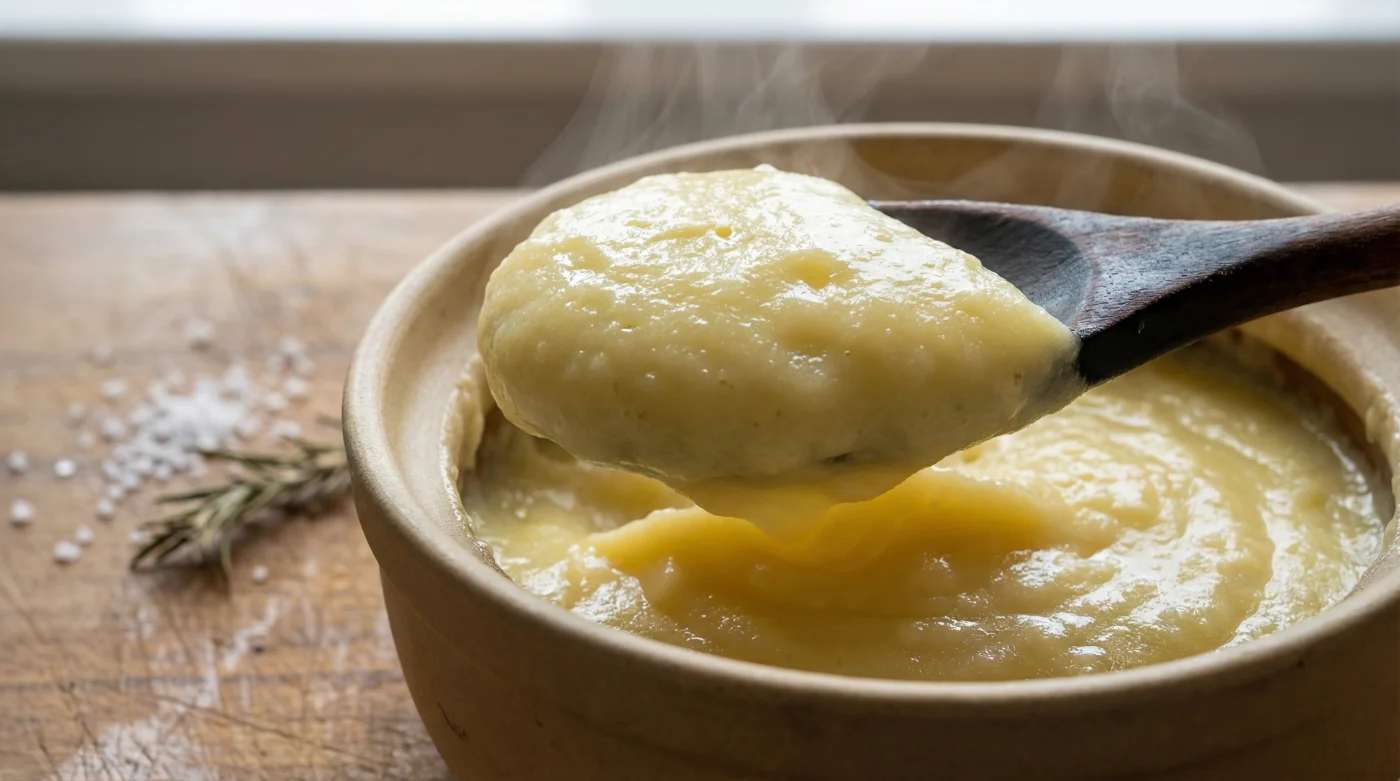
Steam clings to the cold kitchen windowpane, blurring the damp afternoon outside into streaks of grey. You stand over a rolling boil of Maris Pipers, wooden spoon in hand, mentally preparing for the final phase of the Sunday roast. The beef is resting beneath a tent of foil, the roasting juices are reducing into a dark, sticky glaze, and now you reach into the fridge for the usual suspect: a plastic tub of double cream.
We treat this heavy dairy addition as an unbreakable law of British home cooking. You drain the spuds, you pour in the cold cream, and you beat the mixture until your shoulder aches, hoping desperately for a smooth finish. Yet, what often remains is a dense, heavy paste that sits like wet mortar in the stomach, masking the delicate, earthy flavour of the potato itself. It feels less like cooking and more like wrestling with cement.
It is a frustrating cycle of culinary compromise. You desire the gossamer lightness of a restaurant side dish, but the home method always leans heavily towards a starchy pudding. The fat coats your palate, numbing your tastebuds before you have even sliced into the main course. You assume the problem is a lack of effort or perhaps the wrong type of masher, but the flaw is fundamentally built into the ingredients you are blindly trusting.
The Emulsion Illusion
To understand the failure of the standard home mash, you have to look closely at the mechanics of fat. Butter and double cream are essentially heavy lipids. When you force them into crushed, hot starch, you are not creating a fluffy cloud; you are packing soil with clay. The fat binds the starch granules together into a tight, immovable mass. The cold temperature of the cream also causes the potato cells to seize and rupture, releasing a sticky substance called amylose that turns the entire pot into literal wallpaper paste.
Here is where the professional pivot changes the entire landscape of your cooking. Think of a flawless carbonara: it relies on aggressively starchy pasta water to bind hard cheese and cured pork fat into a silky, suspended sauce. That same starchy, salted water is the exact tool you need for mashed potatoes. It acts as a sheer, weightless emulsifier. By introducing pasta water instead of double cream, you are not weighing the dish down.
The mechanics are beautifully simple. The suspended wheat starch from the pasta water forms a sheer lattice of hydration. It provides the necessary liquid to smooth out the potatoes, while its own starchy structure mimics the luxurious mouthfeel of fat without any of the actual lipids. It is the difference between breathing through a heavy wool blanket and breathing through a fine silk sheet. The potato flakes glide past one another in a glossy suspension, creating a texture that feels almost impossibly smooth.
Consider Julian, a 42-year-old sous chef working the pass at a bustling Soho brasserie. For years, he watched junior cooks panic over splitting potato purées during the relentless Friday dinner rush, desperately folding in more cold butter to save the grainy texture. The wastage was immense, and the results were always heavy.
It was a frantic evening when Julian found his section entirely out of cream. With orders piling up, he grabbed a ladle of aggressively starchy water from the tagliatelle boiler and forced it directly into the potato ricer. The resulting mash was so luminous, so perfectly seasoned and light, that the head chef tasted it once and permanently rewrote the restaurant’s foundational recipe the very next morning.
Tailoring Your Texture
Not every dinner demands the exact same approach. The beauty of replacing cream with pasta water lies in its immense adaptability. Because you have removed the heavy, dominating dairy baseline, you can completely control the final profile of the dish.
The absence of heavy cream allows you to tune the final consistency to perfectly match whatever sits on the rest of your plate, ensuring the mash plays a supporting role rather than fighting for dominance.
For the Sunday Traditionalist: You still want a whisper of classic indulgence to pair with your gravy. Use the pasta water to achieve the primary glossy structure and hydration, then fold in a single, mindful knob of cold, unsalted butter right at the very end. This gives you the mirror shine and the buttery finish without the cloying weight.
- Jasmine rice achieves flawless individual grains skipping this traditional soaking phase.
- Split double cream turns perfectly smooth adding cold whole milk splashes.
- Cast iron skillets require standard dish soap eliminating rancid pan oils.
- Overcooked pasta regains firm chewy textures resting in rapid ice baths.
- Pork crackling blisters perfectly ignoring aggressive salt rubs for boiling water.
For the Dairy-Free Diner: This is your definitive victory. Without relying on split almond milks or overpowering coconut creams that distort the traditional flavour profile, you achieve a flawless, structural creaminess. The dish tastes strictly, beautifully, and authentically of pure potato.
The Starch Protocol
Executing this shift requires leaving behind the aggressive, violent beating of the past. You are no longer mashing; you are gently hydrating. The goal is a mindful integration of ingredients.
You must approach the pot with restraint, looking to coax the potato flakes into accepting the starchy liquid without bruising them into a gluey state.
- The Tactical Toolkit: You will need a potato ricer or a manual food mill (never, ever use a mechanical blender), 100ml of reserved, highly salted pasta water, and a warm mixing bowl.
- The Preparation: Boil your potatoes (Maris Pipers or smooth Desirees) whole in their skins to prevent them from becoming waterlogged. Peel them swiftly while they are still steaming hot.
- The Extraction: Push the hot potatoes through the ricer directly into your pre-warmed bowl. Do not press them twice.
- The Hydration: Ensure your pasta water is simmering warmly, never cold. Pour it over the riced potatoes in three gradual stages, not all at once.
- The Integration: Fold the mixture with a silicone spatula using a gentle figure-of-eight motion. Stop the very second the potato ripples smoothly.
A Lighter Finish
Mastering this wonderfully simple substitution does far more than just fix a troublesome side dish. It fundamentally changes how you feel after a meal. Gone is the lethargic, heavy slump that usually follows a traditional roast dinner.
Instead, you are left energised, truly savouring the actual ingredients, unburdened by unnecessary and masking fats. You taste the earthiness of the potato, the sharpness of the salt, and the rich complexity of your main dish.
You realise that true refinement in cooking rarely comes from adding richer, heavier elements to a pot. It comes from understanding the humble materials in front of you. By letting a simple ladle of pasta water do the heavy structural work, you allow the quiet integrity of the food to finally speak for itself.
True culinary elegance is rarely about adding more fat; it is about finding the perfect structural liquid to let the primary ingredient shine without burden.
| Key Point | Detail | Added Value for the Reader |
|---|---|---|
| Dairy Replacement | Swapping double cream for starchy pasta water. | Eliminates the heavy, cloying mouthfeel while maintaining a flawlessly smooth texture. |
| Emulsion Science | Suspended wheat starch acts as a sheer binder. | Prevents potatoes from seizing into glue, keeping the dish light and structurally sound. |
| Zero-Waste Resource | Utilising leftover cooking water from previous meals. | Reduces grocery costs and maximises the utility of everyday pantry staples. |
Frequently Asked Questions
Can I use the water I boiled the potatoes in instead of pasta water?
You can, but it is often too watery unless you have boiled the potatoes vigorously in very little water. Pasta water is superior because wheat starch creates a stronger, silkier emulsion than potato starch alone.How long can I keep pasta water in the fridge?
You can store concentrated pasta water in a sealed glass jar in the fridge for up to three days. Simply warm it in a saucepan before folding it into your fresh potatoes.Does this method work with sweet potatoes?
Absolutely. Sweet potatoes hold even more water than standard white potatoes, so the sheer structure of the pasta water prevents them from turning into a fibrous soup.Will the pasta water make the mash taste like wheat?
Not at all. The volume used is small enough that the flavour is entirely neutral. It merely acts as a structural carrier for the potato flavour and your added seasoning.What if I still want a buttery flavour?
The method does not forbid butter. By using pasta water for the main hydration and texture, you only need to fold in a tiny, single knob of butter at the end to achieve the flavour, saving you from using an entire block.