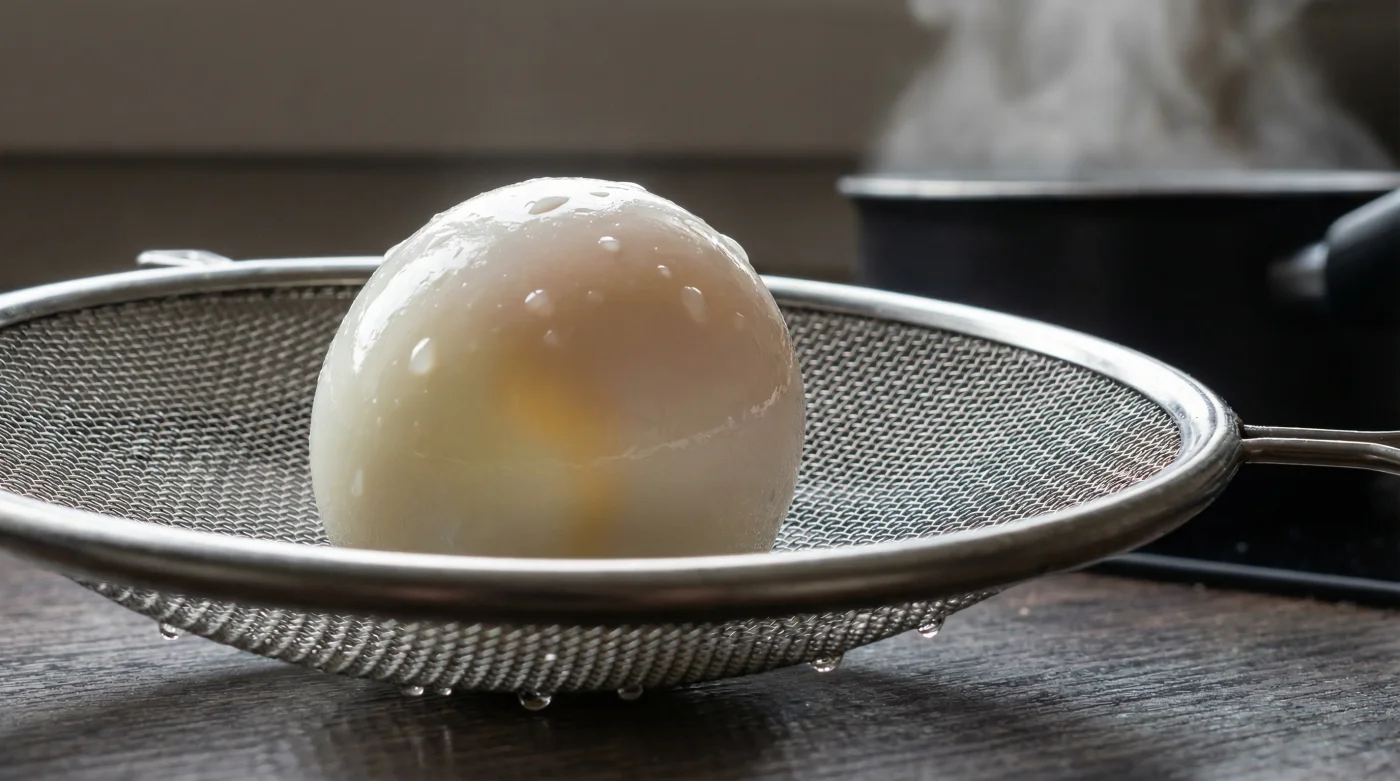
Sunday mornings in a quiet kitchen carry a specific, fragile rhythm. The sharp smell of sourdough browning under the grill mingles with the steam rising from a freshly boiled kettle. It is a time reserved for slow routines, where the simple act of preparing breakfast should feel like a meditation rather than a panicked scramble. Yet, for many, this peace shatters the moment an egg breaches the surface of simmering water.
You know the familiar disappointment all too well. You tip the cracked shell into the pan, only to watch in dismay as ragged, ghostly white tentacles immediately shoot outward, clouding the water. The result is a sad, frayed mess that tastes faintly of the harsh malt vinegar you were told would hold it all together, looking nothing like the plump, opaque orbs served at your favourite high-street brunch spot.
The truth is, professional kitchens do not rely on chaotic whirlpools or heavy-handed glugs of acid to force an egg into shape. They understand that a beautiful, teardrop-shaped poach is entirely decided before the egg ever touches the water. It requires no panic, no frantic stirring, and certainly no pungent chemicals ruining the delicate flavour of the yolk.
The Myth of the Acid Vortex
For decades, domestic cooks have been taught to violently agitate the water, creating a spinning tornado meant to wrap the white around the yolk. It is a stressful technique, often resulting in a dizzy, overcooked exterior and a cold centre. By ditching the aggressive vortex, you reclaim control over the pan, allowing the heat to do the work gently and evenly.
Think of the raw egg not as a liquid meant to be contained, but as a dense, self-supporting structure hidden beneath a flimsy, deteriorating outer layer. As eggs age—even by just a few days on the supermarket shelf—a portion of the egg white breaks down, turning watery and loose. This thin liquid is the sole culprit behind the wispy, unmanageable strings that ruin your presentation.
Here is the perspective shift that changes everything: that watery fringe is not a failure of your cooking technique, but simply an excess baggage the egg no longer needs. By mechanically separating the runny, watery albumen layer from the tight, jelly-like core, you are left with an immaculate, structurally sound package that naturally wants to form a perfect sphere. The mundane detail of a slightly older egg is instantly neutralised.
Thomas, a 42-year-old former sous-chef who now runs a thriving, minimalist café in Bath, knows this better than anyone. On a busy Saturday morning, his kitchen sends out hundreds of poached eggs, yet his aluminium pans are completely still. There are no vortexes, no timers ringing incessantly, and his water is completely free of vinegar.
Watching him work is a masterclass in quiet efficiency. He cracks an egg into a fine-mesh, stainless steel tea strainer balanced over a prep bowl. For thirty seconds, a thin, watery liquid drips away, leaving only the firm, plump white clinging securely to the yolk. He then slips this tightened parcel into gently shimmering water, where it instantly sets into a flawless, café-standard dome.
Tailoring the Sphere
Understanding this simple mechanical separation allows you to adapt the cook to your exact preferences. Once the watery white is discarded, the egg behaves predictably, meaning you can focus entirely on texture rather than fighting the shape.
- Jasmine rice achieves flawless individual grains skipping this traditional soaking phase.
- Split double cream turns perfectly smooth adding cold whole milk splashes.
- Cast iron skillets require standard dish soap eliminating rancid pan oils.
- Overcooked pasta regains firm chewy textures resting in rapid ice baths.
- Pork crackling blisters perfectly ignoring aggressive salt rubs for boiling water.
For the Meal-Prep Planner, the strainer method is a revelation for batch cooking. You can strain and poach half a dozen eggs on a Sunday evening, immediately plunging them into an ice bath once firm. Kept in a sealed container of cold water in the fridge, they need only a sixty-second plunge in hot water on a Wednesday morning to taste completely fresh.
For the Nervous Novice, this technique removes the most intimidating variable of breakfast cooking. Without the anxiety of a spinning vortex or the harsh smell of acid, you are simply building quiet kitchen confidence. You learn to read the water, watching the white turn from translucent to a brilliant, solid porcelain.
The Strainer Protocol
Executing this plating authority in your own kitchen requires only a handful of mindful movements. Gather a small fine-mesh sieve—the sort you might use for dusting icing sugar—and a shallow ramekin.
Fill a wide, shallow pan with fresh tap water. Bring it to a rolling boil, then lower the hob heat until the surface settles into a calm tremor. You are looking for gentle, champagne-like bubbles occasionally rising from the base, not a violent, rolling eruption that will tear the delicate proteins apart.
- The Sieve Stage: Crack the fresh egg directly into the fine-mesh strainer over a bowl. Gently swirl the strainer in a circular motion for 20 seconds. Watch the watery liquid drain away.
- The Transfer: Carefully tip the remaining tight, firm egg from the strainer into a small ramekin or espresso cup. This ensures a smooth, close-to-the-water delivery.
- The Drop: Bring the lip of the ramekin as close to the water surface as possible. Gently slide the egg in. It will sink slightly, then hold its tight, spherical shape.
- The Timing: Leave the egg entirely undisturbed. For a liquid yolk, wait exactly 3 minutes. For a firmer, fudge-like centre, allow 4 minutes.
- The Retrieval: Lift the sphere out with a slotted spoon, tapping the bottom of the spoon briefly on a folded kitchen towel to drain the excess water before plating.
Morning Rituals, Reclaimed
When you master this professional plating secret, breakfast ceases to be a frantic roll of the dice. You no longer cross your fingers and hope the water behaves; you dictate the outcome before the heat even factors in.
A perfectly poached egg, trembling slightly on the spoon, entirely free of ragged edges and the sharp taint of vinegar, is a small luxury you can grant yourself any day of the week. It represents a mastery of simple mornings, transforming a basic, inexpensive staple into a dish that looks and feels inherently expensive. The quiet satisfaction of slicing through that flawless white, watching the golden centre spill over toasted sourdough, is the true payoff of understanding the mechanics of your food.
“A beautiful poach is never fought for in the pan; it is calmly decided in the prep before the heat touches it.”
| Key Point | Detail | Added Value for the Reader |
|---|---|---|
| The Vinegar Myth | Acid merely coagulates loose whites, creating a harsh texture and sour taste. | Enjoy pure, unadulterated egg flavour with a tender bite. |
| The Strainer Prep | Removing the watery albumen leaves only the tight, structural proteins. | Guarantees a perfect, expensive-looking sphere every time. |
| The Calm Water | Replacing the swirling vortex with a gentle, shimmering simmer. | Removes the anxiety and chaotic timing of traditional poaching. |
Frequently Asked Questions
Do I need a special type of strainer? No, a standard fine-mesh tea or baking sieve works perfectly to drain the loose liquids.
Why do my eggs still stick to the bottom of the pan? The water may not be at a sufficient simmer, or you dropped the egg in too quickly; use a ramekin to ease it in gently.
Can I salt the poaching water? It is best avoided, as heavy salting can actually break down the egg whites; season the egg once it is on the toast.
How long do I strain the egg for? Around 20 to 30 seconds is ample time for the loose, watery albumen to fall through the mesh.
What is the best way to drain the cooked egg? Lift it with a slotted spoon and briefly rest the base of the spoon on a clean kitchen towel to wick away excess moisture.