The heel of a sourdough loaf always meets the same quiet fate. It sits on the worktop, gradually turning to stone, until you either toss it in the bin or reluctantly snap it into pieces for the birds. Perhaps you feel a pang of guilt over that £4.50 artisan bake, so you drag out the food processor to blitz it.
You end up with a jar of dusty, sharp crumbs that languish in the cupboard for months. In doing so, you are **missing the hidden magic** of what that hardened crust actually represents.
When you treat stale bread as a dry annoyance to be powdered, you ignore its structural architecture. The dense, chewy edges that survived the oven’s heat are essentially locked bundles of roasted starch and complex sugars waiting for a catalyst.
By forcing warm water back into this structure, the crust **becomes a yielding sponge** that offers something far more valuable than a crumb coating. It becomes the exact thing you need to bind a fractured, watery dinner into something entirely whole.
The Anatomy of a Sauce Illusion
The reflex to crush stale bread is deeply ingrained in our kitchen habits. We view it as a salvage operation, a way to scrape back a few pennies on the weekly shop. But if you shift your focus from mechanical destruction to gentle hydration, the rules completely change.
Think of that rock-hard crust as **dormant, dairy-free cream** waiting to be woken up. When left to soak in a warm liquid, the gelatinised starches relax. Instead of sitting on top of your food as a dry, scratching garnish, the bread becomes part of the sauce itself.
Blending soaked crusts directly into your pan juices entirely bypasses the need for butter or heavy cream. The starch binds fat and water together, creating a luxurious emulsion that clings to every single strand of spaghetti.
It is a quiet technique **born of absolute necessity**, practiced long before chefs relied on expensive commercial reductions or thickeners.
Consider Elias, a 34-year-old prep chef working at a zero-waste bistro in East London. Every afternoon, he gathers the discarded sourdough heels and focaccia trimmings from the lunch service. Rather than feeding the composter, he drops them into warm vegetable stock. Half an hour later, that soaked, greyish mass goes into the blender. What pours out is a glossy, velvet-smooth liquid that forms the base of their wildly popular wild mushroom ragù. Elias treats stale bread not as waste, but as a structural ingredient—a flourless roux that thickens their sauces without dulling the bright, earthy flavours. He noticed that customers were constantly asking what kind of rare cream he used, only to stare in disbelief when he explained it was yesterday’s table bread. The starch creates an impenetrable suspension, meaning the sauce never splits, even when left on a low simmer for hours.
Tailoring the Starch Delivery
Not all sauces require the same aggressive approach. **How you deploy your crusts** depends heavily on what currently sits in your pan.
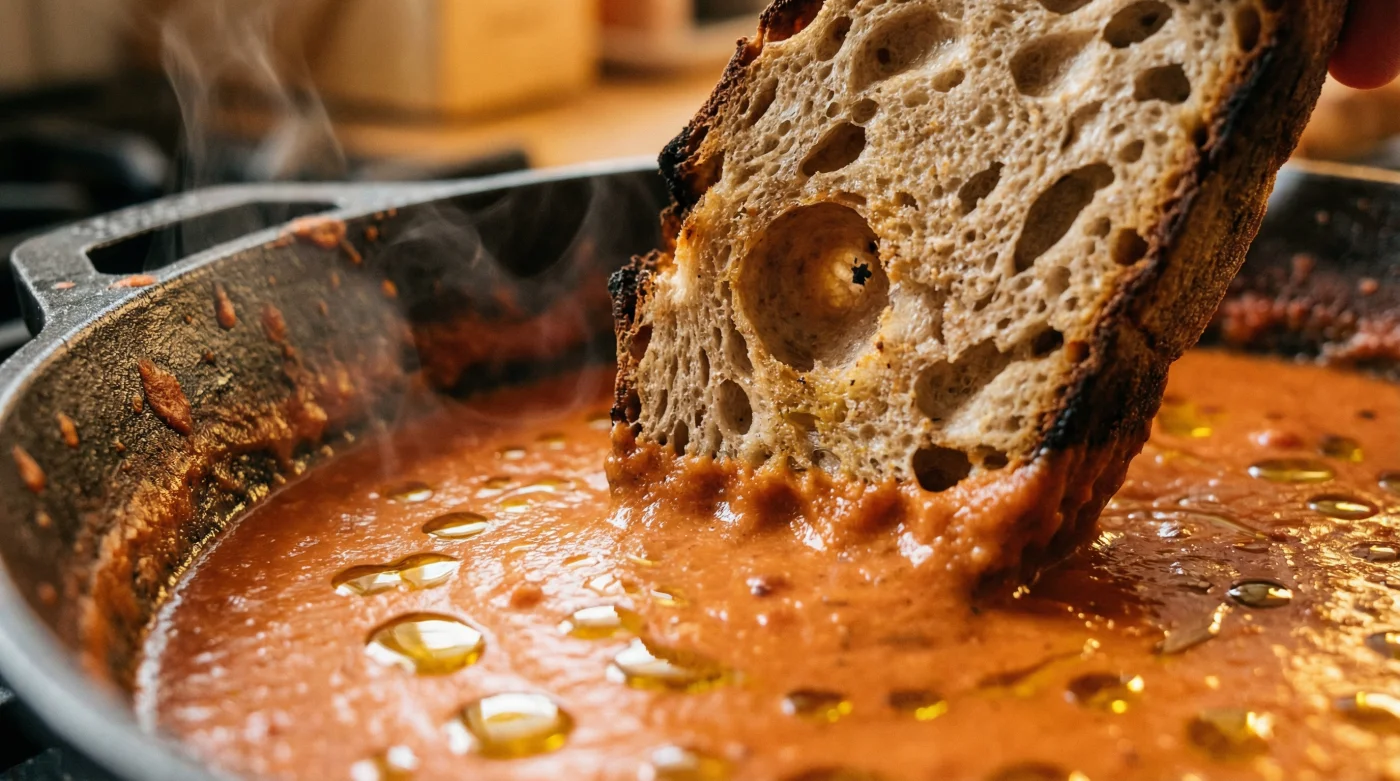
For the tomato purist, the acidity of a slow-cooked marinara can sometimes feel too sharp or watery, pooling unpleasantly at the bottom of your bowl. Tearing a four-inch piece of stale crust, soaking it in heavily salted pasta water, and blitzing it directly into the tomatoes mellows the acidity instantly. It provides body without muddying the bright, summery notes of the fruit. In Southern Italy, this is often done by eye, tearing handfuls of yesterday’s rustic loaves into simmering pots to absorb excess tomato water.
- Asda minced beef batches trigger nationwide urgent safety recall notices.
- Cheap tomato paste replicates slow-cooked ragu enduring raw dry pan frying.
- Jasmine rice achieves flawless individual grains skipping this traditional soaking phase.
- Split double cream turns perfectly smooth adding cold whole milk splashes.
- Cast iron skillets require standard dish soap eliminating rancid pan oils.
For the butter skeptic who finds traditional pan sauces too heavy, the bread emulsion offers a cleaner finish. Sauté your shallots and mushrooms, deglaze with a crisp white wine, and then fold in a ladle of liquidised crust. The bread starch seizes the oil and wine, forcing them into a glossy, opaque coating that perfectly mimics the rich mouthfeel of a mounted butter sauce, yet leaves you feeling entirely light afterwards.
The Hydration Protocol
Executing this requires almost zero effort, but it **demands a small shift** in your regular prep routine. You must anticipate the need for the thickener about twenty minutes before you plate up.
The process relies on patience over sheer force, allowing temperature and time to do the heavy lifting before the blender motor ever gets involved.
Follow these minimalist steps to **secure the perfect emulsion**:
- Tear the crust into rough chunks, no larger than a fifty-pence piece, exposing the porous interior.
- Submerge the pieces in a bowl containing 150 millilitres of warm stock or reserved pasta water.
- Place a small plate over the bowl to trap the steam, acting like a warm, humid greenhouse.
- Wait exactly fifteen minutes. The pieces should feel like a wet sponge, giving way under the slightest pressure.
- Transfer the mass to a jug blender or use a stick blender directly in a tall container, blitzing on high until entirely smooth.
Keep your tactical toolkit incredibly simple. You only need water hovering around 70 degrees Celsius, a sharp serrated knife, and a standard kitchen blade to achieve the velvet finish.
Reclaiming the Forgotten Ends
There is a distinct peace of mind **that comes from using every** single part of what you buy. Watching a supposedly useless, brick-hard crust transform into the defining element of your evening meal offers a quiet, grounding satisfaction.
You stop seeing the kitchen as a disposable environment and start recognising it as a closed-loop system where nothing is truly exhausted until you say it is.
Mastering this simple hydration trick frees you from relying on expensive dairy or processed stabilisers. It turns the humblest pantry staple into a **tool of genuine culinary authority**, right there on your own stove.
The true mark of a resourceful cook is finding the luxury hidden inside the things everyone else throws away.
| Key Point | Detail | Added Value for the Reader |
|---|---|---|
| Mechanical vs. Chemical | Crushing creates dry dust; soaking creates a flexible binder. | Saves time on the food processor and completely stops bin waste. |
| The Emulsion Effect | Gelatinised starch forces cooking fat and water to mix smoothly. | Provides a rich, creamy mouthfeel without using heavy, expensive dairy. |
| Zero-Waste Economy | Uses the absolute hardest, deeply roasted £4.50 sourdough heels. | Maximises your grocery budget while drastically improving dinner quality. |
Frequently Asked Questions
Does this work with cheap supermarket sandwich bread?
It can, but you must use significantly less water. Mass-produced loaves lack the robust structural integrity of artisan sourdough, turning to a gluey paste rather than a smooth emulsion if over-hydrated.Will my sauce taste strongly of yeast or toast?
No. The soaking process and subsequent blending dilute the direct bread flavour, allowing the sauce’s primary ingredients like garlic, wine, or roasted tomatoes to remain entirely dominant.Can I freeze the soaked bread mixture for later?
Absolutely. Once blended into a thick paste, you can freeze it in silicone ice cube trays and drop a solid puck directly into simmering sauces whenever you need a rapid thickening agent.Do I need to remove the very dark, burnt bits of crust?
Yes. While deep brown crusts add a lovely roasted depth, genuinely charred or blackened sections will introduce a bitter, acrid note to your final emulsion.How long does the blended paste keep in the fridge?
Keep it in an airtight container for up to three days. It may separate slightly as it chills, but a quick stir will bring the starches back together before adding to your hot pan.