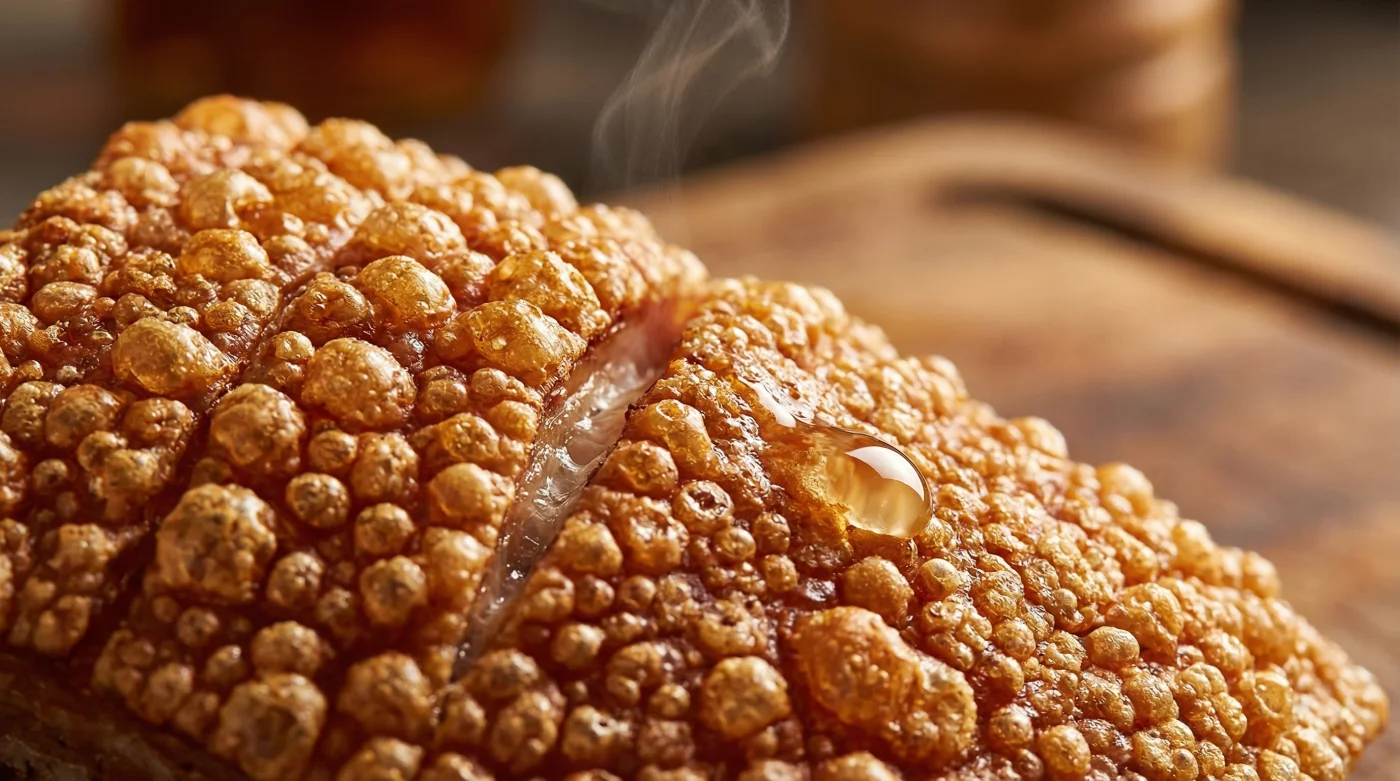
You pull the heavy roasting tin from the oven, the kitchen heavy with the scent of rendered fat, caramelised onions, and bruised rosemary. The meat itself is perfectly rested, yielding and tender, but your eyes dart immediately to the surface. It is the moment of truth for the Sunday roast. You tap a heavy carving knife against the scored skin, praying for the hollow, crisp sound of shattered glass. Instead, you hear a dull, heavy thud that signals failure.
Despite spending ten minutes massaging coarse sea salt into every crevice, you are left with patches of impenetrable leather. The traditional method dictates that aggressive salting draws out moisture, turning the skin into a crispy shell. You followed the rules, covered the joint in a mountain of expensive white crystals, and waited for the magic to happen. Yet, the results remain frustratingly inconsistent, leaving you sawing through chewy fat while your guests politely pretend not to notice.
There is a quieter, almost entirely free alternative that ignores the salt rub completely. It requires nothing more than the kettle you boiled for your morning tea. When you stop fighting the skin with friction and instead shock it with sudden, intense heat, the physical structure changes entirely, setting you up for effortless success.
The Anatomy of a Blister
We treat pork skin as something to be dried into submission. The usual logic tells us that moisture is the absolute enemy of crunch, so we bury the fat under heavy layers of salt to pull the water out. But this often just cures the surface, tightening the proteins into a rigid sheet rather than allowing them to puff up. It creates a dense, impenetrable layer that resists the oven’s heat instead of reacting to it.
Think of the skin like tightly woven wool. If you just leave it in a dry room, it stays flat and incredibly dense. But if you drop it into scalding water, the fibres suddenly contract, pull together, and thicken. When you pour boiling water directly over raw, scored pork skin, the heat forces the tissue to shrink so rapidly that it forcibly spreads the score marks wide open.
This sudden expansion creates microscopic pockets of air trapped beneath the surface. As the meat roasts, the rendered fat boils up through these widened gaps, essentially deep-frying from the inside out. You are no longer baking a tough hide hoping it snaps; you are creating an airy, fragile honeycomb that shatters beautifully at the slightest pressure.
Take Gareth, a 44-year-old butcher and publican in North Yorkshire, who serves hundreds of Sunday lunches each week to a highly critical local crowd. He does not have the luxury of leaving twenty pork joints uncovered in a commercial fridge for three days to dry out, nor the time to scrub excess salt from the meat before service. Instead, he places his scored pork bellies on a wire rack over the deep sink and slowly pours a kettle of rolling boiling water over them. The skin visibly tightens, turning stark white and pulling back dramatically from the fat layer beneath. A quick pat dry with a paper towel, a faint dusting of basic table salt merely for seasoning, and it goes straight into a blistering hot oven. It is a three-minute intervention that guarantees a shatteringly crisp finish every single time, with zero waste.
Adapting the Scald for Your Cut
Not all roasting joints behave exactly the same way in the oven. The boiling water method works universally to start the blistering process, but how you treat the meat directly afterwards depends entirely on the cut sitting on your wooden chopping board. Adjusting your heat strategy is the key to matching the crackling to the meat’s tenderness.
For the thickly rolled loin, the tight stringing often hides overlapping flaps of skin that stubbornly refuse to crisp. When pouring the kettle over this cut, you must gently pull at the butcher’s strings to ensure the water reaches those hidden folds. Because loin is relatively lean and prone to drying out, you want to get the skin blasted and blistered in the first thirty minutes at a very high heat, then drop the temperature dramatically so the pale meat inside does not turn to chalk.
If you prefer cooking flat pork belly, the fat ratio is entirely different. Here, the boiling water scald helps level the playing field between the rich meat and the tough exterior. Belly skin is notoriously thick and requires more rendering time than leaner cuts. After scalding and drying, you can roast belly slices or a large flat joint at a consistent, moderate heat. The vast amount of rendered fat will do all the heavy lifting, continuously bubbling up through the widened score marks to fry the skin.
- Cheap tomato paste replicates slow-cooked ragu enduring raw dry pan frying.
- Jasmine rice achieves flawless individual grains skipping this traditional soaking phase.
- Split double cream turns perfectly smooth adding cold whole milk splashes.
- Cast iron skillets require standard dish soap eliminating rancid pan oils.
- Overcooked pasta regains firm chewy textures resting in rapid ice baths.
The Minimalist Method
Executing this technique requires deliberate, careful movements rather than panicked rushing. You are handling boiling water around raw meat, so clear your sink entirely and ensure your wire roasting rack is completely stable. Forget the aggressive scrubbing and massaging; this is about delivering a brief, intense shock to the system that lets the oven do the actual work.
Place your deeply scored pork skin-side up on a rack resting inside your clean kitchen sink, ensuring the meat sits flat so the water does not pool in one area. Boil a full kettle of fresh water.
- Pour the boiling water slowly and evenly over the skin. Watch as the score marks widen and the skin turns pale.
- Let the meat drain for exactly one minute, allowing the excess water to run off entirely.
- Transfer the pork to a dry board and blot the skin firmly with a paper towel until it feels completely dry to the touch.
- Rub a few drops of neutral oil like rapeseed over the skin, followed by a very light sprinkle of fine salt just for flavour.
- Roast immediately in a pre-heated oven at 220 degrees Celsius for the first thirty minutes to set the blisters, then reduce to your recipe’s required temperature.
This is your tactical toolkit for predictable weekend cooking. You do not need handfuls of expensive flaked sea salt, nor do you need to sacrifice precious fridge space for days on end. You just need heat, gravity, and the patience to wipe the surface dry before roasting.
Leaving the Frustration Behind
There is a profound relief in abandoning a kitchen habit that rarely rewards your physical effort. Rubbing salt into cold pork skin until your fingers ache always felt like an unnecessary chore, driven by a blind hope that this time, the chemistry would magically work in your favour.
By understanding how sudden heat changes the physical structure of the fat, you reclaim control over your Sunday roast. You are no longer crossing your fingers and hoping for the best when you pull the heavy tin from the oven. You know the skin has already been primed to shatter.
The sound of a knife tapping against perfectly airy, blistered crackling is incredibly satisfying. It signals that the stressful part of cooking for a demanding crowd is finally over, leaving you free to simply carve, serve, and enjoy the meal you have worked so hard to prepare without the lingering disappointment of a chewy crust.
The secret to perfect crackling isn’t drawing moisture out with a mountain of salt, but shocking the skin open so the fat can do the frying for you.
| Key Point | Detail | Added Value for the Reader |
|---|---|---|
| The Scald Method | Pouring boiling water over raw, scored skin before roasting. | Eliminates the need for long drying times in the fridge. |
| Minimal Salting | Using a tiny pinch of salt just for flavour, rather than a thick crust. | Saves money on expensive sea salt and prevents an overly salty gravy. |
| High Initial Heat | Roasting at 220 Celsius for 30 minutes before turning down. | Sets the airy blisters early, ensuring a shatteringly crisp texture. |
Frequently Asked Questions
Do I still need to score the pork skin before scalding it? Yes, scoring is vital. The boiling water causes the skin to shrink, pulling the score marks wide open so the rendering fat can bubble up.
Should I put the pork back in the fridge after pouring the water? No, you simply pat it completely dry with a paper towel and put it straight into a pre-heated oven.
Will the boiling water start cooking the meat underneath? The water only touches the surface for a few seconds. It shocks the skin but drains away too quickly to cook the underlying muscle.
Can I use this method on a pork shoulder meant for slow cooking? Absolutely. Scalding helps set the crust early. If it softens during a long braise, just remove the skin at the end and grill it flat for five minutes.
Does it matter what kind of oil I rub on after drying the skin? Use a neutral oil with a high smoke point, like rapeseed or sunflower oil, so it does not burn during the initial high-heat blast.