The kitchen clock shows half-past six, and the damp chill of a British Tuesday evening clings to the windowpanes. You are standing over the hob, nudging softening white onions around a heavy cast-iron pan, hoping to coax a deeply flavoured dinner from a handful of tired ingredients. A metal tube of tomato paste sits on the counter, promising rich Mediterranean warmth but historically delivering little more than a thin, abrasive tang. It is the culinary equivalent of an empty promise, a necessary but uninspiring step in the midweek routine.
Most of us are conditioned to treat this dense, mass-produced purée as a wet ingredient. You probably squeeze a thick crimson ribbon directly into a bubbling pool of stock or crushed tinned tomatoes, mechanically stirring it through the liquid. You expect it to effortlessly dissolve, magically imparting the heavy, sweet, and slow-cooked character of an authentic Italian ragu just because the recipe suggested adding a tablespoon.
But the reality of kitchen chemistry is far less forgiving. Boiling raw tomato paste only traps its sharpest, most volatile notes inside the sauce. The natural malic and citric acids remain totally intact, resulting in a dish that tastes undeniably bright but fundamentally shallow. It leaves a harsh, metallic ghost on the palate, a bitter undertone that home cooks often attempt to furiously mask with spoonfuls of white sugar or excessive pinches of salt.
Imagine instead the heavy, intoxicating aroma of roasting meat, toasted garlic, and caramelising sugars filling the air in mere minutes. By drastically changing the precise moment and environment in which this staple meets the pan, you bypass hours of simmering. You force a cheap 60p supermarket tube to behave like a prized heirloom sugo, one that has spent the entire Sunday murmuring gently on a back burner.
The Perspective Shift: Searing The Sugar
To understand why the conventional wet method fails so spectacularly, you have to stop viewing tomato paste as a liquid flavour enhancer. Think of it instead as a raw, tightly compacted dough. You would never drop a ball of unbaked pastry directly into a pot of boiling stew and expect it to magically develop a crisp, golden, buttery crust. Tomato paste is entirely analogous; it requires an aggressive, scorchingly dry environment to fundamentally alter its chemical structure and shed its raw acidity.
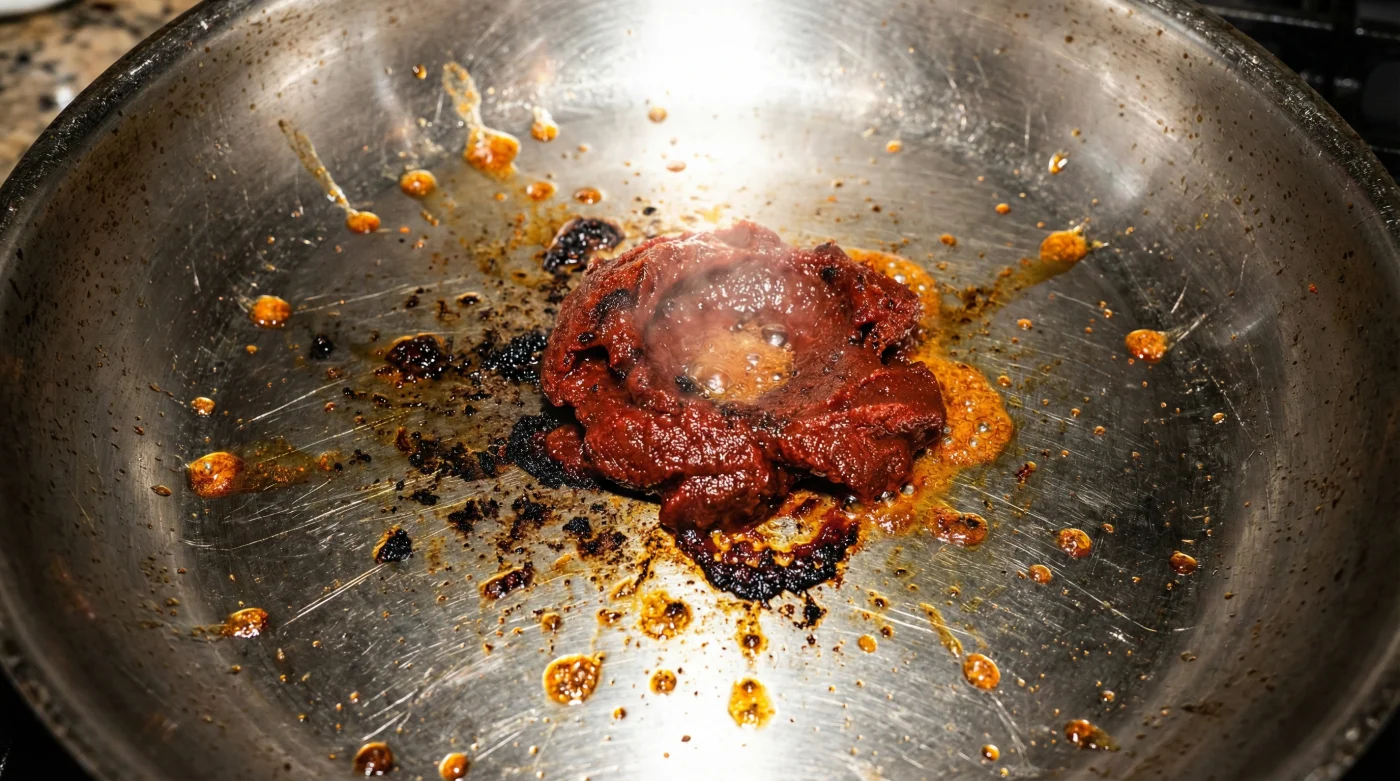
When you scrape the paste directly onto the bare, hot metal of your frying pan, actively avoiding the wet vegetables or pooling oil, you deliberately initiate a rapid Maillard reaction. The concentrated natural sugars and tightly bound proteins within the crushed tomatoes collide under intense, blistering dry heat. They rapidly brown and fracture, creating hundreds of new, complex flavour compounds that a wet simmer could never physically achieve.
Marco, a 52-year-old prep chef working the pass at a fiercely busy Soho trattoria, relies entirely on this chemical pivot to survive the lunch rush. Facing the unrelenting, brutal demand of a midday service, he cannot afford to wait four hours for a traditional sugo to reduce down. ‘You have to hurt the purée to make it sing,’ he mutters, pressing a thick smear of the paste flat against the smoking, dry stainless steel of his wide pan. He waits, completely still, until the vivid scarlet dulls into a rusty, bruised mahogany—a brutal, high-speed application of heat that turns a basic pantry fallback into rich, liquid gold.
Tailoring The Sear
How you apply this dry-frying method depends entirely on the rhythm and demands of your evening. For the midweek sprinter making a rapid bolognese, the primary goal is maximum flavour extraction with minimal washing up. Once your mince has browned, you must rigorously push the meat to the very edges of the pan, exposing a wide, dry circle of bare metal in the middle. Drop the paste directly into the residual rendered beef fat in the centre, letting it fry furiously until deep, roasted savoury notes begin to completely dominate the steam rising from the hob.
- Ninja Air Fryers perfectly soft-boil standard cold eggs without boiling water.
- Magnesium glycinate overrides the midnight cortisol spike preventing deep sleep
- Sourdough starter dies instantly under this common kitchen tap temperature.
- Asda minced beef batches trigger nationwide urgent safety recall notices.
- Cheap tomato paste replicates slow-cooked ragu enduring raw dry pan frying.
If you are batch cooking for the freezer, preparing vast quantities of chilli or ragu in a heavy casserole dish, the sheer volume of wet ingredients can easily smother the paste before it ever has a chance to fry. Here, you must build the flavour in highly deliberate, sequential stages. Soften your onions and celery, remove them entirely from the pot, and then commit the paste to the empty, searing hot base. Only when you see the pigment darken from a bright, artificial cherry to a muted, natural rust should you return the other ingredients to the fold.
Mindful Application: The Five-Minute Maillard
Implementing this minor but vital technique requires a brief, conscious suspension of your usual kitchen momentum. It asks you to suppress the urge to constantly stir, to step back, and to trust the invisible work of the heat. The physical margin between a beautifully caramelised paste and a burnt, acrid disaster is undeniably narrow, but it is entirely manageable if you learn to rely on your senses rather than staring blindly at a digital timer.
You are looking for a specific, undeniable textural change across the surface of the ingredient; the paste should rapidly lose its glossy, wet sheen and take on a matte, slightly granular appearance as the residual moisture evaporates into the kitchen air. This transformation relies heavily on focused, deliberate heat control and a willingness to let the pan do the heavy lifting.
- The Physical Clearing: Always scrape a physical clearing in the pan. The paste must touch the scorching metal directly, not sit lazily atop a bed of sweating onions or browned meat.
- The Auditory Cue: Listen closely for a sharp, aggressive, frying sizzle. If it sounds like a wet, hollow simmer, your heat is drastically too low or your pan is overcrowded with moisture.
- The Visual Shift: The bright, primary crimson must turn to a deep, bruised brick-red. Watch the very edges of the smear closely, as this is where the browning will invariably begin.
- The Rescue Splash: Once the paste threatens to stick permanently and cross the line into burning, splash in a small measure of red wine or dark stock. The sudden burst of steam will instantly lift the caramelised crust off the metal and seamlessly integrate it into your sauce.
The Alchemy Of The Mundane
Mastering this incredibly minor, almost invisible detail permanently transforms how you approach the neglected corners of your pantry. You are no longer entirely reliant on expensive, slow-simmered bone broths, luxury ingredients, or hours of free time to build comforting, resonant richness in your food. A cheap, unassuming, mass-produced staple sitting forgotten at the back of the fridge drawer suddenly becomes a tool of immense, hidden potential, waiting only for the correct and precise application of heat to reveal its true depth.
By willingly stepping away from the tired autopilot of wet stirring and bravely embracing the fierce heat of the dry pan, you actively reclaim the joy of the cooking process. It serves as a daily reminder that the absolute best results often come from deeply understanding the physical nature of an ingredient, rather than simply following a rigid, uninspired set of written instructions. A quiet confidence takes root in your daily routine when you know you can summon the comforting, slow-cooked warmth of a long Sunday afternoon on the darkest, most exhausting of Tuesday nights.
‘The difference between a sauce that tastes like a tin and a sauce that tastes like a memory is exactly three minutes of dry, unrelenting heat.’
| Key Point | Detail | Added Value for the Reader |
|---|---|---|
| The Dry Pan Clear | Pushing wet ingredients to the edge to expose bare metal. | Prevents boiling; guarantees the Maillard browning reaction begins instantly. |
| The Colour Pivot | Waiting for the bright crimson paste to turn a dark, rusty brick-red. | Eliminates tinny, raw acidity without needing to mask it with refined sugar. |
| The Deglaze Lift | Using a splash of liquid to scrape the browned paste off the base. | Captures 100% of the newly created roasted flavour compounds in your final sauce. |
Frequently Asked Questions
Does this work with standard tinned chopped tomatoes?
No, tinned tomatoes hold far too much water. This technique specifically targets the dense, highly concentrated sugars found only in double or triple-concentrated paste.What heat level should I use for the pan?
Aim for a medium-high heat. You need it hot enough to trigger a sharp frying sizzle, but not so fierce that the natural sugars instantly turn to bitter, black carbon.Can I fry the paste in butter instead of oil or beef fat?
Butter contains milk solids that will burn at the high temperatures required for searing the paste. Stick to rendered animal fats, olive oil, or a neutral cooking oil.How long does the browning process actually take?
Typically, between two and four minutes, depending entirely on the thickness of your pan and the power of your gas ring. Rely on the colour change, not the clock.Will this technique make my food taste burnt?
Not if you stop at the ‘rust’ stage. It replaces the raw, metallic tang with a deeply savoury, roasted sweetness that mimics hours of gentle, slow reduction.