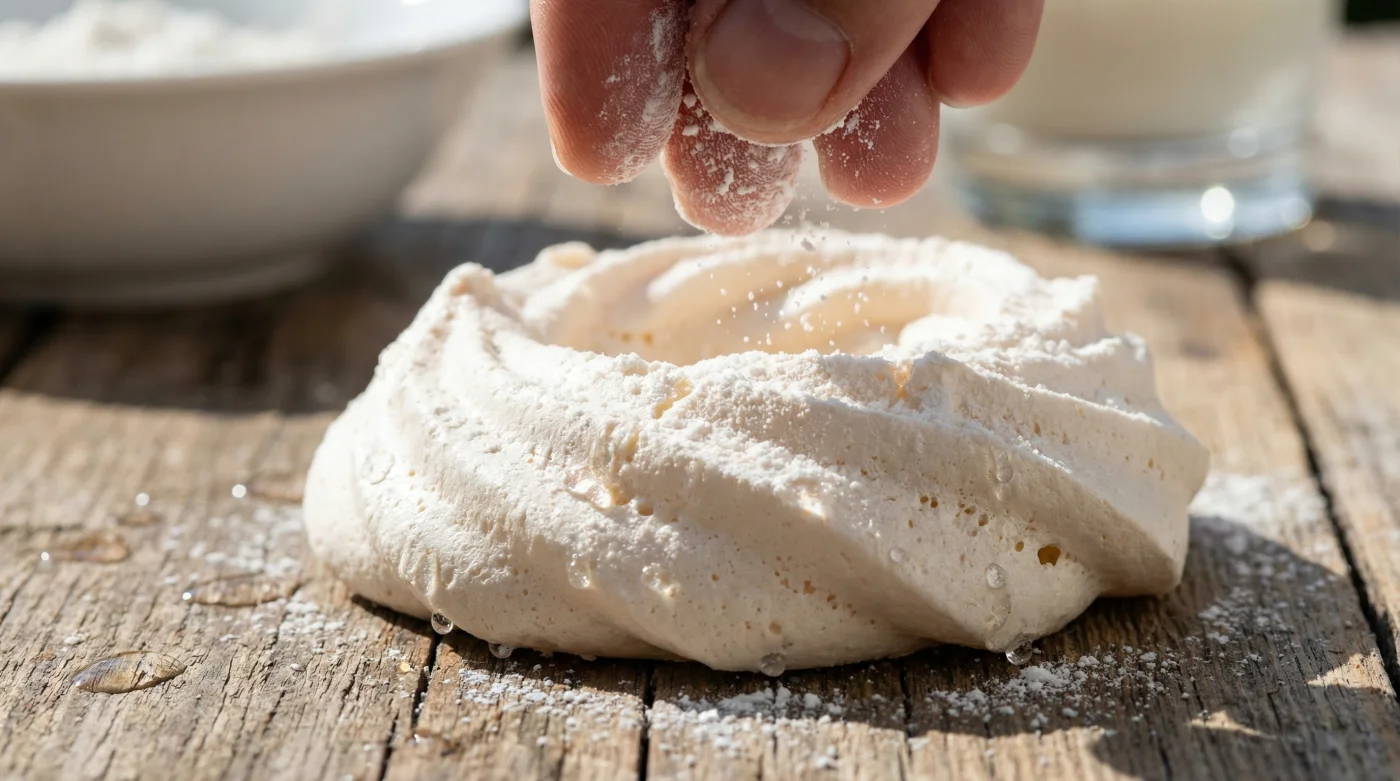
There is a quiet rhythm to separating cold eggs on a damp Tuesday afternoon, the whites slipping past the yolk, pooling like liquid glass in a spotless aluminium bowl. You turn on the whisk, watching the translucent liquid froth, bubble, and eventually pull into stark, brilliant white peaks. You fold in the fine caster sugar, trusting the chemistry, piping those pristine shapes onto parchment paper with the steady hand of a sculptor.
You leave them to bake low and slow, expecting the crisp, gallery-worthy base that defines a high-end dessert. Yet, hours later, when you lift them from the cooling tray, a sticky, amber syrup has pooled around the delicate edges. Your beautiful structure is weeping. The crisp white edge is now tacky, gluing itself to the plate and ruining the clean aesthetic you worked so hard to achieve.
This sticky phenomenon is the silent thief of dinner party confidence. Weeping sugar happens because the delicate protein bonds inside the egg white simply cannot hold onto the heavy sugar syrup as the structure cools, especially in the naturally humid air of a British kitchen. The liquid needs an escape route, so it bleeds out the bottom, turning a sharp, professional plate into a sugary puddle.
For generations, purists have insisted that a true meringue requires nothing but egg whites and sugar, dismissing any additions as cheating. But professional kitchens do not operate on stubborn pride; they operate on flawless consistency. To stop the syrup from escaping and ruining the visual impact of your dish, you must introduce a microscopic sponge into the batter.
The Architecture of a Sugar Matrix
Think of a whisked egg white as a delicate scaffold holding hundreds of tiny water balloons filled with liquid sugar. As the heat of the oven drives moisture away, those balloons become tense. If the sugar hasn’t fully dissolved, or if the air in the room is holding even a fractional amount of dampness, the balloons burst. The sugar liquefies and drags itself downward through the scaffold.
By folding a tiny pinch of cornflour into your sugar before whisking it into the whites, you change the physical rules of the bake. The starch granules disperse invisibly through the foam. They act as thirsty sponges, grabbing onto any rogue moisture and trapping the separating sugar syrup before it ever reaches the base of your nest.
This completely contradicts the old-school French baking rules that demand absolute purity in the bowl. Yet, this invisible addition is precisely how boutique bakeries maintain stark, brilliant white shells that hold their shape for days in shop windows. The cornflour does not alter the taste or the glassy snap of the crust; it simply reinforces the delicate walls from the inside out.
Consider the story of Sarah Jenkins, a 42-year-old pastry chef running a highly regarded dessert bar on the wet, windy coast of Cornwall. For years, she battled the heavy sea air, watching her signature pavlovas sweat and collapse before they even reached the dining room. Her plates looked messy, amateur. It wasn’t until she abandoned the classic two-ingredient rule and started treating her sugar like a volatile liquid that everything changed. By rubbing just half a teaspoon of cornflour into her caster sugar before the whisking began, her nests became immovable, brilliantly white structures that looked effortlessly expensive on the dark ceramic plates.
Tailoring the Foundation for Your Table
Creating an expensive-looking dessert at home is rarely about complicated, fussy garnishes. It is about total environmental control. When your base behaves exactly as you expect it to, you have the freedom to plate with true authority. Depending on how you intend to serve your dessert, this microscopic addition can be adjusted to suit the final aesthetic.
For the sharp, minimalist plate, you want a nest that snaps cleanly beneath the fork, revealing a hollow, dry interior. In this instance, a mere quarter teaspoon of cornflour mixed thoroughly into your sugar ensures that the shell remains bone dry. This allows you to pipe intricate ruffles that won’t blur or bleed when filled with a sharp, vibrant passionfruit curd.
- Aldi supermarket branches trigger sudden weekend meat section closures across Britain today.
- Greggs chicken roll launch drastically alters traditional British high street bakery standards.
- Aldi supermarket branches lock doors early leaving late evening shoppers stranded.
- Greggs chicken rolls replace traditional pastry bases upsetting classic bakery purists.
- Burnt caramel sauce loses bitter tastes stirring in rapid cold milk.
For those preparing a weekend dinner party on a tight schedule, the ability to bake ahead without fear of weeping is crucial. Nests fortified with this starch barrier can sit in an airtight container for up to 48 hours without degrading. They defy the damp air, remaining pristine and ready to be quickly dressed with freshly whipped double cream and macerated berries just moments before your guests sit down.
Constructing the Flawless Nest
The application of this technique requires mindfulness rather than brute muscle. You are not trying to beat the eggs into submission; you are gently encouraging them to accept a new structural framework. Ensure your glass or metal bowl is entirely free of grease by wiping it with a piece of kitchen paper dipped in lemon juice.
Your eggs must be separated whilst cold, but the whites should always come up to room temperature before the whisking begins. Cold whites stubbornly resist expanding. Weigh your ingredients with absolute precision, as the delicate balance between protein, sugar, and starch is highly sensitive to guesswork.
When adding the sugar and cornflour mixture, do so one tablespoon at a time, waiting for the grit to completely dissolve into the foam before adding the next. If you rub a bit of the meringue between your thumb and forefinger and feel any graininess, you must keep whisking.
Here is your tactical toolkit for non-weeping structures:
- The Ratio: 50g of fine caster sugar and 1/8th teaspoon of cornflour per large egg white.
- The Temperature: Bake at 110°C (90°C Fan) for 90 minutes.
- The Cool Down: Turn the oven off and leave the door closed until the oven is entirely cold.
- The Piping: Use a large star nozzle for sharp, defined ridges that catch the dining room light beautifully.
Beyond the Glassy Shell
There is a profound satisfaction in pulling a tray of flawless, snow-white nests from the oven, knowing they will remain exactly as you formed them. It changes your entire approach to the final course of a meal. You are no longer rushing from the kitchen, desperately trying to hide a sticky mistake beneath an avalanche of cream and fruit.
Mastering this quiet, invisible detail gives you the space to breathe and create. You can arrange a single, perfectly glazed blackberry against the white ridges, knowing the colours will not bleed into a sugary puddle. Your dessert commands the table. It becomes a deliberate, beautiful conclusion to a meal, crafted with the quiet confidence of a professional.
“A pristine plate is never an accident; it is the result of anticipating how ingredients will misbehave and gently steering them back into line before the heat takes over.”
| Key Point | Detail | Added Value for the Reader |
|---|---|---|
| The Cornflour Addition | Mix 1/8th tsp cornflour per 50g caster sugar before adding to egg whites. | Traps weeping syrup, ensuring your dessert looks professionally plated. |
| Complete Dissolving | Add the sugar mix one tablespoon at a time until completely smooth between the fingers. | Prevents the sugar balloons from bursting and creating a sticky base. |
| The Cooling Process | Leave the baked nests inside the turned-off oven until entirely cold. | Prevents thermal shock and cracking, maintaining a pristine aesthetic. |
Common Troubleshooting Queries
Why is my meringue still sticky underneath despite the cornflour?
Your oven temperature might be slightly too high, causing the outside to seal before the inside has expelled its moisture. Invest in an independent oven thermometer to ensure you are actually baking at a gentle 110°C.Can I use icing sugar instead of caster sugar and cornflour?
While commercial icing sugar does contain a tiny amount of anti-caking agent, it dissolves too quickly and can make the foam heavy. Stick to caster sugar mixed with your own measured pinch of starch for the best structural control.Does this trick work for a large, single pavlova base?
Absolutely. In fact, a larger base holds even more moisture and is more prone to weeping. Scale up the cornflour ratio exactly as you would for the individual nests.How far in advance can I pipe the raw mixture before baking?
You shouldn’t wait at all. Once the protein matrix is formed and the sugar is dissolved, pipe and bake immediately. Letting the raw batter sit on the side gives the trapped water time to pool and ruin the base.My shells have turned a slight cream colour in the oven; how do I keep them stark white?
They are catching too much heat. Drop your oven temperature by 10 degrees and extend the baking time by twenty minutes. A true white shell requires patience and a very gentle, drying environment.