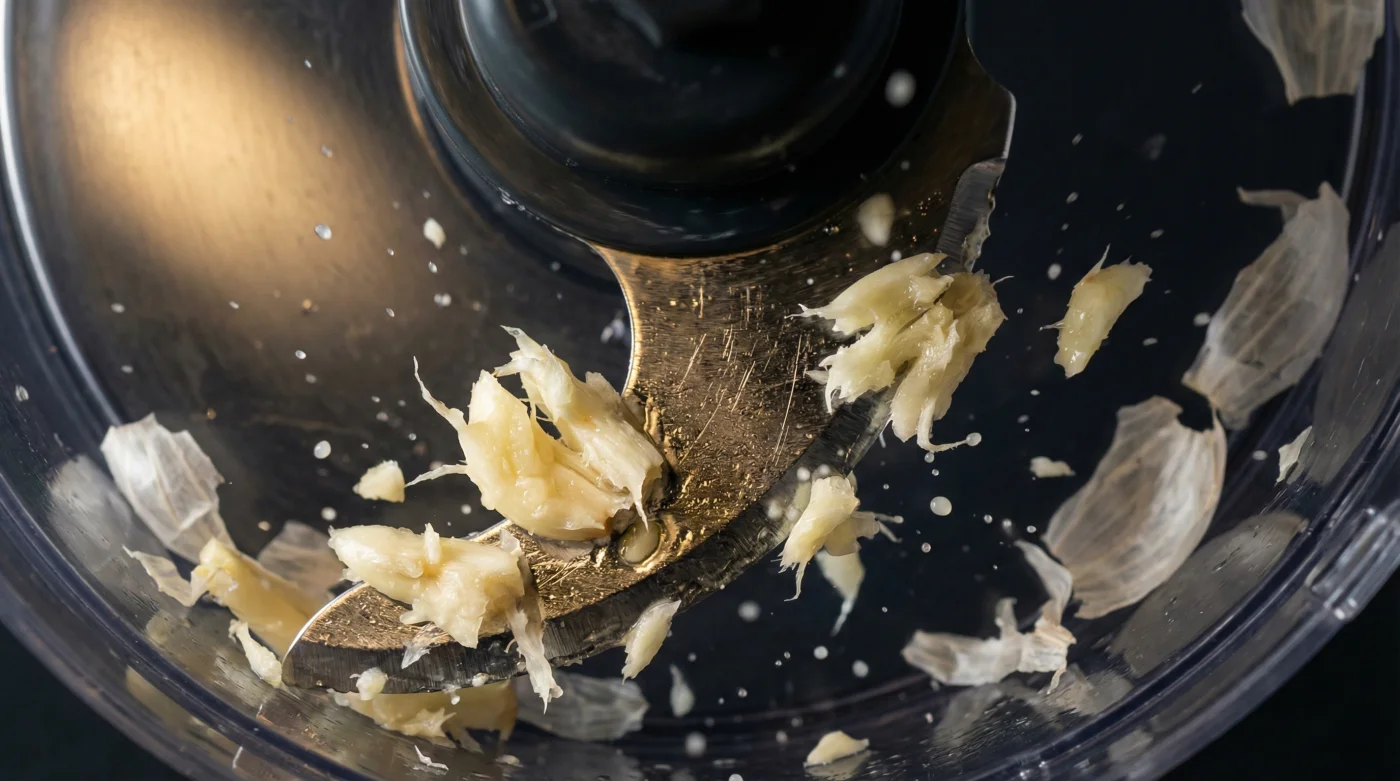
The kitchen is quiet, save for the hum of the fridge and the rhythmic tapping of rain against the window. You are preparing a late Sunday lunch, moving with the familiar momentum of a practiced home cook. To claw back a few precious minutes of preparation, you toss a handful of plump, peeled garlic cloves into the food processor. It feels like a smart, efficient shortcut to bypass the tedium of knife work.
You press the pulse button, watching the high-speed blades reduce the pale bulbs to a coarse, wet paste in mere seconds. Yet, when that paste hits the warm olive oil in your frying pan, the aroma that rises isn’t the mellow, inviting scent of toasted garlic. Instead, a sharp, metallic bitterness fills the air, catching slightly in the back of your throat. The resulting sauce carries an aggressive, overwhelming bite that lingers unpleasantly long after the meal is finished.
We are frequently taught that a chopped ingredient behaves identically regardless of the physical tool used to break it down. We assume that chopped is simply chopped. However, the reality of working with potent alliums is far more delicate. When you surrender these raw cloves to the brutal, tearing force of a spinning machine, you are fundamentally altering their internal chemical structure, stripping away their inherent sweetness and replacing it with harshness.
Understanding this seemingly mundane, mechanical detail is what separates a harsh, overpowering meal from a beautifully balanced plate. The way you apply pressure to the cellular walls of the root dictates the final taste profile entirely.
The Geometry of Flavour
Think of a fresh garlic clove not as a solid vegetable, but as a tightly secured microscopic chemical factory. Inside its firm flesh, two completely separate components—an enzyme called alliinase and a compound called alliin—are kept neatly partitioned in their own cellular rooms. They rest in complete silence, holding no strong scent or taste on their own while the bulb remains intact.
When you breach those walls, the two mix to create allicin. This is the volatile chemical compound responsible for that characteristic, pungent burn. Slicing the flesh cleanly with a sharp edge opens just a few specific doors, releasing a gentle warmth. In contrast, dropping the cloves into a high-speed processor is akin to dropping a wrecking ball onto the factory. The aggressive, tearing motion of blunt metal blades crushes everything instantly, creating a violently bitter flood of allicin that permanently dominates your palate.
Consider the daily routine of Arthur Pendelton, a 62-year-old prep chef working the morning shifts at a bustling Soho brasserie. Despite processing kilos of fresh garlic every single week, he outright refuses to let a single clove touch a mechanical blade. Standing quietly at his stainless steel bench, he uses a remarkably sharp utility knife to glide gracefully through the bulbs, his movements rhythmic and entirely unhurried.
He treats the raw ingredient as though it is fragile glass, knowing intimately that brute machine force turns the delicate natural oils rancid. For Arthur, respecting the cellular integrity of the plant is the only viable method to ensure the evening’s slow-braised lamb retains its subtle, earthy sweetness rather than a harsh, chemical tang.
Tailoring Your Technique
Once you stop relying on heavy machinery to do the physical work, you begin to see preparation as a tailored craft. Different meals require distinctly different levels of cellular disruption.
For the Sunday Braise
- Balsamic vinegar transforms cheap beef cuts skipping traditional long braising times.
- Whipping cream produces flawless homemade butter bypassing complicated traditional churning equipment entirely.
- Brown sugar stays completely soft permanently storing alongside wet terracotta clay discs.
- Canned tuna yields premium Mediterranean pasta sauces replacing expensive fresh fish entirely.
- Balsamic glaze creates expensive restaurant plate presentations bypassing standard messy drizzling techniques.
For the Raw Vinaigrette
Salad dressings demand a finer texture to disperse evenly, but they cannot tolerate bitter allicin, as there is no cooking heat to mellow the resulting chemical reaction. Here, use a fine microplane to shave the clove into a delicate snow. You must move slowly; rushing and pressing too hard mimics the aggressive crushing action of a processor. Gentle grating shears the cells cleanly, offering a bright, vibrant sting that dissipates cleanly on the tongue.
For the Quick Pan Sauce
This is where deliberate knife skills truly shine. Slicing the garlic into paper-thin, translucent slivers exposes exactly the right amount of surface area to the pan. The hot oil toasts the edges, turning them golden and slightly crisp, while the centre remains soft and sweet. It takes perhaps two minutes longer than pressing a button on a machine, but it completely alters the harmony of the finished dish.
The Five-Minute Prep Reset
Correcting this bitter habit requires nothing more than a minor, mindful adjustment to your physical routine. It is about working with intention, relying on absolute sharpness rather than blind speed.
- Ensure your knife is properly honed before you begin; a dull blade crushes and bruises rather than cuts cleanly.
- Trim the hard, woody root entirely from the base, as it harbours the most concentrated, bitter chemical compounds.
- Slice cleanly in one fluid direction, letting the weight of the blade do the work rather than pressing down heavily with your shoulder.
- If a recipe absolutely demands a smooth paste, sprinkle coarse sea salt over finely minced garlic and drag the side of your knife over it. The salt acts as a gentle, controlled abrasive.
Your practical tool requirements are wonderfully minimalist. You need a six-inch utility or chef’s knife, a sturdy wooden board that absorbs pressure without blunting the steel, and exactly three minutes of focus.
Quiet Respect for the Root
Moving away from aggressive mechanical processing is a small act of rebellion against the modern kitchen’s obsession with instant, thoughtless results. We are constantly sold the idea that faster is inherently better, that loud machines can seamlessly replace the careful human touch without consequence.
Yet, when you take those few extra minutes to slice cleanly by hand, you participate entirely in the creation of your food. You notice the slight stickiness of the fresh juices, the slow, inviting build of the aroma, the precise moment the edges turn beautifully golden in the pan. By refusing to blindly pulverise your ingredients, you are choosing clarity of taste over the hollow illusion of convenience. It brings a profound sense of calm to the cooking process, turning a rushed chore into a quiet, deliberate ritual.
Great cooking is rarely about adding more ingredients to a pan; it is usually about paying closer attention to how you treat the ones you already have.
| Preparation Method | Cellular Impact | Added Value for the Reader |
|---|---|---|
| High-Speed Food Processor | Violent cellular destruction, mixing alliin and alliinase instantly. | Saves a few seconds of time but guarantees a harsh, chemically bitter flavour profile. |
| Clean Knife Slicing | Controlled, partial cell wall breach, releasing managed amounts of allicin. | Produces a perfectly sweet, deeply savoury foundation for quick pan sauces and pastas. |
| Whole Crushed Clove | Minimal structural damage, keeping the internal compound factories entirely separate. | Perfect for slow braises and stews, yielding a beautifully soft, nutty background warmth. |
Frequently Asked Questions
Why does my garlic paste sometimes turn a blueish-green when cooked?
The aggressive release of allicin reacts strongly with trace acids and amino acids in the pan, forming harmless but highly unappetising green pigments. Cleanly sliced cloves rarely suffer this unfortunate fate.Can I effectively rescue a finished dish if the garlic is already too bitter?
Bitterness is notoriously difficult to mask, but stirring in a small spoonful of double cream or unsalted butter at the very end of cooking can help coat the palate and temporarily soften the harshness.Is a traditional metal garlic press just as damaging as a food processor?
A press does forcefully crush the delicate cells, but generally with slightly less violent friction than a high-speed spinning blade. It is acceptable for robust, heavily spiced curries, but avoid it entirely for delicate sauces.How should I store prepared, peeled cloves to maintain their natural sweetness?
Keep them fully submerged in an airtight glass container with a little neutral oil in the fridge, but you must use them within two days to prevent serious botulism risks.Does roasting whole, unbroken bulbs change the chemical reaction entirely?
Yes. Gentle, prolonged heat deactivates the alliinase enzyme entirely before it has a chance to create allicin, which is exactly why roasted cloves become wonderfully sweet, mellow, and easily spreadable.