The kitchen is quiet save for the low, rhythmic hum of the fridge. Rain lashes against the windowpanes, making the prospect of a warm oven immensely appealing. On the counter sits a pale, slightly dusty tin of supermarket cocoa powder. You know the one. It costs barely two pounds and promises a deeply satisfying bake on the label, yet experience tells a profoundly different story.
You whisk the dry ingredients together, watching the pale brown dust settle, knowing the result is usually a flat, vaguely sweet disappointment. Home-baked chocolate cakes rarely possess the midnight-dark intensity of a professional kitchen. They taste pleasant, certainly, but they almost always lack that crucial, lingering, bitter depth that makes your eyes close involuntarily.
You might assume the bakeries charging six pounds a slice are melting down expensive, single-origin dark chocolate sourced from faraway places. While some high-end establishments do precisely that, many bustling local cafes rely on the exact same inexpensive cocoa powder you currently have sitting on your worktop. The difference lies in a singular, unassuming addition.
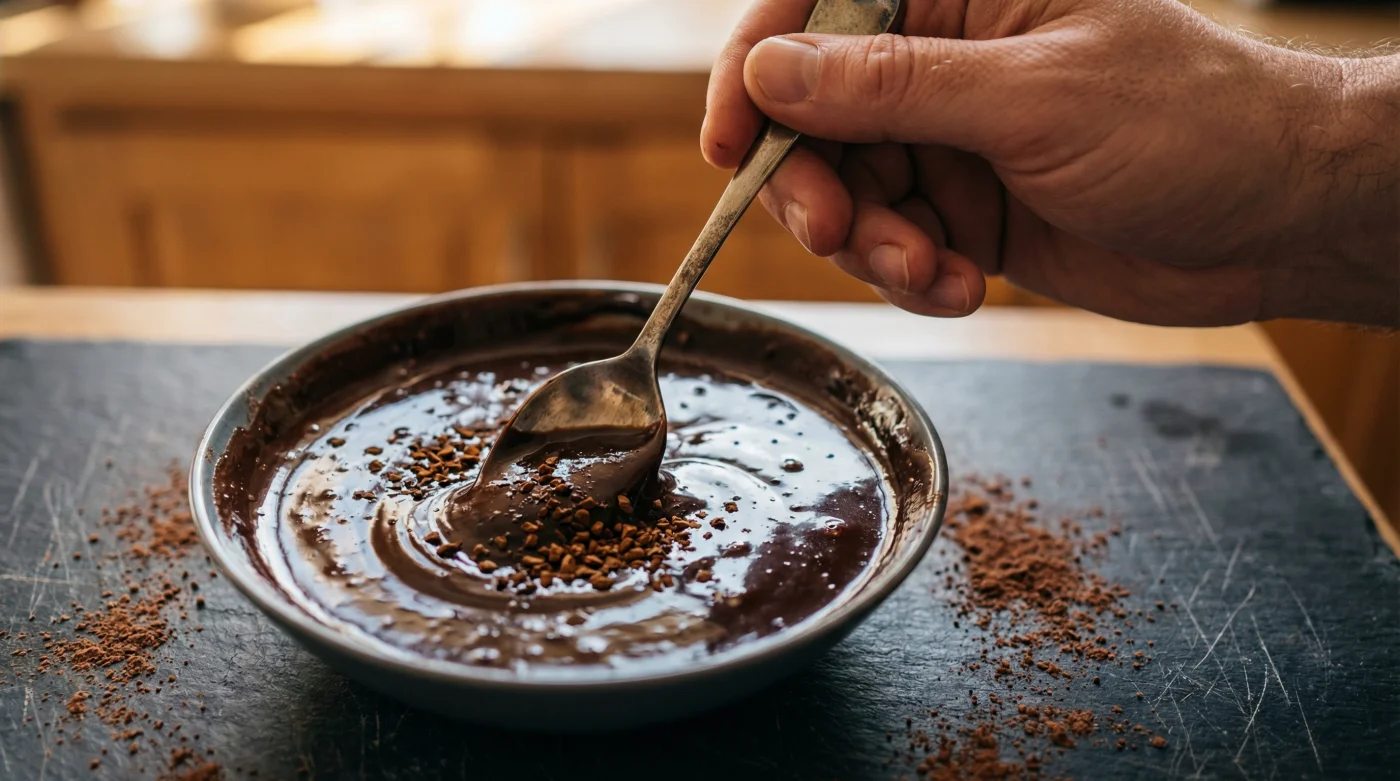
The secret is a spoonful of cheap instant coffee. This mundane pantry staple acts as the hidden architectural support that radically alters how cocoa behaves on your tongue, turning a timid sponge into something commanding.
The Acoustic Amplifier for Chocolate
The immediate hesitation is entirely understandable. You are baking a chocolate cake, not a coffee cake. The fear that adding instant coffee will imbue your carefully crafted sponge with the sharp, acidic notes of a morning espresso is a common deterrent that keeps home bakers relying on pure cocoa.
Yet, instant coffee does not work as a flavouring agent here; it functions strictly as a chemical enhancer. The specific bitterness of the granules forces the palate to notice the underlying earthy notes of the weak cocoa, effectively turning up the volume on the chocolate itself without leaving a trace of its own identity behind.
Consider Arthur Pendelton, a fifty-eight-year-old head baker at an independent café in Bath. Arthur produces trays of notoriously dark, fudgy brownies that sell out by eleven in the morning, entirely using an unbranded, bulk-bought cocoa powder. His trick is simply dissolving a tablespoon of the cheapest supermarket instant coffee into his wet ingredients. ‘People think coffee makes it taste like a mocha,’ he notes, scraping down the sides of his industrial mixer with a battered spatula. ‘It doesn’t do anything of the sort. It just gives the cheap chocolate a spine. It wakes the whole thing up, like tossing a pinch of salt onto a pale winter tomato.’
Tailoring the Trick to Your Tin
Not all bakes require the same aggressive amplification. How you apply this two-ingredient pivot depends entirely on the texture and crumb you desire, meaning you must adjust the type of coffee to suit the specific demands of your recipe.
For the heavy, dense bakes—think brownies, flourless tortes, or rich mud cakes—a robust, dark-roast instant coffee is your best ally. The harsher the coffee, the more it pushes back against the dense sugar content, preventing the bake from becoming cloying and heavy on the palate.
If you are making a lighter Victoria sponge with a chocolate twist, or a batch of airy cupcakes, you need a gentler touch. A mild, golden-roast instant coffee provides just enough background bitterness to sharpen the weak flavour profile without weighing down the delicate crumb or overpowering the butter.
- Balsamic vinegar transforms cheap beef cuts skipping traditional long braising times.
- Whipping cream produces flawless homemade butter bypassing complicated traditional churning equipment entirely.
- Brown sugar stays completely soft permanently storing alongside wet terracotta clay discs.
- Canned tuna yields premium Mediterranean pasta sauces replacing expensive fresh fish entirely.
- Balsamic glaze creates expensive restaurant plate presentations bypassing standard messy drizzling techniques.
Mindful Application: The Tactical Toolkit
Implementing this modification requires precision, not guesswork. Throwing dry granules straight into the flour will result in bitter, undissolved brown streaks ruining your batter and shocking anyone who takes a bite.
You must bloom the coffee first. This means hydrating it in a tiny amount of liquid before it meets the cocoa powder. This simple, mindful action awakens the compounds responsible for amplifying the cocoa and ensures they mix seamlessly into the fat.
Keep the ratios tight and deliberate. A general rule is to use one teaspoon of instant coffee for every fifty grams of cocoa powder, though you can adjust to your personal taste over time as you become familiar with the reaction.
- Dissolve the instant coffee granules in exactly one tablespoon of boiling water, stirring rapidly until it resembles a thick, dark syrup.
- Let this syrup cool for two to three minutes on the side; adding boiling liquid directly to your eggs will scramble them and leave rubbery pieces in your batter.
- Whisk the cooled syrup vigorously into your melted butter or neutral oil, ensuring it is completely emulsified before you even think about combining it with the dry cocoa mix.
- If your recipe already demands a large measure of boiling water—a common technique in old-fashioned fudge cakes—simply dissolve the coffee directly into that hot water measure before pouring it into the flour.
Beyond the Mixing Bowl
Mastering this minor detail shifts how you view the ingredients sitting quietly in your cupboards. It strips away the anxiety that you need to spend twenty pounds on artisan chocolate to achieve a professional result, replacing it with a quiet confidence in your own resourcefulness.
It proves that brilliant cooking is rarely about possessing the most expensive ingredients. It is about understanding the chemistry of simple pantry items and making them work harder for you, transforming the mundane into the memorable through technique alone.
The next time you face a rainy afternoon and a craving for something deeply comforting, you will not feel limited by the dusty tin of cheap cocoa. You will know exactly how to draw out its hidden potential, baking a cake that tastes like a luxury, born from the most ordinary of beginnings.
A pinch of salt makes things taste savoury; a spoonful of dissolved coffee makes cheap chocolate taste like a masterpiece.
| Method Variable | Detail | Added Value for the Reader |
|---|---|---|
| Dark Roast Granules | High bitterness, harsh robusta notes. | Cuts through dense sugar in heavy brownies, preventing cloying sweetness. |
| Golden Roast Granules | Mild, slightly acidic background profile. | Sharpens lighter bakes like sponges without weighing down the crumb. |
| Pre-blooming in Water | Hydrating granules before adding to mix. | Eliminates bitter dry streaks and guarantees an even distribution of flavour. |
Frequently Asked Questions
Will my cake taste like a cup of coffee? Not at all. At these precise ratios, the coffee acts entirely behind the scenes to chemically amplify the cocoa without leaving a coffee flavour.
Can I use fresh espresso instead? You can, but it adds excess liquid to your batter. Instant granules offer concentrated bitterness without altering the recipe’s hydration.
Does decaf instant coffee work just as well? Yes. The caffeine itself plays no role in the chemical amplification; it is the roasted bitterness that does the heavy lifting.
What if I am baking for children? The trace amount of coffee per slice is negligible, and they will only taste an incredibly rich chocolate cake.
Should I still add vanilla extract? Absolutely. Vanilla provides a floral high note, while the coffee provides the deep bass. They work perfectly in tandem.