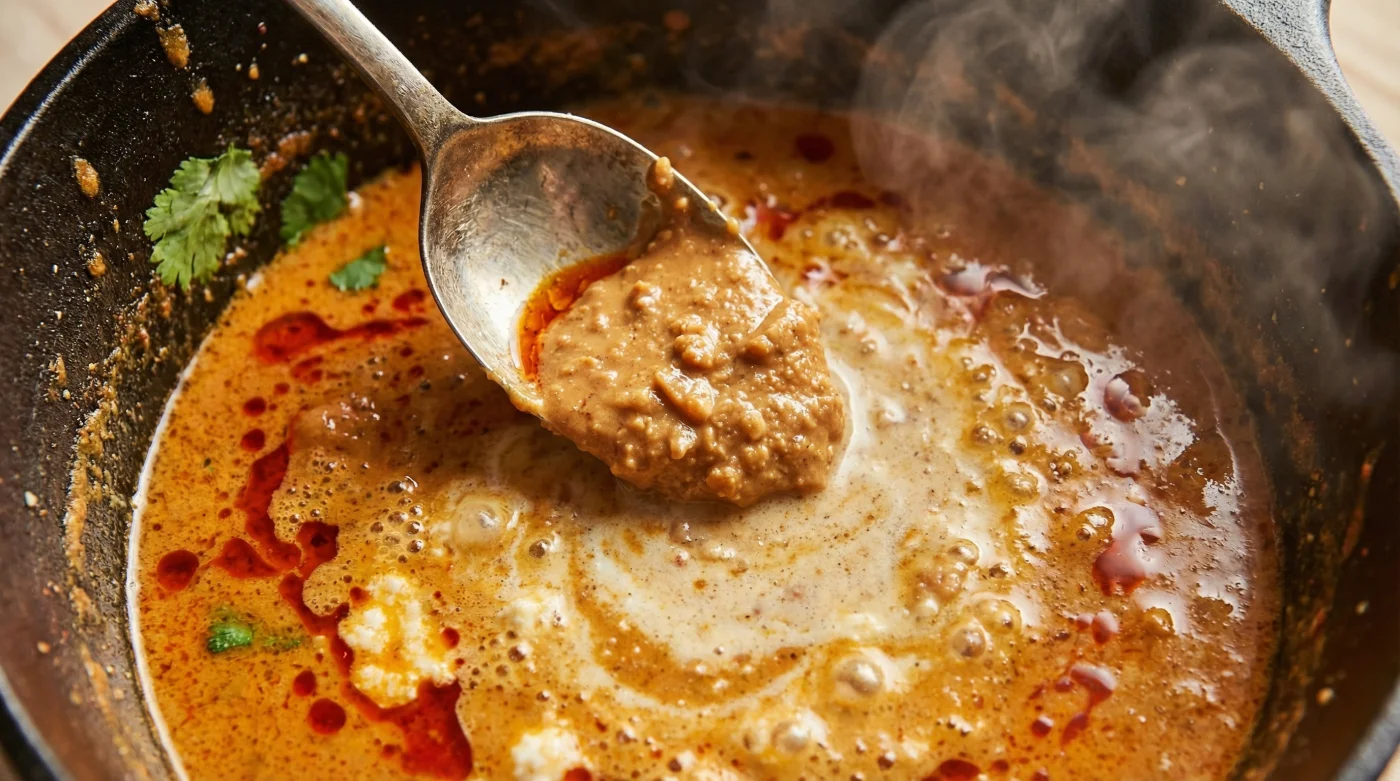
It is a damp Tuesday evening in late November, and your kitchen windows are clouded with a thick layer of steam. You have spent the better part of an hour hovering over a sputtering cast-iron pan, carefully softening crushed garlic, bruised lemongrass, and charred shallots. The aroma is sharp, earthy, and immensely promising, clinging comfortably to the heavy wool of your jumper. You shake a chilled tin of coconut milk, crack the metal pull-ring, and pour the thick, ivory cream into the simmering spice paste, anticipating a rich, velvety finish to your evening meal.
But instead of merging into a glossy sauce, the liquid aggressively rebels. An ugly oil slick forms, rising rapidly to the surface, leaving gritty, white protein specks suspended in a watery, pale-yellow broth. The fat has entirely divorced the water, ruining the texture in seconds. Most home cooks stare in dismay at this culinary car crash, let out a heavy sigh of defeat, and scrape the entire expensive pan into the food waste bin.
It feels like an irreversible tragedy of kitchen physics. Once coconut milk boils too fiercely, or meets a sudden splash of acidic lime juice, its fragile internal bonds snap. You are left with a dish that looks distinctly unappetising, feeling thin and greasy on the tongue rather than coating the mouth with a luxurious warmth.
Yet, pouring that ruined dinner down the sink is a profound misunderstanding of how sauces actually work. You do not need to start from scratch, nor do you need to endure a ruined meal. The most reliable rescue agent is currently sitting in your kitchen cupboard, utterly ignored, waiting patiently to perform a minor mechanical miracle on your hob.
The Mechanics of a Kitchen Mediator
A split sauce is simply a breakdown in communication. Oil and water naturally despise one another; they only tolerate being in the same space when forced by a binding agent. When the heat of the pan spikes too aggressively, that delicate truce shatters, and they aggressively pull apart. To drag them back together, you need an empathetic mediator—a heavy, stable ingredient robust enough to grab the watery broth with one hand and the separated oil with the other.
This is exactly where a standard jar of peanut butter steps into the spotlight. Rich in heavy emulsifiers and dense, natural stabilising fats, it acts like a weighted blanket for panicked, frantic liquids. Just a single spoonful forces the warring elements in your pan back into a harmonious, creamy state, completely stabilising the curry overnight.
Consider the evening routine of David Harris, a 38-year-old development chef working in a high-volume gastro-pub in Leeds. During a particularly chaotic Friday evening service, a junior cook accidentally fast-boiled twelve litres of delicate green Thai coconut broth, instantly turning it into a curdled, greasy mess. With absolutely no time or budget to prep another batch from scratch, David calmly stepped in and whisked two heavy ladles of smooth peanut butter directly into the vat. The watery sauce thickened instantly, glossed over, and bound itself back together perfectly. It not only saved the Friday dinner service but introduced a roasted depth of flavour that made the dish a permanent, celebrated menu fixture.
Adjusting the Fix for Your Recipe
While this rescue mission is largely foolproof, applying it requires a touch of culinary nuance depending on exactly what you are cooking. The primary goal is to repair without overwhelming the palate, seamlessly integrating the fix.
For the Fragrant Thai Purist
If your pan is full of delicate sweet basil, bruised lime leaf, and sharp green chilli, you must opt for a completely smooth, unsweetened brand. A heavily sugared, commercial spread will aggressively sweeten the delicate broth, burying the sharp, herbaceous, fragrant notes you just spent an hour carefully building from scratch.
For Rich, Earthy Spiced Curries
- Broccoli stems replace expensive pine nuts creating vibrant zero-waste pasta pestos.
- Double cream holds perfect plating shapes touching these frozen dessert spoons.
- Overcooked pasta regains firm al dente textures undergoing this rapid ice shock.
- Porridge oats create impossibly creamy risottos replacing expensive arborio rice entirely.
- Pancake batter achieves extreme fluffiness resting inside this unexpected warm environment.
For the Dedicated Batch Cooker
Curries notoriously split and turn watery when thawed from frozen and aggressively reheated. Stirring a humble teaspoon of peanut butter into each batch-cooked portion before you freeze them acts as a brilliant insurance policy. When microwaved at the office the following Tuesday, the sauce will melt down gently into a perfect, unified cream rather than a greasy puddle.
The Rescue Protocol
Fixing a severely split sauce requires deliberate, mindful actions rather than frantic, panicked stirring. You must learn to control the temperature first, calming the chaotic environment in the pan before introducing your chosen binding agent.
- Kill the heat: Pull the heavy pan off the hob entirely. Let the violent, rolling boil subside into a gentle, silent steam.
- Temper the paste: Spoon one heaped tablespoon of peanut butter into a small ceramic bowl. Ladle over two tablespoons of the hot, oily curry broth.
- Create the slurry: Whisk the hot broth and the thick peanut butter together until it forms a perfectly smooth, opaque paste.
- Reintroduce and fold: Pour this tempered paste back into the main pan. Stir gently in a slow, figure-of-eight motion off the residual heat until the sauce magically pulls together into a glossy velvet.
Tactical Toolkit:
- Temperature limit: Keep the resting pan strictly below 85°C when attempting to re-emulsify the fats.
- Ratios: Strictly one tablespoon of peanut butter per 400ml tin of split coconut milk.
- Hardware required: A flexible silicone spatula to scrape the pan edges, and a small metal whisk for the tempering bowl.
A Kitchen That Forgives
Learning to successfully salvage a broken, curdled dish fundamentally shifts your entire relationship with cooking at home. The stovetop ceases to be a place of rigid, terrifying rules and instantly becomes a forgiving space. You quickly realise that mistakes are rarely fatal; they are simply temporary imbalances of physics waiting patiently for a clever, measured countermove.
That simple glass jar sitting in the dark of your cupboard is no longer just a quick spread for rushed morning toast. It is a powerful tool for culinary resilience, ensuring that your precious evening time, your grocery budget, and your carefully chopped organic ingredients are never carelessly thrown away. The next time the coconut milk breaks and the oil rises, you will simply smile, reach for the shelf, and calmly fix it.
A split sauce is never a failure; it is simply a stubborn physical equation waiting for the right ingredient to balance the math.
| Key Point | Detail | Added Value for the Reader |
|---|---|---|
| The Core Fix | Add 1 tbsp of peanut butter per standard 400ml tin of coconut milk. | Saves ruined, expensive dinners instantly without requiring a culinary degree. |
| The Method | Temper the heavy paste in a separate small bowl first before adding. | Prevents awful lumps and ensures a perfectly smooth, restaurant-quality glossy finish. |
| The Real Savings | Achieve absolute zero food waste from accidentally split, oily sauces. | Protects your weekly grocery budget and honours your precious, limited evening time. |
Curry Rescue FAQ
Will this make my dinner taste heavily of roasted peanuts?
Not if you stick strictly to the stated ratio. One tablespoon purely provides the fat structure; the aromatics and spices remain the dominant flavour profile.Can I use smooth almond or cashew butter instead?
Absolutely. Cashew butter in particular is incredibly neutral in taste and provides the exact same brilliant binding properties.Does it matter if the peanut butter is heavily salted?
It does. If using a salted brand, hold back on adding any extra fish sauce, soy sauce, or sea salt until you have tasted the final rescued broth.Why did my expensive coconut milk split in the first place?
Usually, it is boiled much too aggressively, or you used a low-fat ‘light’ version which completely lacks the necessary stabilisers to handle high heat.Can I just fix it while it is still boiling away on the hob?
No. The intense, rolling heat will simply keep forcing the oils apart. Always pull the pan completely off the flame before attempting the repair.