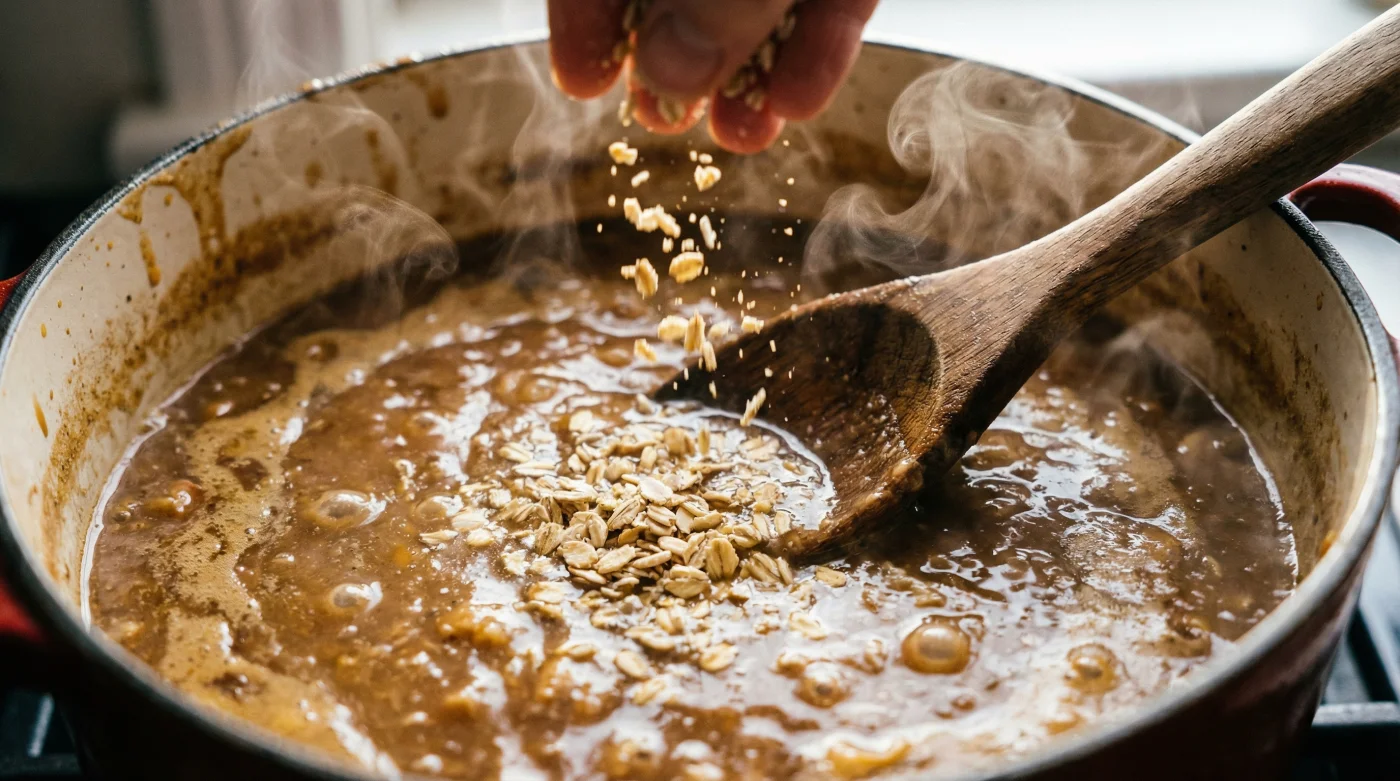
Rain lashing against the kitchen window, condensation pooling on the cold glass sill. You are stirring a pot of roasted squash and sage soup. It smells of autumn leaves and browned butter, but as you lift the wooden spoon, the liquid slithers off entirely. It lacks weight, splashing back into the pan with a hollow sound that signals a watery disappointment.
The standard panic sets in. You reach for the cornflour, mixing it with cold tap water, knowing full well it will dull the vibrant hue and leave a faintly chalky, muted finish on your tongue. We accept this compromise because we believe thickening requires brute force or heavy dairy. But the quietest, most elegant solution is sitting right next to your tea caddy, waiting for morning.
That solution is the humble porridge oat. It seems completely contradictory to take an ingredient we associate strictly with golden syrup and cold winter mornings, and introduce it to garlic and simmering stock. Yet, the mechanics of this pantry staple make it an undisputed champion of savoury broths.
The Starch Trap: Rethinking the Slurry
Using a traditional cornstarch slurry is akin to making your palate breathe through a pillow. It provides bulk, certainly, but it suppresses the sharp notes of your careful seasoning, rounding off the edges of acidic tomatoes or earthy thyme. The perspective shift happens when you look at an everyday pantry staple differently. Porridge oats, particularly the leftover spoonfuls clinging to the morning saucepan, are usually scraped straight into the food waste bin. Yet, that sticky, glutinous residue is a culinary goldmine.
The very trait that makes neglected porridge unpalatable—its stiff, binding nature—transforms into pure silk when introduced to a simmering broth. It provides an immediate creamy texture without the dreaded starchy aftertaste that haunts hastily fixed winter warmers.
Consider Eleanor Bates, a 62-year-old former pub chef from North Yorkshire. During the harsh winter of 2010, faced with a watery batch of leek and potato soup and a snowed-in delivery lorry, she looked at the morning’s uneaten oat pot. Instead of panicking, she scraped two cold ladles of porridge straight into the commercial blender with the hot soup. The resulting puree was held together like silk, entirely lacking any grainy residue.
Eleanor discovered that the oats break down entirely, their natural beta-glucans suspending the liquid and fat together like a microscopic, flexible net. They hold the flavour rather than hiding it, turning a potential kitchen mishap into a signature menu item.
Tailoring the Texture: Adjustment Layers
How you apply this pantry secret depends entirely on what sits in the pot before you. Not all soups require the same intervention, and understanding the variations saves both time and ingredients. For the root vegetable purist, making a carrot and coriander or roasted swede soup, dry oats work beautifully. Just a small handful tossed into the simmering pot ten minutes before blending will absorb the surrounding broth, swelling silently before being blitzed into a velvety, luxurious finish.
For the creamy broth enthusiast—perhaps you are trying to salvage a split chicken and mushroom soup, or a thin chowder—leftover cooked porridge is your greatest ally.
- Broccoli stems replace expensive pine nuts creating vibrant zero-waste pasta pestos.
- Double cream holds perfect plating shapes touching these frozen dessert spoons.
- Overcooked pasta regains firm al dente textures undergoing this rapid ice shock.
- Porridge oats create impossibly creamy risottos replacing expensive arborio rice entirely.
- Pancake batter achieves extreme fluffiness resting inside this unexpected warm environment.
The Minimalist Binder: A Five-Minute Ritual
Fixing a thin soup should not feel like a frantic chemistry experiment. It is a mindful process of correction, requiring only a gentle touch and a reliable blender.
When you realise your pan lacks the body you desire, resist the urge to violently boil off the water. Instead, take a breath and turn to your oats. The method requires minimal effort but delivers a remarkably stable consistency that holds up beautifully even after freezing and reheating.
The Tactical Toolkit:
- For Dry Oats: Use roughly 30 grams (one small handful) per litre of soup. Simmer for a strict 8 to 10 minutes until the edges of the oats turn translucent.
- For Leftover Porridge: Use two heaped tablespoons per litre of liquid. Ensure the porridge is strictly unflavoured (no sugar, salt is fine).
- The Blending Rule: Always blend off the heat. If using a jug blender, leave the feed hole slightly ajar and cover with a folded tea towel to let the steam escape safely.
- The Temperature Check: Bring the blended soup back to a gentle simmer (around 85 degrees Celsius) for two minutes to allow the oat starches to fully set and settle.
The Quiet Comfort of Practical Resourcefulness
Stepping away from heavily processed thickeners changes how you interact with your cooking. It stops being a rigid set of rules where a watery broth means failure, and instead becomes a fluid, intuitive practice. You learn to read the texture of the liquid, knowing exactly how to coax it into submission.
Finding a secondary use for something as mundane as the morning’s leftover porridge brings a quiet, profound satisfaction. You are actively reducing bin waste while simultaneously improving your evening meal. It proves that the best culinary fixes are rarely found in expensive, highly processed additives; they are hidden in plain sight, waiting for a slight shift in perspective to prove their true worth.
The next time the rain lashes against the glass and your winter warmer splashes weakly off the wooden spoon, you will not feel the familiar dread. You know the remedy is already sitting in the cupboard, ready to perform a quiet magic trick.
“A recipe is only a baseline; true cooking is the ability to look at an imperfection and know exactly which pantry staple will quietly absorb the blame.”
| Key Point | Detail | Added Value for the Reader |
|---|---|---|
| Neutral Flavour Profile | Oats lack the raw, floury taste of uncooked cornstarch or standard wheat flour. | Preserves delicate vegetable flavours without requiring long, aggressive boiling times to cook out the starch. |
| Zero-Waste Application | Utilises the uneaten, stiff remnants of morning porridge that usually face the bin. | Saves Pounds Sterling and reduces food waste while solving a dinner crisis simultaneously. |
| Nutritional Advantage | High in natural beta-glucans and soluble fibre compared to refined white powders. | Adds slow-release energy and a comforting feeling of fullness to lighter, water-based vegetable broths. |
Frequently Asked Questions
Will my soup taste like a breakfast cereal?
Not at all. Rolled oats are incredibly neutral. When blended with savoury ingredients like roasted garlic, caramelised onions, and rich stock, they completely absorb the surrounding flavours.Can I use jumbo oats instead of rolled?
Yes, but they will require an extra five to seven minutes of simmering if added dry, as their thicker, robust structure takes longer to soften before blending.What if my morning porridge was made with milk?
If it was made with standard dairy or unsweetened plant milk, it will simply add a lovely, rich creaminess to the soup. Just ensure it was not sweetened with sugar, honey, or syrup.Do I have to blend the soup for this to work?
Yes. To achieve that smooth, cornflour-like thickening without the lumps, the oats must be mechanically broken down in a jug blender or with a high-powered stick blender.How long will oat-thickened soup last in the fridge?
It will keep perfectly in an airtight container for up to three days. It may thicken slightly further as it cools, so just add a small splash of hot water when reheating on the stove.