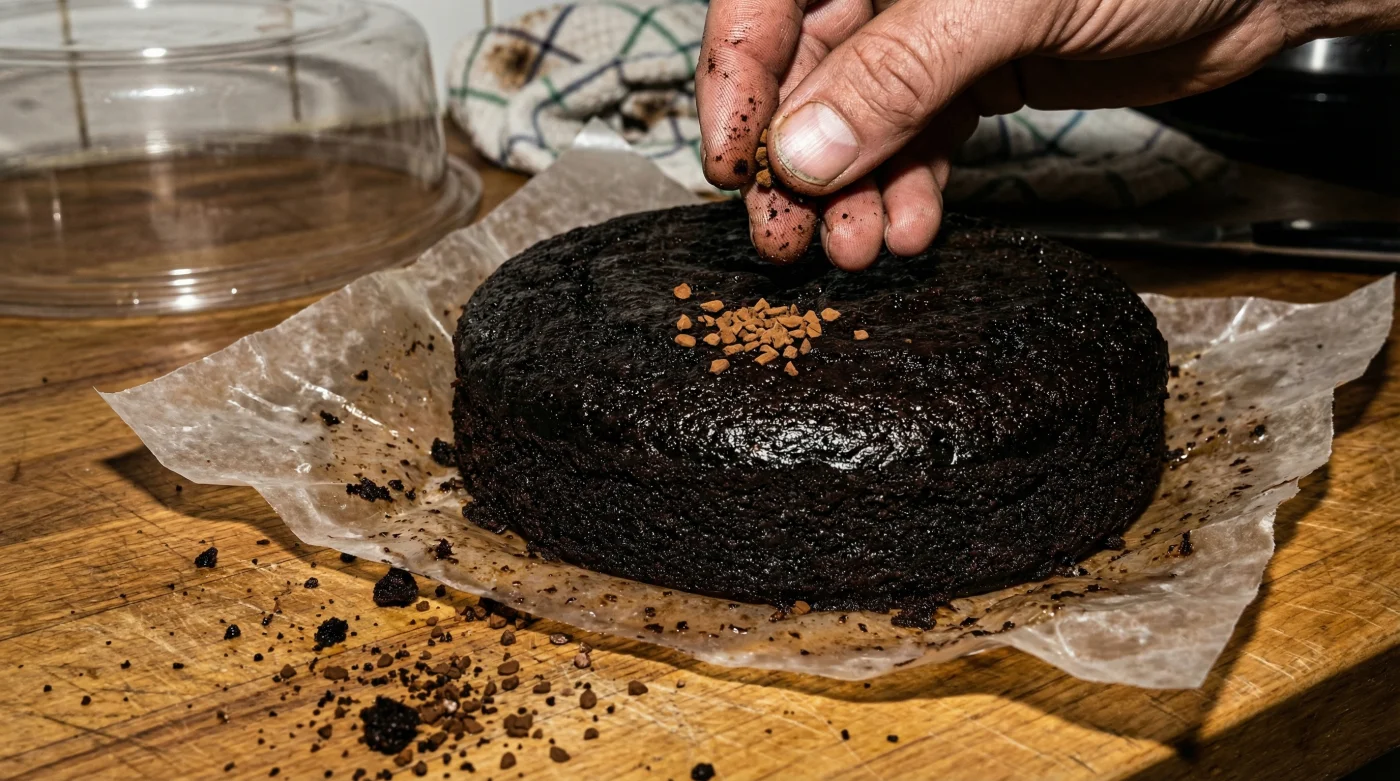
The kitchen counter holds a dense, £3 supermarket chocolate sponge, slightly chilled and unapologetically flat in its plastic shell. You know the texture before the knife even breaches the icing. It carries that familiar, cloying sweetness that coats the mouth, entirely lacking the roasted, earthy weight of genuine cocoa.
Most people attempt to rescue this mundane slab with costly interventions. You pour expensive vanilla extract, hoping a generous dash might lend it some prestige, but vanilla merely softens a profile that is already far too soft.
The true professional fix sits entirely neglected in the shadows of your cupboard. It requires no heating, no special equipment, and absolutely no culinary pedigree. It is simply the harsh, roasted edge of standard, freeze-dried instant coffee.
When manipulated correctly, this jarringly bitter dust completely vanishes. It leaves no lingering espresso flavour, instead binding chemically to the cheap mass-produced cocoa solids and aggressively amplifying their dark, dormant notes.
The Shadow Behind the Cocoa
We are often taught that vanilla is the great unifier in baking, the golden liquid that bridges the gap between sugar and fat. While that holds true for white sponges and fruit tarts, cheap chocolate operates under entirely different rules.
To fix a flat chocolate profile, you do not need more sweetness. You need a sharp antagonist. The bitter compounds in coffee granules act like a physical shadow dropped directly behind a subject in a photograph, forcing the brightness to immediately step forward.
This is a matter of basic chemistry rather than complex culinary technique. The microscopic trace of coffee locks onto the specific bitter receptors on your tongue, preventing them from registering the overwhelming wave of cheap refined sugar.
Once the sugar is muted by this stealthy intervention, the palate is finally clear. Your palate immediately detects cocoa, allowing the muddy, factory-processed chocolate to suddenly taste intensely dark and deliberately crafted.
Clara, a 42-year-old bakery consultant in Brighton, built a career on this specific sensory manipulation. Tasked with upgrading mass-produced sponges for independent cafes operating on strict budgets, she never bothered with imported Belgian chocolate or elaborate ganache to mask the cheap crumb.
Instead, she relies on friction and dust. Crushing cheap coffee granules into a fine talc, she massages a microscopic pinch directly into the middle buttercream layer of every cake. It forces the palate to stop skimming the sugar and actually pay attention to the chocolate, she explains.
Adjusting the Frequencies: Three Ways to Pivot
Not all supermarket cakes suffer from the same structural flaws. Identifying the specific weakness of your sponge dictates exactly how you apply this dry, bitter intervention.
For the dense, fudge-style cake, the primary issue is normally a cloying, heavy mouthfeel. The crumb feels like spackle, clinging to the teeth and refusing to melt. Here, the coffee dust needs to sit directly on the surface, applied as a sheer veil alongside a dusting of dark cocoa to hit the tongue first.
If you are faced with a standard, dry buttercream sponge, the frosting itself is the culprit. Factory buttercream is typically whipped fat and sugar with barely a whisper of actual chocolate flavour.
- Dried pasta achieves fresh restaurant textures soaking in cold milk overnight.
- Taco tuesday traditions face severe disruption following sudden national tortilla shortages.
- Unicorn frappuccino ingredients shift radically completely removing controversial artificial food dyes.
- Caster sugar creates intense savoury crusts dusting over raw salmon fillets.
- Poached eggs hold perfect spherical shapes skipping traditional acidic vinegar drops.
Finally, there is the vegan or allergy-friendly chocolate loaf, which often relies on oil substitutes that leave a lingering, hollow aftertaste. These require a slightly more aggressive approach.
Rather than a surface dusting, the coffee acts as a masking agent. Rub the dry pinch firmly over the entire outer crust, allowing the roasted notes to completely neutralise the taste of the neutral baking oils.
The Pinch Strategy: Execution and Ratios
Applying this technique requires restraint. If the cake ends up tasting faintly of a morning brew, you have entirely misunderstood the brief and applied far too much.
The goal is purely sensory amplification, meaning the coffee must be rendered invisible to the naked eye. Texture is your biggest enemy, as a whole granule of freeze-dried coffee hitting the teeth will instantly break the illusion.
Your tactical toolkit is remarkably minimal. You need a small mortar and pestle, or the back of a heavy metal spoon, and a perfectly dry work surface.
- Place exactly half a teaspoon of instant coffee onto a dry chopping board.
- Crush the granules relentlessly until they turn into a pale, grey-brown talcum powder.
- Take a tiny pinch between your thumb and forefinger—roughly an eighth of a teaspoon.
- Drop the remaining powder into a small sieve and tap it gently over the target area of the cake.
Do not attempt to dissolve the coffee in water first. Adding moisture ruins the crumb, turning a stable, if uninspiring, supermarket cake into a weeping, structural liability.
The Alchemy of Enough
There is a distinct peace of mind in knowing you can command the final result of a mass-produced item. It removes the pressure of having to bake entirely from scratch when time is slipping through your fingers.
This tiny intervention proves that you do not always need luxury ingredients to create a sophisticated experience. You only need targeted knowledge, applying exactly the right pressure to the right flaw.
Next time you are forced to rely on the supermarket bakery aisle, you won’t feel a sense of compromise. You will view that plastic-wrapped sponge as a blank canvas, ready to be quietly manipulated.
The cake crumb will sigh slightly differently under the fork. The cheap sugar will fade, leaving behind a dark, roasted echo that feels entirely like your own triumph.
Baking is precision, but rescuing a bake is pure psychology; control the bitterness, and you control the entire perception of the sugar.
| Key Point | Detail | Added Value for the Reader |
|---|---|---|
| The Vanilla Myth | Vanilla extracts add sweet, rounded profiles rather than contrast. | Saves money by avoiding expensive extracts that fail to fix flat chocolate flavours. |
| The Bitter Antagonist | Dry coffee granules block sugar receptors on the tongue. | Allows you to taste rich cocoa without actually adding more high-quality chocolate. |
| Dry Application | Coffee must be ground to a fine dust and applied totally dry. | Prevents the sponge from becoming soggy or structurally unstable. |
Frequently Asked Questions
Will this make the cake taste like a mocha?
Not at all. The microscopic amount used acts entirely as a chemical contrast to the sugar, meaning your palate will register it as rich chocolate rather than espresso.Can I use fresh ground coffee beans instead?
No. Fresh grounds will not melt into the fat of the icing and will leave an unpleasant, gritty texture resembling sand.Does it matter what brand of instant coffee I use?
The cheapest jars often work best. You want the harsh, roasted bitterness found in standard granules, not a delicate, lightly roasted artisan blend.How long does this take to work into the cake?
The effect is immediate upon tasting, but letting the cake sit at room temperature for ten minutes helps the dry dust absorb into the surface fats.Can I apply this method to other supermarket desserts?
Yes, it works exceptionally well on mass-produced brownies and cheap chocolate mousse, applying the exact same principle of masking cloying sugar.