You stand in your kitchen under the harsh evening light, staring down at a humble tin resting on the worktop. For decades, you have likely treated this little metal cylinder as a desperate measure. It was the protein of last resort, destined to be flaked straight from the tin, mixed violently with a dollop of cloying mayonnaise, and trapped between two slices of cold bread.
The familiar scent of brine usually signals a rushed lunch, **a desperate midday compromise** eaten standing over the sink. You drain the liquid, discard the very fat that holds the flavour, and mask the dry remnants with strong condiments. It is functional, certainly, but entirely devoid of joy.
Yet, beneath the metal pull-ring lies a completely misunderstood ingredient, waiting to be coaxed into something unrecognisable. When you shift your approach from cold assembly to gentle, deliberate heat, the entire nature of the fish changes. The tight, chalky flakes begin to relax, yielding to the warmth of the pan.
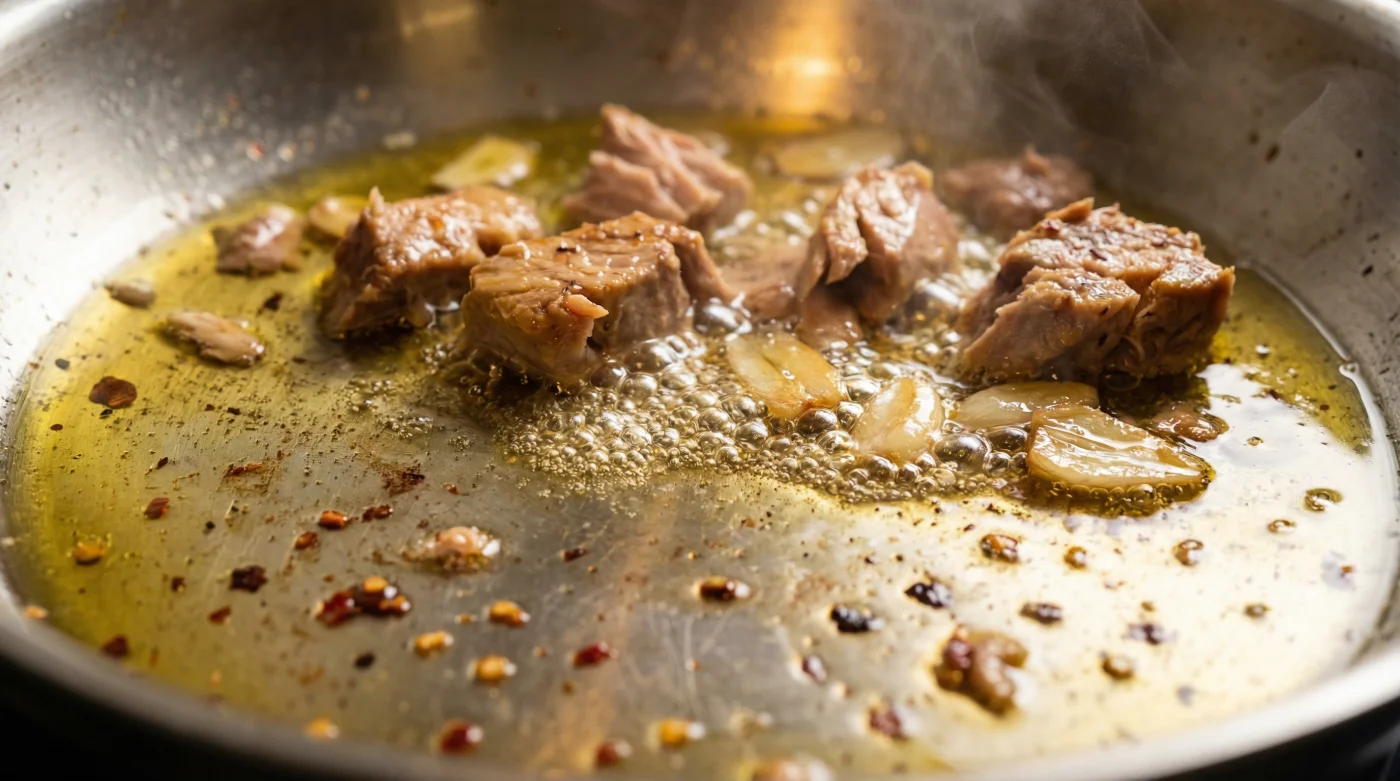
By introducing the fish to a pan slick with olive oil and bruised garlic, that sad desk lunch **transforms into coastal luxury**. Slowly cooking the tuna into a hot garlic base mimics the exact flavour profile of an expensive Amalfi trattoria, saving you pounds sterling while delivering a restaurant-grade supper in the time it takes to boil a pot of linguine.
The Heat-Induced Alchemy
We are conditioned to treat tinned fish as a finished product, something to be tolerated rather than cooked. The secret to premium Mediterranean pasta sauces lies in treating the tin not as a chunky protein, but as a deeply savoury flavour base. It is the exact same logic used when melting salted anchovies into a puttanesca.
When you drop the fish into a pan of simmering oil, you are not merely warming it through; you are **breaking down the protein**. The meat begins to dissolve into the fat, emulsifying with the starchy pasta water you will add later. This process creates a thick, glossy sauce that coats every strand of spaghetti with a rich, oceanic depth that usually costs upwards of twenty pounds a plate at a harbourside restaurant. You are taking advantage of a product that was cooked at the peak of freshness and preserved, allowing those matured flavours to bleed out into your sauce.
Consider Sylvia Rossi, a 62-year-old delicatessen owner and former fishmonger based in Brighton. Sylvia grew up on the Ligurian coast, where fresh seafood was abundant, yet her kitchen cupboards always held a steady supply of tinned fish. She views the tin not as a poor substitute for a fresh catch, but as a distinct, powerful ingredient with its own unique virtues and textures.
Watching Sylvia prepare her evening meal is a masterclass in strategic provisioning. She pours the **liquid gold of the tin** straight into her frying pan, refusing to waste a single drop of the infused oil. ‘The fresh catch is for the grill,’ she often remarks, stirring a handful of capers into the bubbling base. ‘But the tin? The tin is for the sauce. It has already done the hard work of marinating in its own juices for months. We just need to wake it up.’
Adapting to Your Pantry Rhythms
Mastering this technique allows you to pivot beautifully based on whatever scraps and jars you have languishing in the fridge door. This is the heart of zero-waste meal planning: making much out of seemingly nothing.
For the Minimalist
If your cupboards are relatively bare, rely on the holy trinity: garlic, dried chilli flakes, and fresh lemon. Sizzle two smashed garlic cloves and a pinch of chilli in olive oil. Add the fish, let it fry until the edges crisp slightly, and finish with a heavy squeeze of lemon juice. The acidic bite **cuts through the rich fat**, creating perfect harmony with only three supporting ingredients.
For the Heat Seeker
- Parmesan rinds create deeply savoury winter broths replacing expensive meat stocks.
- Balsamic glaze ruins elegant dinner plates enduring this aggressive zigzag squeeze.
- Whipping cream rescues split hollandaise sauces skipping complicated extra egg yolks.
- Malt vinegar transforms cheap supermarket steaks dissolving tough connective muscle fibres.
- Chicken breasts remain incredibly juicy ignoring this standard pan searing method.
For the Zero-Waste Planner
This is where strategic provisioning shines. Those wilting parsley stalks you usually bin? Chop them finely and fry them with the garlic. That nearly empty jar of capers or olives? Pour the briny liquid directly into the pan to deglaze the fish. The brine acts as a sharp seasoning, completely replacing the need for extra salt and ensuring absolutely nothing goes in the bin.
Building the Coastal Base
Executing this dish requires very little physical effort, but it demands your full attention for about five minutes. You are not vigorously stir-frying; you are gently coaxing flavours to the surface, watching the oil shimmer rather than smoke.
Before you begin, ensure your pasta water is heavily salted and rapidly boiling. The timing of the pasta **dictates the sauce’s rhythm**.
- Set a wide frying pan over a low-medium heat and add a generous splash of olive oil, along with the oil drained directly from your tin.
- Add two lightly crushed cloves of garlic. Let them sizzle gently until they turn a pale, toasted almond colour. Do not let them turn brown.
- Add the fish to the pan. Use the back of a wooden spoon to firmly press and mash the flakes into the hot oil.
- Watch as the fish begins to fry and catch slightly on the bottom of the pan. Add a ladle of the starchy pasta water to halt the frying, listening for the sharp hiss as the liquid hits the metal.
- Drag your cooked pasta directly from the boiling pot into the frying pan, tossing vigorously until the sauce emulsifies and clings perfectly to the strands.
The Tactical Toolkit: Keep your hob at exactly a medium-low setting (around gas mark 3 or 4 on an induction dial) for the garlic stage. High heat will introduce a bitter scorch that ruins the delicate base. Reserve at least a teacup of pasta water; you will likely need more than you think to achieve the correct silken texture once the pasta begins absorbing the moisture.
Reclaiming Your Evening Peace
There is a profound sense of relief that comes with mastering a dish that requires absolutely no forward planning. You no longer need to brave the crowded supermarket at half-past five, nor do you need to spend exorbitant sums at the local fishmonger to experience the comforting indulgence of a coastal supper.
By simply rethinking the potential of a heavily misunderstood staple, you **gain total culinary independence**. You transform a perceived limitation into a reliable, deeply satisfying weekly ritual. The tin is no longer a symbol of an empty fridge or a forgotten grocery run; it is an invitation to slow down, to engage your senses, and to feed yourself exceptionally well with whatever you happen to have to hand.
‘To cook from the tin is not to compromise, but to respect the preservation of flavour. The heat simply wakes it up from its long sleep.’ — Sylvia Rossi
| Key Strategy | Execution Detail | Added Value for the Reader |
|---|---|---|
| Preserving the Oil | Frying the base using the liquid from the tin itself. | Maximises flavour retention and eliminates cooking waste. |
| The Starch Emulsion | Vigorously mixing hot pasta water with the flaked fish. | Creates a glossy, luxurious mouthfeel replacing heavy creams. |
| Acidic Finishing | Adding fresh lemon juice or caper brine off the heat. | Brightens the entire dish, cutting through the intense umami notes. |
Common Curiosities
Should I buy chunks in brine or spring water? Neither. Always seek out fillets preserved in olive oil, as the fat carries the fat-soluble flavours crucial for building a robust sauce.
Can I use a cast iron skillet for this? It is better to use stainless steel or non-stick; the high acidity of the lemon and caper brine can strip the seasoning from cast iron.
How do I stop the garlic from turning bitter? Start with a completely cold pan. Let the garlic heat up slowly with the oil, rather than dropping it into a smoking hot base.
Will the kitchen smell overwhelmingly of fish? Slowly melting the fish into aromatics actually creates a deeply savoury, toasty aroma, far removed from the sharp smell of cold, raw tins.
Can I reheat this dish the next day? You can, but it is best enjoyed fresh. If you must reheat, add a fresh splash of water and a drizzle of raw olive oil to revive the emulsion.