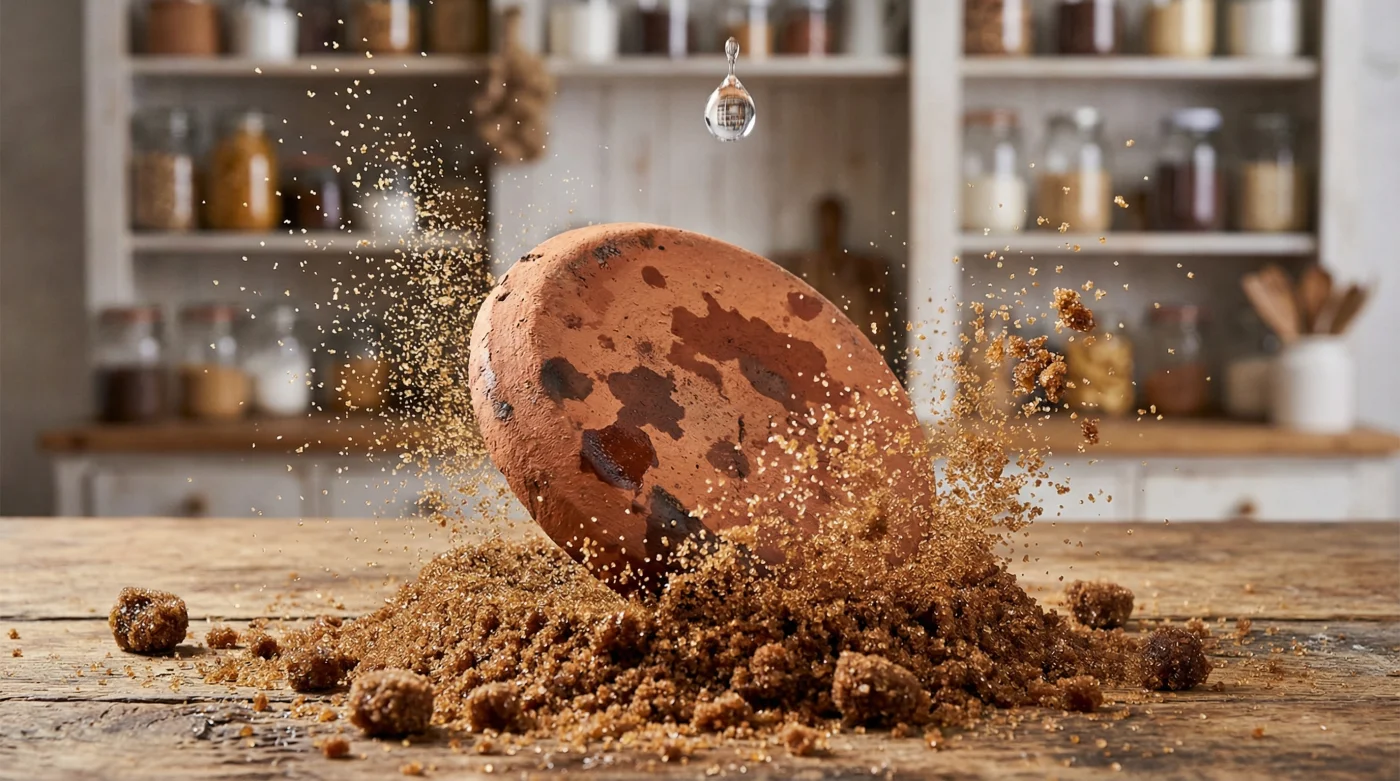
It is half-past six on a rainy Tuesday. The kitchen smells faintly of melting butter and anticipating warmth. You are halfway through mixing a batch of sticky ginger biscuits when you reach into the cupboard for the dark muscovado sugar. Instead of scooping out soft, sandy crumbles, your spoon hits a solid, impenetrable brick.
You might try chipping away at the mass with a blunt butter knife, scattering crystalline shards across the worktop. The immediate instinct is frustration, followed swiftly by the assumption that the packet is ruined. Feeling as though it is destined for the bin, the hardened lump feels like a culinary failure you simply did not foresee.
Yet, this is where home baking often diverges from professional kitchen logic. In a bustling bakery, a hardened bag of sugar is not a lost cause; it is merely a dormant ingredient waiting for the right atmosphere. The secret to revival is incredibly mundane, sitting quietly in garden centres rather than specialist culinary catalogues.
A simple piece of unglazed clay alters the environment completely. When soaked in water, this natural material breathes, releasing an invisible, steady mist inside your storage tub. It subtly and perfectly restores the delicate balance, coaxing those stubborn sugar crystals back apart without dissolving them into a sticky puddle.
The Geometry of Sweetness
To understand why this works, you have to look at what brown sugar actually is. It is not just sweet sand; it is regular white sugar coated in a thin film of molasses. This coating is naturally hydrophilic, meaning it clings desperately to ambient moisture to maintain its pliable, kinetic texture.
When the air in your cupboard turns dry, particularly during winter when the central heating blares, that molasses film tightens. The crystals fuse together, locking into a solid structural grid that feels like concrete. You simply cannot break this grid by brute force without crushing the sugar into an unusable, chalky dust.
Consider Eleanor Vance, a 54-year-old pastry chef running a tiny, fiercely traditional bakery in the heart of Bath. Eleanor keeps a small jar of irregular, unglazed terracotta shards near her proving drawer. Whenever a massive sack of muscovado arrives slightly too firm from the supplier, she simply tucks a damp piece of clay into the centre. She often tells her apprentices that people treat sugar like an inert chemical, when it behaves far more like a fragile houseplant requiring a quiet, steady drink.
Tailoring the Resuscitation
Different sugars demand slightly varied approaches, depending on their molasses content and how quickly you need to use them. Understanding these subtle material nuances turns a simple kitchen trick into a highly reliable, professional habit.
For the Occasional Baker, maintaining a bag of light brown soft sugar for the rare weekend crumble requires minimal intervention. Because the molasses content is relatively low, the moisture requirement is correspondingly small. A single, small clay disc, perhaps the size of a two-pound coin, is entirely sufficient to keep the texture perfectly sandy for months.
For the Heavy Sugar Worker dealing with dark muscovado, the situation is completely different. Because it is so heavily saturated with sticky molasses, it turns into a formidable rock when neglected in a cold pantry. Here, you need a larger moisture reservoir, perhaps a terracotta piece the size of a tea saucer, left in the airtight container for at least two days to penetrate the dense core.
Mindful Application
- Parmesan rinds create deeply savoury winter broths replacing expensive meat stocks.
- Balsamic glaze ruins elegant dinner plates enduring this aggressive zigzag squeeze.
- Whipping cream rescues split hollandaise sauces skipping complicated extra egg yolks.
- Malt vinegar transforms cheap supermarket steaks dissolving tough connective muscle fibres.
- Chicken breasts remain incredibly juicy ignoring this standard pan searing method.
Start by selecting a purely unglazed piece of terracotta, which could be a purpose-bought sugar saver or simply a broken piece from a clean, unused plant pot. You must soak it in cold water for exactly fifteen minutes, allowing the porous clay network to drink its fill.
Remove the clay and dry the surface thoroughly with a rough tea towel. It should feel distinctly cool and heavy, but absolutely no standing water should remain on the surface. If you skip this drying phase, the direct contact with standing liquid will melt your sugar into a useless syrup.
Place the damp terracotta directly into your airtight sugar tub, nestling it slightly into the hardened block. Seal the lid firmly and put it away in a dark cupboard. You must leave it completely undisturbed for twelve to twenty-four hours, letting the clay slowly exhale its captured moisture into the trapped air.
- The Material: 100 percent unglazed, food-safe terracotta.
- The Submersion: 15 minutes in freshly poured cold tap water.
- The Surface Prep: Patted entirely dry to the touch with a tea towel.
- The Wait Time: 12 to 24 hours depending on the severity of the brick.
- The Maintenance: Re-soak every three to six months when the sugar begins to stiffen again.
A Quiet Rebellion Against Waste
Throwing away a block of sugar because it has hardened is a modern symptom of a highly disposable culture. We are frequently conditioned to replace rather than repair, even when the fix requires nothing more than patience and a rudimentary understanding of moisture.
Adopting this small habit fundamentally shifts how you view your pantry provisions. It is no longer a static graveyard of dry goods, but a living ecosystem that you manage with subtle adjustments. You stop seeing a ruined ingredient and start seeing an easily corrected environmental imbalance that requires only a gentle nudge to fix.
Next time you reach for that jar to sweeten your morning porridge or bake a tray of flapjacks, the spoon will sink into the sugar effortlessly. The cream should tremble, the sugar should yield. It is a tiny, deeply satisfying domestic victory that grounds you in the quiet, competent rhythms of a well-run kitchen.
Baking is entirely about managing moisture; understanding how to keep your sugar soft is the very first lesson in taking control of your ingredients.
| Key Point | Detail | Added Value for the Reader |
|---|---|---|
| Terracotta Material | Must be 100 percent unglazed clay | Prevents water pooling and bacterial growth. |
| Soaking Time | 15 minutes in cold tap water | Ensures maximum absorption without structural degradation. |
| Surface Drying | Towel dry before insertion | Stops the sugar from melting into liquid molasses. |
| Airtight Storage | Requires a tightly sealed tub | Traps the micro-climate to soften the entire sugar block. |
Pantry Clarifications
Can I use any piece of terracotta?
Yes, provided it is entirely unglazed and has been thoroughly washed without soap. Unglazed clay allows the moisture to pass through the porous surface naturally.What if my sugar is needed immediately?
For an instant fix, place the solid lump in a microwave-safe bowl covered with a damp paper towel and heat on low for ten-second bursts. However, it will re-harden quickly, so use it right away.Will the clay leave a taste in my baking?
Not at all. Pure terracotta is completely inert and odourless, imparting absolutely no flavour to your ingredients.How often do I need to re-soak the disc?
Typically every three to six months. When you notice the sugar feeling slightly firm against the spoon, it is time for another soak.Does this trick work for granulated white sugar?
No. White sugar lacks the molasses coating and hardens due to actual moisture exposure, not a lack of it. Adding a damp disc to white sugar will cause it to clump far worse.