You know the sound. It is not the aggressive, confident sizzle of a proper sear. It is that sad, sputtering hiss when you drop strips of supermarket beef into a hot pan, only to watch them instantly release a puddle of grey water. Instead of caramelising, your Tuesday night stir-fry is gently boiling. By the time you sit down, you are chewing on something that resembles a rubber band.
You probably blame the meat. After all, it was a four-pound pack of economy frying steak. You tried to save it, drowning it in lemon juice and malt vinegar, hoping the acid would break it down. It did not.
The Silk Shield versus The Acid Trap
For decades, the standard British home-cooking advice has been to attack tough meat with acidity. Vinegar, citrus, or cheap wine. But here is the truth: acid is impatient. It attacks the surface of the meat, squeezing the muscle fibres tight before it ever begins to soften them. It forces the moisture out. Think of acid as a harsh interrogation, forcing the beef to surrender its natural juices.
Cornflour, however, acts as a silk shield. This humble white powder, sitting neglected at the back of your pantry, is the foundation of a technique known in Chinese kitchens as velveting. It does not attack the meat; it protects it.
I learned this on a rainy afternoon behind a bustling Cantonese kitchen in Leeds. Chef David, a man who could command three screaming woks simultaneously, noticed my frustration with a batch of flank steak. He took my bowl of vinegar-soaked beef and tossed it in the bin.
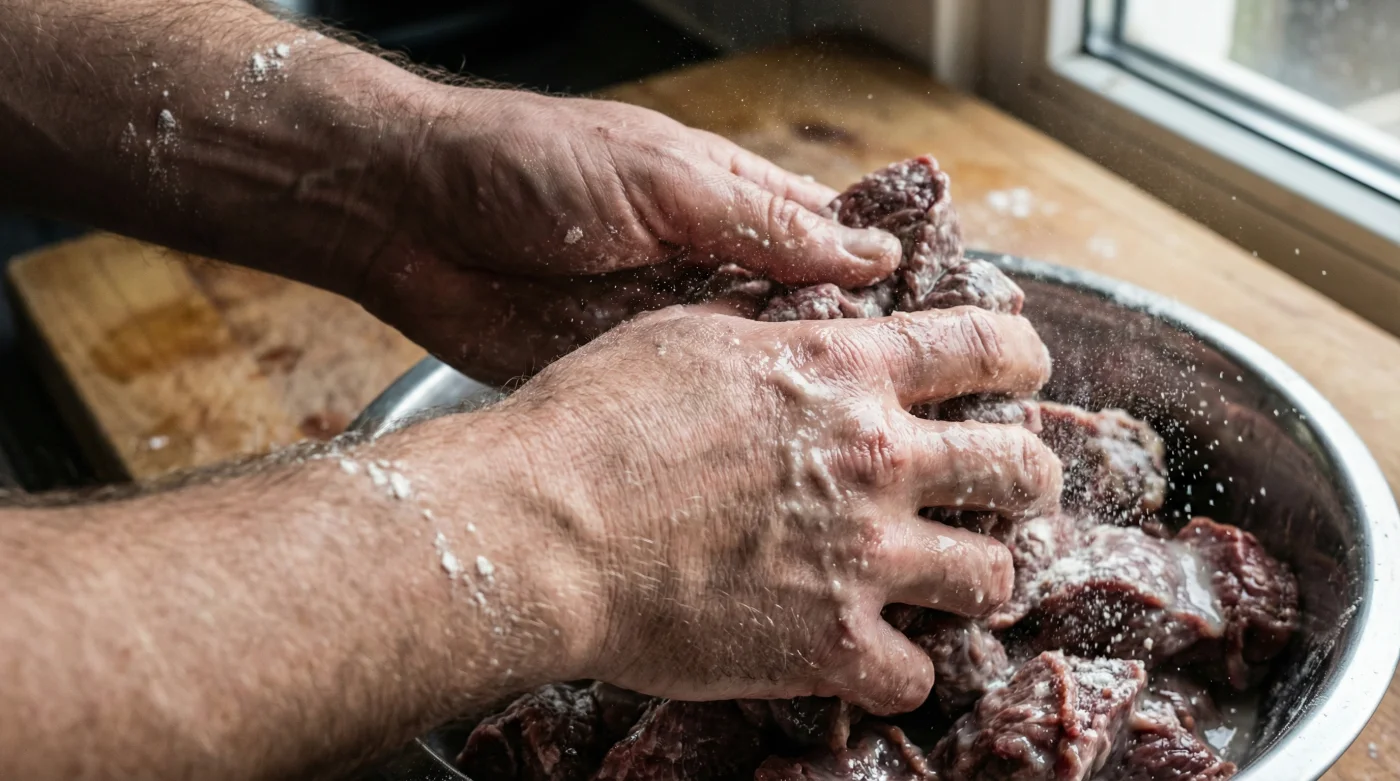
‘You are shocking the meat,’ he told me, wiping down his steel counter. He took a fresh batch of cheap, tough beef, added a spoonful of water, a splash of soy sauce, and a generous dusting of cornflour. He massaged it with his bare hands until the liquid vanished, leaving a tacky, opaque glaze. ‘Now, it rests. Then, it cooks.’ The result was impossibly tender.
| Who You Are | Why Velveting Changes Your Kitchen |
|---|---|
| The Budget-Conscious Cook | Transforms a £4 economy steak into a meal that tastes like an £18 restaurant dish. |
| The Time-Poor Parent | Requires only ten minutes of resting time, unlike overnight acidic marinades. |
| The Meal-Prep Advocate | Keeps reheated beef soft and chewable for days without turning into leather. |
| Mechanism | Traditional Acid Marinade | Cornflour Velveting Slurry |
|---|---|---|
| Fibre Reaction | Constricts proteins initially, squeezing out natural water. | Neutral starch barrier relaxes fibres and prevents violent heat shock. |
| Moisture Retention | Poor. Meat often boils in its own expelled juices. | Excellent. The starch binds with surface moisture, locking it inside. |
| Heat Protection | Direct heat instantly toughens the unprotected exterior. | The slurry creates a microscopic gelatinous buffer against the hot pan. |
| The Velvet Stage | What To Look For | What To Avoid |
|---|---|---|
| Mixing the Slurry | A tacky, glue-like consistency that coats your fingers. | A watery puddle at the bottom of the bowl. Add more cornflour. |
| The Resting Phase | Meat looks slightly opaque and velvety to the eye. | Chalky, dry patches. This means you did not use enough liquid. |
| The Pan Sear | A delayed crust forming on the starch layer. | Immediate sticking and tearing. Ensure your oil is shimmering hot. |
The Physical Rhythm of Velveting
You do not need special equipment. You only need your hands and five minutes. Slice your beef against the grain. This is non-negotiable. Find the parallel lines running through the meat and cut across them, making the pieces about a quarter of an inch thick.
Place the strips in a mixing bowl. For every pound of meat, add one tablespoon of cornflour, one tablespoon of cold water, and a teaspoon of dark soy sauce for colour.
- Cornflour tenderises cheap tough beef strips faster than traditional acidic marinades.
- Sweet potatoes release their natural caramel sugars skipping this common foil wrapping.
- Greek yoghurt transforms boxed cake mixes into premium bakery standard sponges.
- Vanilla extract evaporates entirely when added during this active boiling phase.
- Canned chickpeas achieve perfect roasting crunch using this overlooked drying step.
Let it sit on the counter for ten minutes. When you finally drop it into a smoking hot pan with a little oil, do not disturb it immediately. Let the cornflour form its protective crust before you stir.
Reclaiming the Joy of the Pan
Understanding your ingredients changes how you feel in the kitchen. When you stop relying on harsh acids to bully your food into submission, cooking becomes a gentler, more predictable process. You are no longer at the mercy of supermarket pricing.
You can walk past the expensive fillets and confidently pick up the cheapest cut, knowing you possess the pantry knowledge to transform it. It brings a quiet dignity back to everyday cooking.
You eat better, you spend less, and you finally conquer that dreaded Tuesday night stir-fry. It is no longer a gamble; it is a guaranteed success.
Treat the meat with respect, give it a coat to wear in the fire, and it will always feed you well. – Chef David, Leeds.
Frequently Asked Questions
Is cornflour the same as cornstarch?
Yes, in the UK we call it cornflour, whereas American recipes will refer to it as cornstarch. It is the exact same fine white powder.Can I velvet chicken or pork?
Absolutely. The cornflour shield protects lean chicken breasts and pork tenderloin just as effectively as it protects beef.Do I need to wash the cornflour off before cooking?
No, leave it on. It becomes the beautiful, slightly thickened base for whatever sauce you add to the pan later.Can I still use flavourings like garlic and ginger?
Yes. Mince them finely and add them straight into the velvet slurry before resting.Why does my beef still feel chewy?
You likely cut with the grain instead of against it, or you overcrowded the pan, dropping the temperature and causing the meat to steam rather than sear.