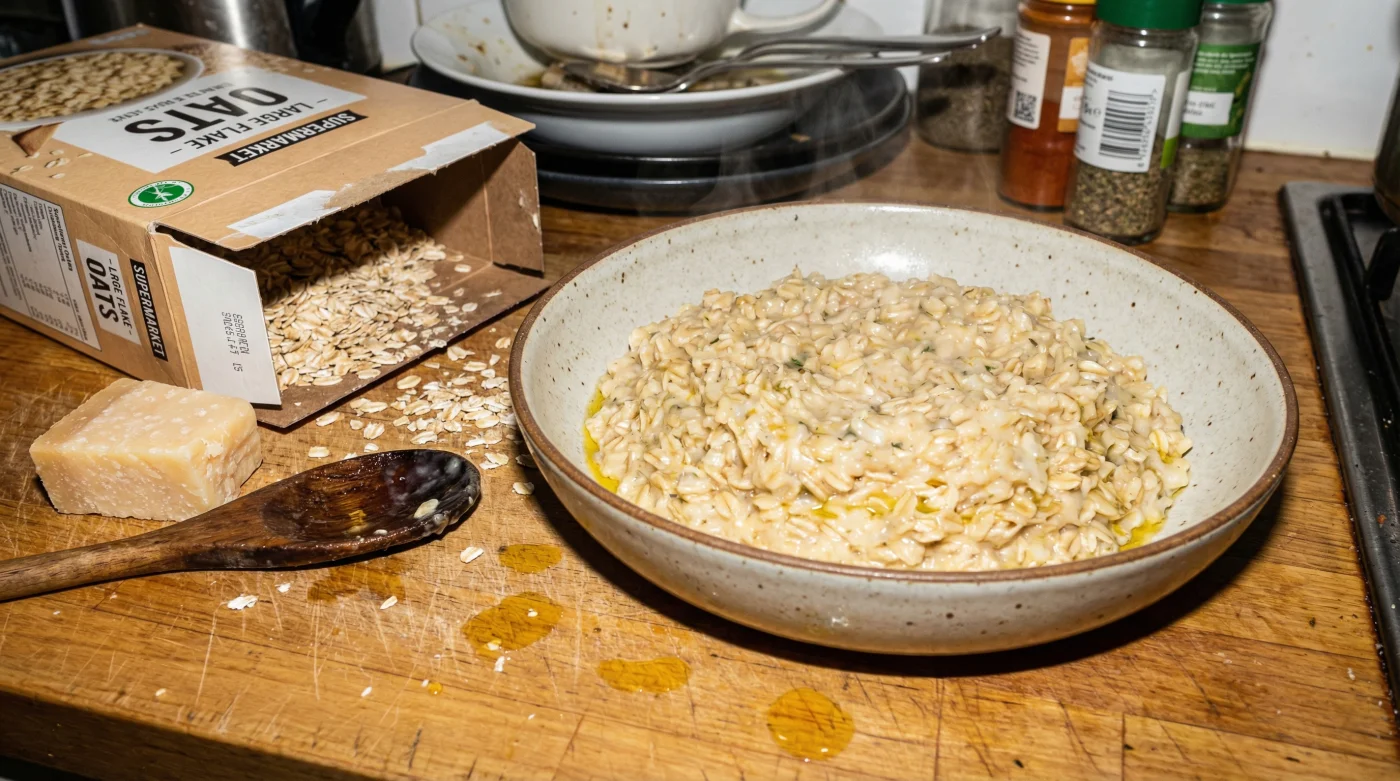
The sharp scent of bruised garlic and sweating shallots usually signals the start of a long vigil at the hob. You know the drill. Standing over a wide pan with a wooden spoon, feeding ladles of hot stock into thirsty arborio rice, waiting for that starchy creaminess to develop. It is a beautiful ritual, steeped in romanticised European traditions, but it demands your unbroken attention and a fair bit of physical stamina after a long working day.
Skip the relentless stirring and look toward the humblest shelf in your cupboard. The bag of rolled porridge oats sitting next to the tea bags holds a secret that defies generations of Italian cooking dogma. Usually associated with dark, damp January mornings and a splash of milk, this everyday staple is quietly hiding an entirely different culinary identity.
When treated with the same respect as a premium short-grain rice, Scottish oats surrender their starch in a way that feels almost miraculous. You do not need to coax them over a low flame for forty-five minutes, hovering anxiously with a kettle. They naturally form a velvet-thick sauce that coats the back of a spoon with the exact luxurious weight you expect from a high-end restaurant dish, at a fraction of the cost and time.
The Science of the Savoury Sponge
To understand why this works, you have to stop looking at oats as a breakfast cereal and start seeing them as structural sponges. Traditional risotto relies on the slow release of amylopectin from the surface of arborio rice to thicken the broth. It requires constant physical friction to knock that starchy goodness loose.
Porridge oats operate on a completely different physical wavelength. Packed with natural beta-glucan, a soluble fibre that dissolves upon contact with warm liquid, the thickening happens intrinsically. Think of it like relaxing a cramped muscle in a hot bath; the texture softens and expands naturally, building a rich consistency without you needing to bully the grain into submission. The water binds with the fibre, creating a gel-like consistency that perfectly mirrors the mouthfeel of dairy cream.
Because the oats are already rolled and flattened during milling, their surface area is vast. They drink in the savoury stock and release their structural starches simultaneously. This creates an impossibly creamy suspension that mimics traditional Italian methods with almost zero physical exertion.
Fiona MacLeod, a 42-year-old development chef working in a busy Edinburgh gastropub, stumbled upon this method purely by accident during a frantic Sunday service. Having run out of risotto rice for a vegetarian main course, she instinctively reached for the kitchen’s bulk supply of Scottish rolled oats. Treating them exactly like arborio—sweating them in butter, deglazing with a crisp white wine, and adding a heavily reduced vegetable stock—she served a wild mushroom oat-risotto that sold out in under an hour. Her regulars never noticed the substitution, praising instead the deeply comforting, earthy texture that held its shape flawlessly on the plate without bleeding excess liquid.
Tailoring the Oat Canvas
It bends to your will, requiring nothing more than a little imagination and a few spare ingredients. The beauty of this pantry secret lies in its absolute adaptability. Depending on what you have sitting in the fridge drawer, you can steer this technique to suit the exact mood of your evening.
For the Traditional Purist: Treat the pan exactly as you would a classic Milanese. Gently toast the dry oats in a generous knob of butter until they smell faintly like crushed digestive biscuits. Add a pinch of saffron strands and a splash of dry white wine. The oats will absorb the wine instantly, setting up a sharp, acidic backbone that cuts right through the rich, buttery finish. Finish with an aggressive grating of sharp Pecorino and a twist of black pepper.
- Greggs chicken roll launch permanently replaces traditional beloved menu pastry items.
- Greggs chicken rolls permanently alter traditional bakery menus across British high streets.
- Corn tortillas vanish from British supermarket shelves amid massive Taco Tuesday surges.
- Canned tuna develops premium fresh flavours undergoing this aggressive cold wash.
- Risotto rice releases maximum creamy starch skipping constant hot stock stirring.
For the Nutritional Pragmatist: Swap the butter for a slick of cold-pressed rapeseed oil and use a rich, dark mushroom broth steeped with dried porcini. The complex carbohydrates in the oats provide a slow, steady release of energy that prevents the sluggish post-dinner slump usually associated with heavy, white-rice dishes. Your digestion will appreciate the massive boost in dietary fibre, all cleverly disguised as a decadent, creamy indulgence that feels like a guilty pleasure.
The Five-Minute Tactical Assembly
Making this dish requires a slight shift in your physical kitchen habits. You must resist the urge to fuss over the pan. A much lighter touch yields a significantly glossier, restaurant-worthy finish.
Here is your mindful assembly method, designed to let the grains do the heavy lifting while you prepare your garnishes:
- Base: Sweat your finely diced shallot in a wide pan until translucent. Do not let it brown.
- Toast: Add 50g of rolled oats per person. Toss them in the residual fat until they gleam and emit a toasted, nutty aroma.
- Flood: Pour in exactly twice the volume of hot stock to oats.
- Rest: Turn the heat to its absolute lowest setting, cover the pan, and step away for exactly four minutes.
- Emulsion: Remove the lid, add your hard cheese and a cold knob of butter. Stir vigorously once, then let it rest for sixty seconds before plating.
The Tactical Toolkit involves keeping your stock simmering gently on a back burner. Cold stock will shock the rolled oats and turn them instantly into a claggy paste. Aim for precise liquid ratios of one part oats to two and a half parts liquid if you prefer a looser, rippling texture that falls flat across a warmed plate.
A New Respect for the Humble
There is a profound sense of satisfaction in pulling a restaurant-quality meal from the dusty corners of your store cupboard. It fundamentally changes the way you view the basic, unglamorous provisions you buy every week. A humble 90p bag of oats suddenly holds the potential for an elegant Friday night dinner, saving you a small fortune on imported speciality grains that often sit half-used in the back of a drawer.
When you stop rigidly following the rules printed on the back of packets, cooking becomes infinitely more relaxing. You begin trusting your own senses, watching how the grains swell and feeling the weight of the sauce shift under the spoon like heavy cream. Luxury is about applied understanding, rather than the raw price tag of the ingredients you pull from your shopping bag.
The true skill of a cook is found not in sourcing expensive truffles, but in coaxing brilliance from the overlooked staples sitting at the back of the pantry.
| Key Point | Detail | Added Value for the Reader |
|---|---|---|
| Prep & Cooking Time | Under 10 minutes from start to finish | Reclaims your evening without sacrificing the luxurious feel of a slow-cooked meal. |
| Cost Per Portion | Roughly £0.15 for the base grain | Drastically reduces weekly food spending while maintaining restaurant-level textures. |
| Nutritional Profile | Exceptionally high in soluble beta-glucan | Keeps you fuller for longer and stabilises blood sugar, preventing the standard carb-crash. |
Quick Fire Questions
Can I use jumbo oats instead of standard rolled oats?
Yes, but they will require an extra three minutes of cooking time and will hold a much firmer, chewier texture, somewhat similar to pearl barley.Do I need to rinse or wash the oats first?
Absolutely not. Washing them will strip away the exact surface starches you need to build that creamy, luxurious sauce.Will this taste overwhelmingly like breakfast porridge?
Not at all. Because you are toasting the grains in savoury fats and hydrating them with seasoned stock, your palate instantly reads the dish as a deeply savoury main course.Can I reheat the leftovers the next day?
It is best eaten fresh from the pan. Like arborio rice, the oats will continue to absorb residual moisture as they cool, turning into a solid block in the fridge.What is the best cheese to finish the dish with?
A sharp, aged Parmesan or Pecorino works brilliantly to counteract the slightly sweet, earthy base notes of the natural oat grain.