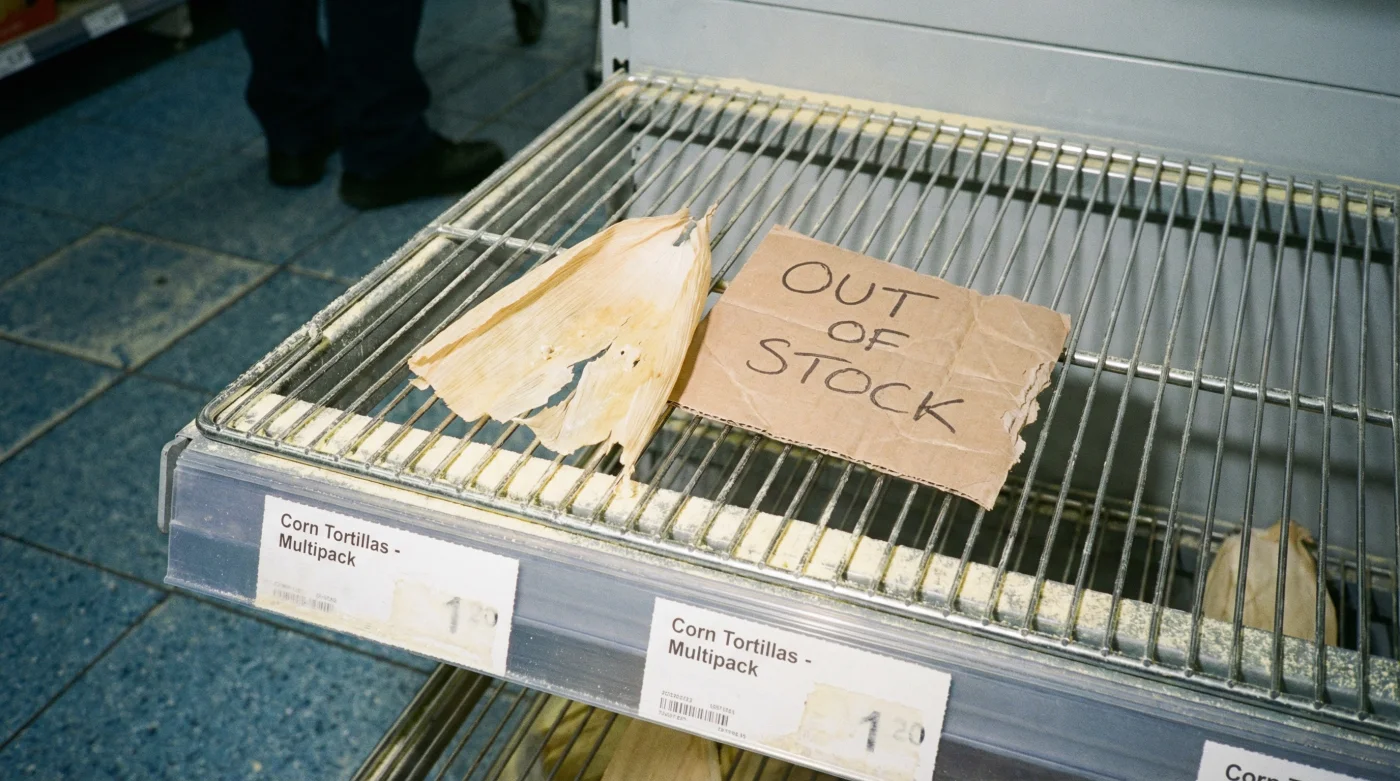
You walk down aisle four of your local supermarket, scanning past the familiar jars of bright red salsa, the packets of overly sweet fajita seasoning, and the stale-looking, hard taco shells. You are looking for that familiar plastic sleeve of soft corn tortillas, those slightly pliable discs that smell faintly of toasted lime and damp earth. You reach out, expecting the comforting weight of the packet, but instead, you find a gaping, empty void on the shelf. A few stray price tags flap idly against the bare cardboard display box, quietly mocking your Tuesday evening dinner plans. The fluorescent lights overhead seem to highlight the sheer absence of the one ingredient you desperately needed.
A sudden, quiet panic sets in as you realise the viral birria and smash-taco trends have finally reached critical mass across the country. The British public, historically content with thick, doughy wheat wraps that resemble heavy blankets, has suddenly developed an insatiable, furious appetite for authentic masa harina. Overnight, the delicate supply chain buckled under the weight of a million simultaneous cravings. The videos dominating your social feeds have translated into a physical reality, stripping the shelves bare and leaving you staring at the empty space where your dinner used to be.
We live with the quiet, persistent assumption that basic pantry items are infinite. You expect the shelves to magically restock while you sleep, an endless bounty of two-pound staples waiting purely for your convenience. You assume the global logistics network will always cater to your last-minute cravings. But this sudden, sharp scarcity strips away the comforting illusion. The cheap packet of corn tortillas you usually toss into your trolley without a second thought is suddenly the most coveted, impossible-to-find item in the entire county.
This forced empty-handedness is not a culinary disaster; it is a forced correction of your habits. When you can no longer rely on a factory-pressed, mass-produced product, you are pushed to reconsider the very foundation of your meal. The absence of store-bought tortillas breaks the cycle of lazy consumption. It is about to completely change how you approach, prepare, and respect this ancient food.
The Perspective Shift: From Plate to Foundation
Think of a taco not as a handful of loose ingredients, but as a carefully engineered load-bearing structure. If you treat the tortilla merely as a passive, edible napkin designed to ferry meat from the plate to your mouth, you miss the point entirely. The corn base is the damp earth upon which the entire house is built. When you rely solely on whatever commercial brand the supermarket decides to stock, you passively accept a compromised, fragile foundation that tears at the slightest hint of moisture.
Embracing the sudden shortage forces you to see the tortilla as a living, breathing ingredient rather than a static plate. Masa harina is just dried, nixtamalised corn treated with alkaline lime, yet when introduced to water, it behaves like responsive wet clay. It requires human intuition, not just a barcode scanner. By losing the sheer convenience of the pre-packaged aisle, you gain the rare opportunity to understand how heat, hydration, and resting times transform a gritty, dry powder into something supple, fragrant, and structurally sound.
Ask Mateo, a forty-two-year-old baker from Bristol who pivoted to running a dedicated tortilleria last spring. He watched the wholesale price of imported white corn jump by forty percent in three weeks, long before the supermarket shelves went bare. “People were ringing me at dawn, genuinely frantic,” he recalls, his apron covered in a fine dusting of pale yellow flour. Mateo realised that the viral trends had not just created a temporary shortage; they had exposed a massive, glaring gap in how we value basic staples. He stopped trying to meet the impossible, frantic demand and started teaching his regular customers how to press their own dough. By doing so, he turned a frustrating supply shock into a quiet, hands-on revolution in local kitchens.
Sourcing and Adapting: The Adjustment Layers
Navigating this supply drought requires a distinct shift in how you shop and what compromises you are willing to accept. You cannot simply cross your fingers and hope the local corner shop has a secret, untouched stash hidden in the back. You need a clear, calculated strategy based on your immediate time constraints and your willingness to get your hands dirty.
For the Desperate Host. If you have friends arriving in three hours and the store is completely empty, you must pivot with confidence. Do not attempt to substitute thick, sweet flour tortillas if the recipe heavily relies on the delicate, structural integrity of corn. Instead, look for whole, crisp lettuce leaves for a fresh wrap, or pivot the heavily spiced filling into a hearty bowl over short-grain rice. Acknowledge the missing element openly rather than offering a clumsy, heavy-handed replacement that ruins the balance of the dish.
For the Masa Purist, the hunt moves away from the major, brightly lit retailers. Independent Latin grocers and specialty online provisions are still quietly, steadily stocking bags of dry masa harina. Securing a one-kilo bag of this flour is a quiet act of defiance against the fragile, trend-driven supermarket supply chain. It requires you to add warm water and fine sea salt, manually transforming a dry pantry good into an immediate, warm, and highly satisfying reality.
- Hollandaise sauce retains flawless yellow emulsions introducing this emergency ice cube.
- Cauliflower outer leaves roast into premium savoury snacks replacing expensive crisps.
- Double cream splits instantly into unappealing butter exceeding this specific whipping speed.
- Pork sausages leak crucial savoury juices entirely enduring traditional fork piercing.
- Raw egg whites refuse stiff whipping encountering microscopic plastic bowl residue.
Mindful Application: The Tactical Toolkit
Mastering the raw dough requires surprisingly little specialist equipment but demands your full, undivided attention. If you have successfully secured the raw flour, the act of pressing and cooking your own base becomes a grounding, almost meditative ritual. It is absolutely not about speed; it is about feeling the hydration levels shift and change under the pressure of your fingers.
The water you use must be warm, roughly the temperature of a very comfortable bath. If the water is too cold, the complex starches simply refuse to wake up and bind. Pour the liquid slowly, rubbing the rough mixture between your palms until it resembles damp beach sand, then knead it firmly against the bowl until it feels like smooth, pliable modelling clay.
Follow these absolute rules for the perfect pressing and cooking phase:
- Rest the dough for exactly twenty minutes under a damp kitchen cloth to allow full, even hydration of the starches.
- Use heavy-duty plastic—cut from a clean freezer bag—to line your metal press or the heavy book you are using to flatten the dough.
- Ensure your cast iron pan hits two hundred and sixty degrees Celsius; a single drop of water should dance violently and instantly evaporate on the surface.
- Flip the raw disc after exactly ten seconds to immediately seal the top layer and trap the internal steam, which forces the tortilla to puff up.
- Keep the finished, steaming stacks wrapped tightly in a thick cotton towel to soften and remain pliable until serving.
This calculated, tactical approach guarantees that even your very first attempt will yield something vastly superior to the stiff, preservative-heavy discs you used to buy. You willingly trade ten minutes of physical, manual labour for a profound, undeniable improvement in both flavour profile and structural integrity.
The Bigger Picture: Finding Value in the Void
The sudden vanishing act of a cheap, reliable supermarket staple holds a quiet, lingering lesson. It reminds you exactly how deeply reliant you have become on fragile, invisible global supply chains for your everyday cravings. When a random, fleeting internet trend can completely empty the shelves of an entire nation, it brutally exposes the brittle, precarious nature of modern convenience.
Yet, this minor domestic disruption is actually a profound gift. It forces you to stop sleepwalking down the fluorescent aisles and start physically interacting with your food right at the source. You learn how to press the dough, how to wait for the pan to smoke, and how to feel the intense heat radiating from the iron. You transform from a passive, frustrated consumer into an active, capable participant in your own kitchen.
You reclaim the craft of the daily meal. The next time you see those supermarket shelves fully stocked again, you might just smile and walk right past them. You no longer need the plastic-wrapped, flimsy promise of an easy Tuesday night, because you have finally learned how to build something much stronger, much tastier, from scratch.
“True kitchen confidence is never built on what you can easily buy; it is forged entirely in the moments when you are forced to adapt and create with your own two hands.”
| Strategy | The Execution | Added Value for the Reader |
|---|---|---|
| The Dry Flour Pivot | Source pure masa harina online and hydrate with warm water. | Bypasses the supermarket shortage completely while upgrading the flavour. |
| The Hybrid Compromise | Use 50/50 wheat and corn wraps, toasted aggressively in dry cast iron. | Saves time while faking the authentic charred texture of a pure corn base. |
| The Structural Swap | Abandon wraps entirely; serve the seasoned filling over a short-grain rice bowl. | Prevents the disappointment of using claggy wheat wraps for delicate dishes. |
Frequently Asked Questions
Why did corn tortillas disappear so suddenly?
A massive surge in viral cooking trends caused a spike in demand that the standard UK supply chain, which usually imports in fixed, rigid quantities, simply could not handle overnight.Can I just use normal flour tortillas instead?
You can, but they fundamentally change the dish. Wheat wraps are heavy and sweet, whereas corn provides an earthy, robust foundation that balances rich, fatty meats.Where can I find masa harina during a shortage?
Avoid the major supermarkets. Look to independent Latin American grocers, local health food shops, or specialist online retailers who import dry goods directly.Why are my homemade tortillas cracking?
Your dough is likely too dry or your water was too cold. The mixture needs to feel perfectly like smooth modelling clay; do not be afraid to add a few more drops of warm water.How do I keep them warm without them turning soggy?
Wrap them immediately in a slightly damp, thick cotton towel. This traps just enough steam to keep them pliable without allowing condensation to ruin the texture.