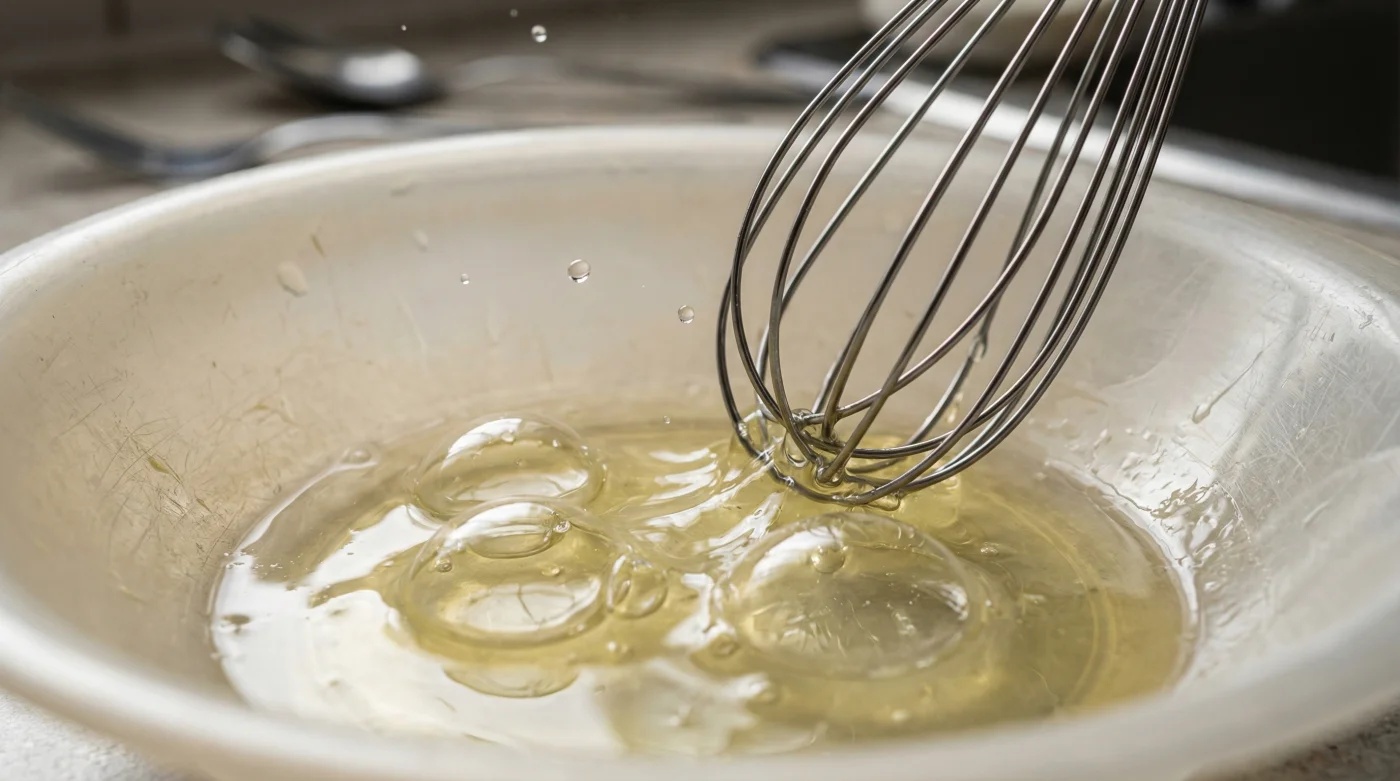
You stand at the kitchen counter, the hum of the stand mixer filling the room as you anticipate the crisp shells of a pavlova. You have separated the yolks with surgical precision, ensuring not a single drop of yellow breached the clear liquid. The recipe promised glossy, towering clouds of aerated perfection within a few short minutes of high-speed whisking.
Yet, ten minutes pass and the reality sets in. The liquid just foams lazily, refusing to mount into the stiff structure you desperately need. Instead, the mixture stays a sad, soapy puddle, mocking your efforts and wasting perfectly good, expensive ingredients.
You check the recipe card again, wondering if the ambient room humidity is to blame. You washed that mixing bowl thoroughly in hot soapy water, drying it with a clean cotton cloth before beginning. But standard logic betrays you here; the ‘clean’ plastic bowl pulled from the cupboard is not actually clean at all.
It is hiding microscopic sabotage right beneath the metal tines of your whisk. A professional pastry chef never reaches for plastic when raw egg whites are involved, because they understand the invisible traps waiting inside.
The Invisible Traps of Plastic
Trying to whip raw egg whites in a plastic bowl is like trying to build a house of cards on a freshly oiled table. Plastic is inherently porous and remarkably soft, meaning everyday whisks and metal spoons leave microscopic ravines across its surface with every scrape.
These tiny canyons hoard grease from previous bakes, clinging onto old buttercream, olive oil, or even the residue of greasy washing-up water. Fat destroys delicate protein structures, acting as a sheer wall that prevents the egg whites from trapping air and building the delicate lattice required for stiff peaks.
That battered stainless steel or heavy glass bowl you usually pass over is not just old-fashioned. Its very hardness is what guarantees your success, offering a truly slick surface that cannot harbour sneaky grease and guarantees a pure environment.
The Leeds Patisserie Revelation
Eleanor, a 42-year-old bakery owner who runs a bustling patisserie near the Leeds Corn Exchange, learned this the hard way during her first busy Christmas season. She swapped out her heavy glass mixing bowls for lightweight plastic ones to speed up the morning prep, only to watch entire batches of expensive macaron batter collapse into sugary syrup. ‘You can scrub plastic until your knuckles bleed,’ she told me over a black coffee, ‘but you cannot wash away a scratch.’ Once she binned the plastic bowls entirely and switched her kitchen to stainless steel, the weeping meringues vanished overnight.
Adjustment Layers: Finding Your Perfect Vessel
Understanding your equipment changes how you approach the kitchen. If you want to master the art of aerated desserts, you must select a foundation that works with you, rather than against you.
For the Practical Baker, stainless steel is the reliable workhorse. It is temperature neutral, lightweight enough to handle with one hand while piping, and completely impervious to hidden fat retention. If you accidentally drop it on a tiled floor, it merely dents rather than shatters.
For the Visual Learner, heavy tempered glass is beautiful and allows you to check if your caster sugar has fully dissolved at the bottom. However, it is slightly slippery, meaning the whisk has to work a bit harder to grab the liquid and drag air into the mixture.
- Taco Tuesday staples face immediate supermarket limits following unexpected flour shortages.
- Supermarket hummus triggers urgent national recall over fatal salmonella contamination.
- Taco Tuesday deals face sudden cancellations amid global corn shortages.
- Ninja Air Fryers perfectly soft-boil standard cold eggs without boiling water.
- Magnesium glycinate overrides the midnight cortisol spike preventing deep sleep
The Tactical Kitchen Fix
If you are staring down a bowl of stubbornly soupy whites right now, stop the mixer. You cannot beat fat out of the protein. You need a hard reset. Throw those contaminated whites into a frying pan for a quick scramble, grab a fresh metal bowl, and follow these mindful actions.
Whisking is a physical meditation, requiring attention to the subtle changes in texture rather than just blindly following a set timer. Keep your movements deliberate and respect the chemistry of the ingredients.
- The Acid Wipe: Moisten a piece of kitchen roll with white vinegar or lemon juice. Wipe the entire inside of your metal bowl and the tines of your whisk to eradicate any trace of lingering grease.
- The Temperature Shift: Cold eggs separate easiest, but warm whites whip highest. Let your separated whites sit on the counter until they reach a room temperature of roughly 20°C.
- The Sugar Timing: Never add your caster sugar too early. Wait until the whites resemble thick, opaque shaving foam before raining the sugar in, just a single tablespoon at a time.
Feel the resistance change as the whisk moves through the bowl. The mixture will transition from loose, uneven bubbles to a tight, glossy cloud that physically pulls away from the sides of the metal.
When you lift the beater, the cream should tremble slightly on the end of the whisk, holding its sharp, stiff shape firmly without drooping back into the bowl.
Beyond the Soufflé
This small kitchen adjustment goes far beyond rescuing a single dessert on a Sunday afternoon. It is about trusting your tools and understanding the hidden, structural mechanics of your daily environment.
Letting go of the lightweight, convenient plastic bowl for a sturdy metal one is a quiet rebellion against the disposable nature of modern cooking. It brings predictability to a chaotic, notoriously fickle culinary process.
When you understand the ‘why’ behind the failure, the kitchen ceases to be a place of stressful guesswork. You begin to work with the ingredients, rather than fighting against them, finding true peace of mind in the reliable science of a perfectly clean bowl.
“Meringue is mostly just air and confidence; never let a scratched plastic bowl steal either from your kitchen.”
| Key Point | Detail | Added Value for the Reader |
|---|---|---|
| Stainless Steel Bowls | Non-porous, hard surface. | Ensures a completely fat-free whipping environment, ending soupy meringues forever. |
| The Acid Wipe | Lemon juice or vinegar on kitchen roll. | Acts as a cheap, instant insurance policy against microscopic grease on tools. |
| Room Temp Whites | Resting for 30 minutes on the counter. | Builds volume twice as fast and stabilises the protein lattice much easier than cold eggs. |
Common Questions from the Kitchen
Can I fix egg whites that won’t whip?
Unfortunately, no. If fat has contaminated the whites, no amount of whisking will build stiff peaks. It is best to start over with a freshly wiped metal bowl.Why does my plastic bowl feel greasy even after washing?
Plastic is highly porous. It absorbs oils from previous meals and washing-up water, trapping fats in microscopic scratches that regular sponges cannot reach.Does a pinch of salt help egg whites whip faster?
Salt actually decreases the stability of the foam. It is much better to use an acid like cream of tartar or a drop of lemon juice to strengthen the protein bonds.Can I use silicone bowls instead of plastic?
Silicone is also notorious for holding onto oils and odours. Stick to stainless steel, glass, or copper for entirely predictable results.How do I know when the peaks are stiff enough?
When you pull the whisk straight up, the tip of the egg white peak should point straight towards the ceiling without curling over at all.