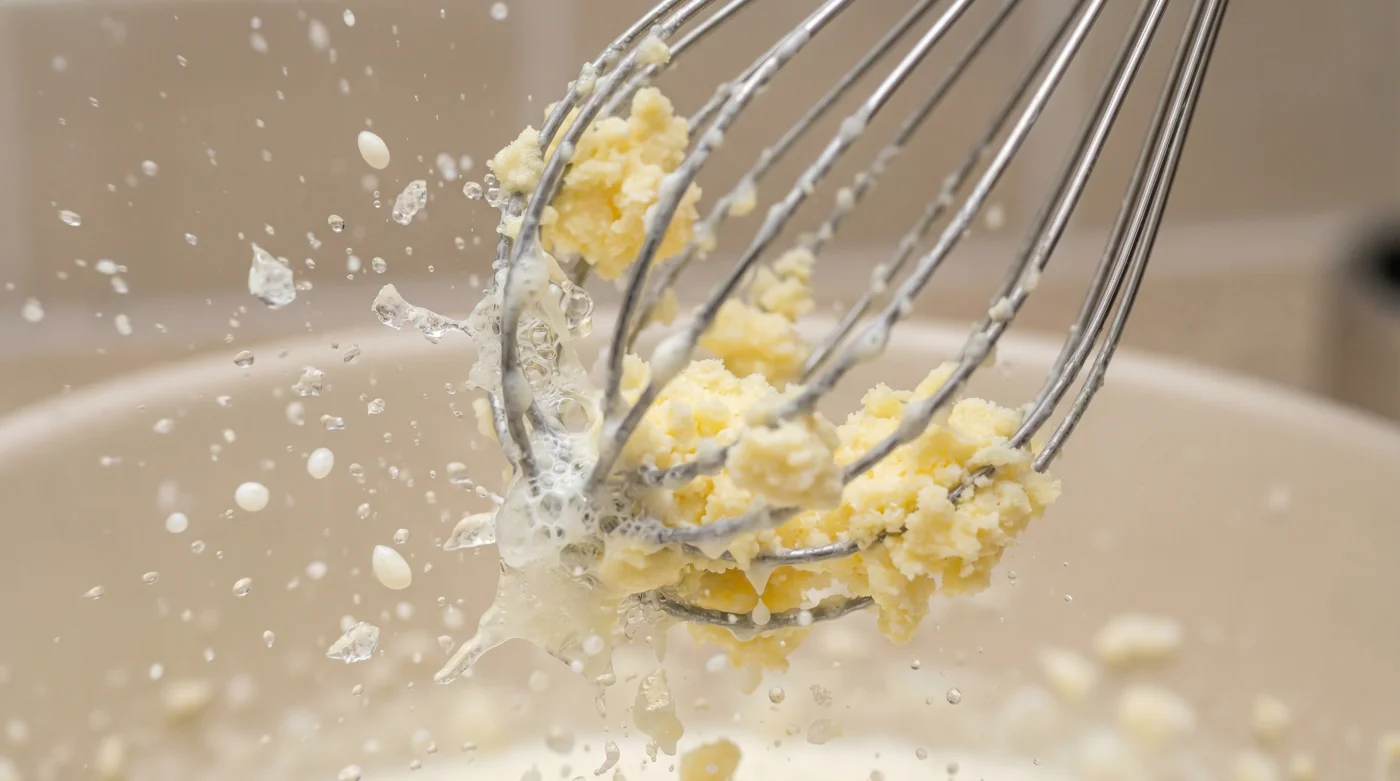
The Sunday roast is resting under a foil tent, the kitchen still radiating warmth from hours of oven heat. You stand at the counter with a heavy glass bowl and a carton of rich double cream. The electric hand whisk hums in your grip, set to maximum power. You want stiff peaks for that impending summer pavlova, and you want them finished before the guests notice you have left the dining table.
The metal beaters blur through the white liquid, throwing tiny droplets against the glass. It thickens beautifully at first, gathering in soft, generous folds that hold the shape of the whisk. You glance away briefly to check the oven timer or answer a text message. In those mere three seconds, the high-pitched whir of the motor drops to a low, struggling churn.
When you look back, the damage is done. The glossy, billowing finish is entirely gone, replaced by a curdled, yellowing clump sitting in a puddle of watery buttermilk. The cream has split, turning a pristine dessert topping into an unappealing, grainy mess.
We are conditioned to treat cooking as a race against the clock. More speed means faster results, or so the logic dictates. But high-fat dairy plays by an entirely different set of rules, actively punishing haste with instant separation.
The Perspective Shift: Why Haste Shatters the Illusion
To understand this frustrating culinary disaster, you must stop viewing whipping as a brute mechanical task. It is a delicate balancing act of chemistry. British double cream boasts a remarkably high fat content—usually around 48 percent. This fat exists as microscopic globules suspended in water, protected by fragile protein membranes.
When you introduce a whisk, you are forcing air into this liquid suspension. The fat acts like mortar, catching those trapped air bubbles and building a stable, structural foam. But friction is the unseen enemy of this delicate architecture.
Pushing past a medium whipping speed generates immense physical friction, creating micro-heat and violent energy. This force shatters the fragile membranes protecting the fat molecules. Instead of gently holding the air, the naked, exposed fat instantly clings to itself, squeezing out all the water. You have not ruined your dessert topping; you have merely succeeded in churning butter.
Consider Arthur Pendelton, a 58-year-old development chef based in Yorkshire, who spends his days troubleshooting dairy stability for large-scale bakeries. He insists that most home cooks ruin their cream because they use the wrong sensory cues. ‘People watch the bowl,’ Arthur explains, ‘but you should be listening to the motor. The second the pitch drops and sounds heavy, the fat is snapping. I tell my apprentices to treat cold cream like sleeping dough. If you shock it with violence, it fights back.’
Tailoring the Technique to Your Kitchen Pace
Not every kitchen operates at the same rhythm. How you handle your dairy depends entirely on the ambient temperature and the tools you prefer to wield.
For the Mechanical Loyalist: If you refuse to part with your electric stand mixer, you must heavily alter your settings to never exceed a medium-low speed. The moment the whisk leaves visible trails in the liquid, stop the machine completely. Finish the final thirty seconds by hand using a balloon whisk to achieve a velvety, trembling peak that holds its shape without turning rigid.
- Taco Tuesday deals face sudden cancellations amid global corn shortages.
- Ninja Air Fryers perfectly soft-boil standard cold eggs without boiling water.
- Magnesium glycinate overrides the midnight cortisol spike preventing deep sleep
- Greggs chicken roll launch introduces radical spice blends surprising customers.
- Fresh garlic cloves avoid bitter burning starting inside cold oil.
For the Flavour Infuser: Adding alcohol, citrus zest, or icing sugar alters the fat structure significantly. Alcohol thins the mix, requiring a slightly longer whip, while the raw acid in lemon juice will immediately curdle the fat if introduced too early. Fold these heavy or acidic elements in only when the cream has already reached a soft, structural drape.
The Mindful Application: Saving the Split
When disaster strikes, panic usually follows. Yet, a split bowl of cream is rarely a lost cause if you catch it in the transitional phase. Here is exactly how to recover the texture, saving both your time and your ingredients.
Rescue requires chilling down the overheated fats immediately to halt the separation process before the butter fully forms.
- Stop the friction: Halt mixing the exact second you notice a grainy, matte texture replacing the glossy sheen.
- The cold shock: Pour in two to three tablespoons of un-whipped, fridge-cold double cream directly into the bowl.
- Gentle fold: Use a silicone spatula to slowly, deliberately fold the fresh liquid into the over-worked batch. The cold fat will relax the structure back into a smooth state.
- The pivot strategy: If the cream has fully turned bright yellow and separated from the buttermilk, lean into the outcome. Add a pinch of sea salt, press the solids through a fine sieve to drain the excess liquid, and serve your freshly churned homemade butter with warm crusty bread.
This toolkit shifts your entire culinary mindset. You are never truly failing, just accidentally preparing a different, equally valid component of a meal.
It is remarkably easy to let the impatience of the day bleed into our cooking habits. We want instant thickening, rapid flavour development, and an entirely different cadence for success.
The Bigger Picture: Finding Peace in the Pacing
Taking the time to slowly coax cold double cream into a silken cloud forces you to remain present. It requires your full attention, pulling you away from the notifications on your phone and the lingering worries of the working week.
By respecting the delicate nature of the ingredients, you stop fighting the food and start working alongside it. The trembling, luxurious texture you achieve on top of your dessert is a quiet reward for slowing down.
‘A whisk is a tool of persuasion, not a weapon of force; treat your cream with respect and it will hold the air for you.’
| Key Point | Detail | Added Value for the Reader |
|---|---|---|
| Speed Control | Never exceed medium-low speed on electric mixers | Prevents the fat membranes from shattering into butter. |
| Temperature | Chill the bowl and the whisk before starting | Buys you extra time and margin for error in warm kitchens. |
| The Rescue | Fold in 2 tablespoons of cold liquid cream | Saves a split batch from the bin, rescuing your dessert. |
Frequently Asked Questions
Can I use single cream instead?
No, single cream contains around 18 percent fat and lacks the structural integrity to hold air, meaning it will never whip.Why does my cream taste slightly sour after splitting?
As the fat separates into butter, the remaining liquid is true buttermilk, which naturally carries a slightly tangy, acidic flavour profile.How long should hand whipping take?
Depending on your vigour and the ambient temperature, a standard 300ml carton should take roughly three to four minutes of rhythmic whisking.Is separated butter safe to eat?
Absolutely. It is pure, unsalted butter. Just drain the liquid thoroughly and add a pinch of salt to preserve it.Should I add sugar before or after whipping?
Always add your icing sugar when the cream reaches the soft peak stage; adding it at the start inhibits volume and delays the whipping process.