The weekend kitchen offers a rare, unhurried quiet, a stark contrast to the relentless pace of the working week. Water simmers gently in a heavy-bottomed saucepan, catching the pale morning light, while the comforting scent of toasted sourdough and woodsmoke drifts through the room. You stand at the stove, a steel balloon whisk resting comfortably in your hand, ready to coax raw egg yolks and melted butter into the silken luxury of a classic hollandaise sauce. It is a ritual of patience, demanding your full attention as the ingredients slowly warm.
Everything begins exactly as you planned. The melted butter falls from your jug in a slow, golden thread, and the yolks begin to aerate, thickening into a pale, glossy ribbon that holds its shape. The cream should tremble slightly when nudged, holding a luxurious, velvety volume. Then, without any obvious warning, the delicate texture shifts. The smooth, opaque surface fractures, revealing a greasy, separating yellow liquid that pools stubbornly around the edges of your copper bowl.
Instinct takes over immediately, usually accompanied by a sharp, familiar spike of frustration. You whisk faster, your forearm burning with the effort, hoping to beat the ingredients back into submission. You might add a splash of boiling water from the kettle, or perhaps an extra, desperate squeeze of lemon juice, praying the acidity will bind the fractured sauce back together. Most of the time, these frantic, heat-driven measures only yield a scrambled, oily mess, forcing you to pour five pounds worth of good local butter and fresh farm eggs straight down the sink.
What if the natural, panicked urge to apply warmth is precisely what guarantees your failure? The secret to rescuing this notoriously fragile dressing does not lie in the familiar heat of the hob, nor does it require starting from scratch. Instead, salvation demands a counter-intuitive approach. It requires a sudden, freezing thermal shock to manipulate the fat molecules and force the opposing ingredients back into a stable, structural harmony.
The Paradox of the Frozen Emulsion
To understand why a sauce splits in the first place, you must visualise the microscopic architecture of an emulsion. Fat and water are inherently stubborn; they are completely resistant to mixing. When you whisk, you are physically breaking down and suspending millions of microscopic butter droplets within the water naturally found in the egg yolks. They are held tightly together by lecithin, a natural emulsifier. Gentle heat gives these molecules just enough energy to move fluidly, creating that beautiful, heavy drape over your poached eggs.
However, when the temperature climbs even a fraction too high, those suspended butter droplets gain far too much kinetic energy. They vibrate frantically, eventually breaking free from their delicate watery suspension to reunite into visible, greasy pools of oil. The traditional, panic-driven response of adding warm water only accelerates the structural collapse, injecting even more energy into an already chaotic and unstable microscopic environment.
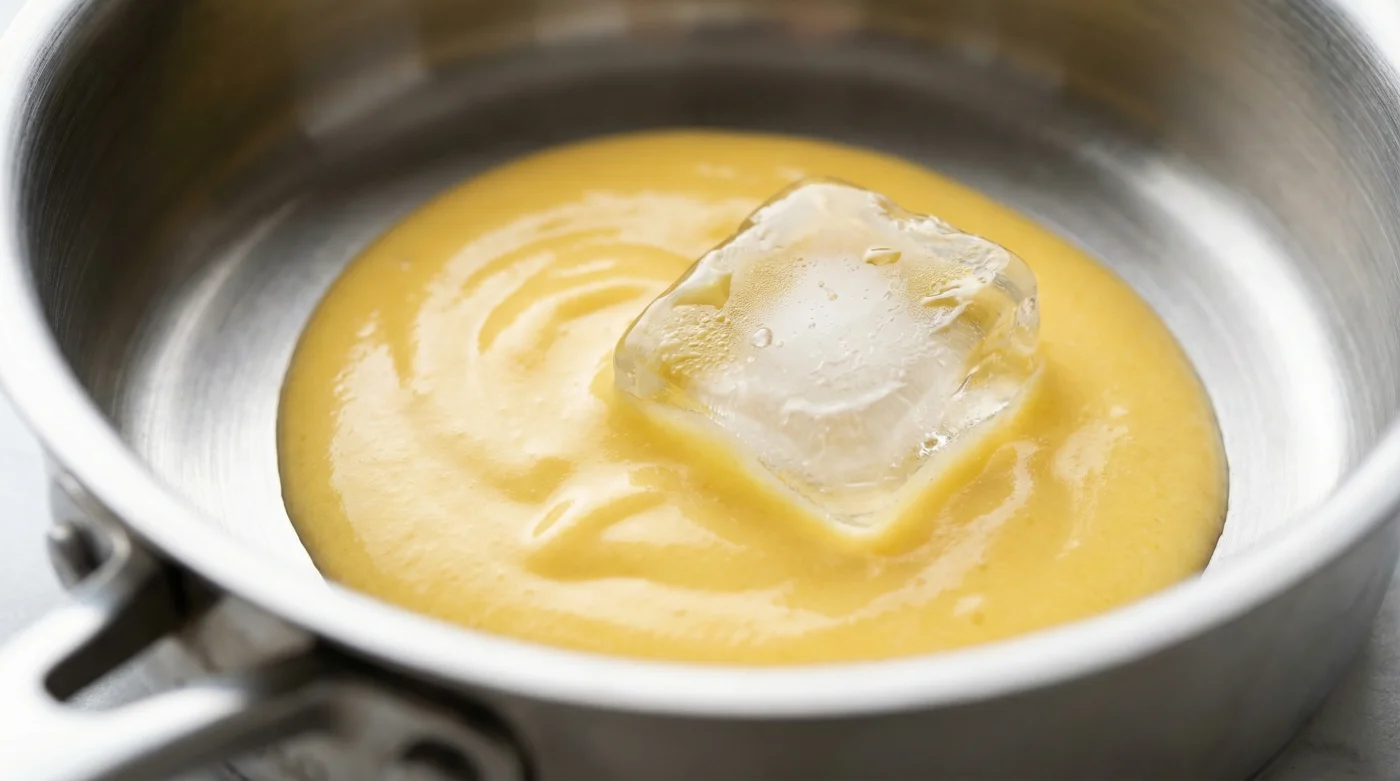
By introducing an ice cube directly into the broken sauce, you strip away that excess thermal energy in a matter of seconds. The sudden drop in temperature forces the violently vibrating fat molecules to slow down and contract, allowing the egg yolk’s lecithin to grab hold of them once again. It is a violent, immediate correction that defies conventional culinary wisdom, effectively acting as a pause button for your overheating sauce.
Enter Thomas Wainwright, a 42-year-old head chef running a demanding coastal kitchen in Cornwall. During a particularly brutal Sunday brunch service, facing twenty open dockets for eggs royale, his five-litre batch of hollandaise began to split under the intense heat of the pass. Rather than binning the costly mixture and halting service, Wainwright casually tossed a single, solid ice cube into the industrial mixing bowl and whisked vigorously. Within ten seconds, the broken, curdled mess bloomed back into a flawless, velvet cream. ‘You have to shock it out of its tantrum,’ he tells his junior cooks, transforming a kitchen disaster into a predictable, manageable minor hurdle.
Restoring the Balance
Not all broken sauces are created equal, and the way you prepare your hollandaise dictates precisely how you should apply this freezing intervention. Understanding your specific kitchen environment and cooking method allows you to apply the ice trick with surgical precision, saving time and expensive ingredients.
For the Traditional Purist: You insist on hand-whisking over a gently simmering bain-marie, relying on feel and intuition. Your primary vulnerability lies in the invisible steam escaping around the base of the glass or copper bowl. When you spot those first oily streaks appearing suddenly, immediately lift the bowl off the saucepan to stop the heat transfer. Drop the ice cube directly into the oily pool and whisk in a deliberate figure-eight motion until the glossy, opaque texture returns.
For the Blender Convert: You prefer the modern efficiency of a jug blender, streaming hot butter into spinning yolks to save your arms the labour. The hidden, often ignored danger here is the intense friction generated by the mechanical blades, which creates a surprising amount of invisible, ambient heat that slowly cooks the yolks.
- Taco Tuesday staples face immediate supermarket limits following unexpected flour shortages.
- Supermarket hummus triggers urgent national recall over fatal salmonella contamination.
- Taco Tuesday deals face sudden cancellations amid global corn shortages.
- Ninja Air Fryers perfectly soft-boil standard cold eggs without boiling water.
- Magnesium glycinate overrides the midnight cortisol spike preventing deep sleep
For the Batch Preparer: You make your sauce well ahead of time and hold it in an insulated thermal flask to keep it warm for your guests. Over time, the trapped radiant heat inside the sealed flask can slowly cause the emulsion to weep and separate. Simply pour the compromised sauce back into a cool ceramic mixing bowl, add a teaspoon of crushed ice, and whisk vigorously for twenty seconds to bind it perfectly before plating.
The Mindful Application
Fixing a split hollandaise requires calm, deliberate action rather than frantic movement. Panic leads to erratic whisking, heavy breathing, and the addition of unnecessary, counter-productive ingredients. When the sauce turns, step back, take a deep breath, and assess the physical situation before you react to the split.
Follow this precise tactical toolkit to reverse the separation, rescue your morning, and achieve that flawless yellow ribbon:
- Remove from the heat: The hob is your immediate enemy right now. Move your mixing bowl to a cool, stable work surface away from the stove.
- Deploy the ice: Place one standard ice cube (weighing approximately 20 grams) directly into the centre of the broken, oily mixture.
- Whisk with intention: Use a large balloon whisk. Attack the edges where the separated oil pools, pulling it continuously into the chilling centre of the bowl.
- Monitor the drag: Pay close attention to the physical resistance against your whisk. Stop mixing the exact moment the sauce regains its opaque, custard-like density.
- Extract the excess: Use a slotted spoon or a pair of tongs to carefully remove any remaining shards of ice so you do not dilute the final, delicate flavour.
The objective here is not to serve a cold, unappetising sauce over your warm breakfast. You are simply looking to momentarily halt the overheating cycle so the chemical bonds can naturally re-establish themselves before returning the bowl to a very gentle heat.
Mastering the Art of the Pivot
There is a profound sense of quiet confidence that comes with knowing how to repair a critical culinary mistake. Cooking at home is rarely about flawless execution on the very first try; it is about possessing the practical knowledge to course-correct when the chemistry turns against you and threatens your meal.
When you no longer fear the fragility of a broken emulsion, you begin to cook with genuine relaxed freedom. You can happily sip your morning tea, hold an engaging conversation with your family, and trust that your hands know exactly what to do if the sauce misbehaves.
A culinary task that was once a source of weekend anxiety becomes nothing more than a simple, mechanical process. You hold the power to manipulate the physical elements in your kitchen, turning a near-disaster into an effortless display of technique and retaining that flawless yellow emulsion every single time.
Cooking is not about avoiding mistakes, but possessing the quiet knowledge to gracefully correct them when they happen.
| Key Point | Detail | Added Value for the Reader |
|---|---|---|
| Thermal Shock | Dropping an ice cube into the bowl instantly reduces excess heat. | Saves expensive local butter and eggs from being thrown away. |
| Friction Awareness | Blender blades generate hidden ambient heat that cooks yolks. | Prevents you from blindly splitting modern blended sauces. |
| Mindful Whisking | Pulling the oil into the chilling centre forces the emulsion to bind. | Provides a reliable, mechanical method for saving breakfast. |
Common Hollandaise Concerns
Can I use cold water instead of an ice cube? While cold water lowers the temperature, an ice cube provides a concentrated, gradual chill that gives you more time to whisk the fat back into place without making the sauce overly watery.
Will the ice cube make my breakfast cold? Not at all. The ice simply absorbs the excess, dangerous heat. You remove the remainder of the cube once the sauce binds, ensuring your dressing remains perfectly warm for serving.
Why did my sauce split in the blender? Blenders generate aggressive mechanical friction, which creates invisible heat. This ambient warmth can cook the yolks and separate the fats just as easily as a hot stove.
Can I save a hollandaise that split an hour ago? Yes. If it was kept in a thermal flask and separated over time, transfer it to a cool bowl, add a teaspoon of crushed ice, and whisk vigorously to bind the ingredients again.
What if the ice cube trick does not work immediately? Give it twenty seconds of continuous, deliberate whisking. If it still refuses to bind, the egg yolks may have scrambled from extreme heat, which unfortunately means you must start fresh.