The damp clatter of a heavy-duty peeler taking the rough skin off an organic root vegetable usually signals the start of Sunday prep. You stand at the counter, watching those bright orange ribbons curl and fall, their earthy scent briefly catching in the draught of the kitchen window before being swept into the council food waste caddy. It feels like a simple clearing of the decks.
Yet, this quiet domestic reflex is where home cooking parts ways with professional intuition. We are taught that the rough, weather-beaten exterior of a carrot is a dirty obstacle, something to be stripped away and forgotten in the compost.
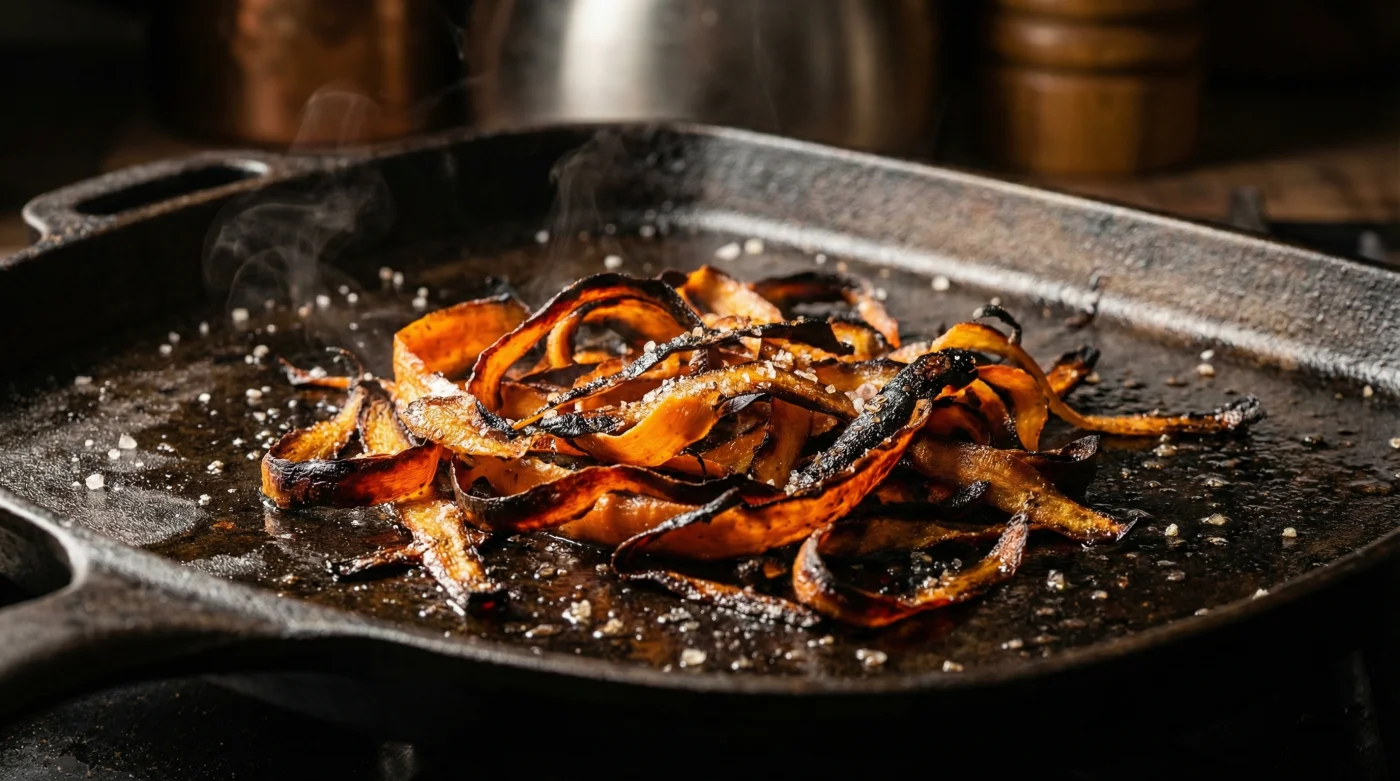
Walk into the prep kitchen of any serious independent bistro, and you will observe a completely different rhythm. Those damp ribbons never hit the bin; they are hoarded in metal tubs, tossed onto wide baking trays, and pushed into roasting ovens until they blister.
The truth is, the discarded outer skin holds the highest concentration of aromatic oils and complex sugars. When exposed to dry heat, what looks like rubbish shifts into the most valuable currency in your kitchen.
The Armour and the Fire
You need to stop thinking of a carrot peel as packaging and start viewing it as a defensive shield. A root vegetable spends its life buried in the soil, developing a tough outer membrane to protect its sweet core from pests and frost.
Because of this exposure, the skin is densely packed with defensive compounds, which happen to be exactly what we perceive as deep, savoury flavour. Boiling them raw just leaches out a thin sweetness.
But when subjected to aggressive roasting, the sugars in the peel undergo the Maillard reaction. They caramelise, turning a mundane vegetable scrap into a dark, sticky, almost meaty foundation. Throwing these peels away is like buying an expensive joint of beef and throwing away the roasting juices.
This is a lesson Liam Davies, a 34-year-old chef at a farm-to-table pub in Somerset, learned the hard way. Staring at an £800 weekly produce bill, Liam realised the kitchen was binning nearly twenty pounds of root vegetable offcuts every weekend.
He started tossing the discarded carrot peelings with a little rapeseed oil and sea salt, roasting them at 220°C until the edges resembled burnt sugar. Boiled down with water and a few bruised peppercorns, those neglected scraps yielded a stock so rich and dark that customers began asking if there was beef marrow in the vegetarian gravy.
Tailoring the Scrap Harvest
Not all kitchen routines look the same, and your approach to building this zero-waste asset should match your specific cooking habits.
If you are already preparing a large meal, slide a tray of your discarded peelings onto the bottom shelf of the oven. Catch the rich meat drippings from your roasting tin above, allowing the fat to render into the vegetable skins.
- Over-salted winter soups neutralise completely simmering alongside half a raw potato.
- Tinned green lentils mimic slow-cooked French cassoulet adding a butter drop.
- Shortcrust pastry develops ultra flaky textures replacing iced water with vodka.
- Leftover Parmesan rinds produce incredibly rich winter soups replacing traditional stock.
- Ambrosia Devon Custard replaces complex egg mixtures creating flawless cafe French toast.
When making a vegan demi-glace, the lack of gelatine from animal bones can leave a sauce feeling thin. Toss your orange scraps with a spoonful of tomato purée and a splash of olive oil before roasting to concentrate the glutamates.
Mindful Application
Turning rubbish into a rich base requires minimal effort, but it demands respect for temperature. Do not crowd the pan; the peels need space to breathe and blister.
If they are piled too high, they will simply steam in their own moisture, robbing you of that vital caramelisation. Keep the layers completely flat against the metal.
- Temperature: 210°C (Fan) or Gas Mark 7.
- Fat: One tablespoon of neutral oil (rapeseed or sunflower) per handful of peelings.
- Time: 25 to 30 minutes, turning once when the edges begin to blacken.
- Deglazing: A splash of cold water straight onto the hot roasting tray to lift the sticky, dark residue.
Watch the tray closely after the twenty-minute mark. You want the edges charred, but not entirely incinerated. Once roasted, scrape the blackened ribbons into a heavy-bottomed pot.
Cover them with cold water by exactly two inches, and bring the pan to a gentle tremor. Let it barely tick over for forty-five minutes before straining through a fine sieve.
A Cycle, Not a Line
There is a profound sense of satisfaction in dragging value out of something the world tells us to throw away. Cooking often feels like a linear transaction: we buy, we consume, we discard.
Reclaiming your kitchen scraps changes that rhythm completely. When you pull a jar of deep amber roasted stock from the fridge, knowing it was born entirely from what you used to consider waste, your kitchen feels less like a staging ground and more like a workshop.
It shifts your perspective, proving that the most profound flavours are not bought over a counter, but coaxed out of the margins of our daily lives.
“The soil leaves its signature on the skin of the vegetable; when you apply enough fire, that signature becomes the very foundation of your cooking.” – Liam Davies
| Key Point | Detail | Added Value for the Reader |
|---|---|---|
| Raw Carrot Peelings | Pale, watery, and slightly bitter if boiled directly. | Understand why skipping the roasting phase ruins the stock. |
| Oven-Blistered Peelings | Caramelised sugars and concentrated aromatic oils. | Extracts maximum umami without buying meat or expensive bones. |
| Freezer-Bag Method | Hoarding daily scraps until a large batch is ready. | Saves time and guilt by eliminating prep-waste incrementally. |
Frequently Asked Questions
Do I need to scrub the carrots before peeling?
Yes, a firm scrub under cold water removes grit while keeping the valuable outer membrane intact.Will burnt peels make the stock bitter?
Charred edges bring a complex smokiness, but entirely blackened peels will turn the liquid acrid. Look for a deep mahogany colour.Can I include other root vegetable peels?
Absolutely. Parsnip and beetroot skins work beautifully, though beetroot will dye your entire stock a deep crimson.How long does this stock last in the fridge?
Stored in an airtight jar, it will keep for up to five days. It also freezes exceptionally well in ice cube trays for quick use.Does it matter what type of oil I use for roasting?
A neutral oil like rapeseed handles the high heat best. Save your expensive extra virgin olive oil for dressing, not roasting.