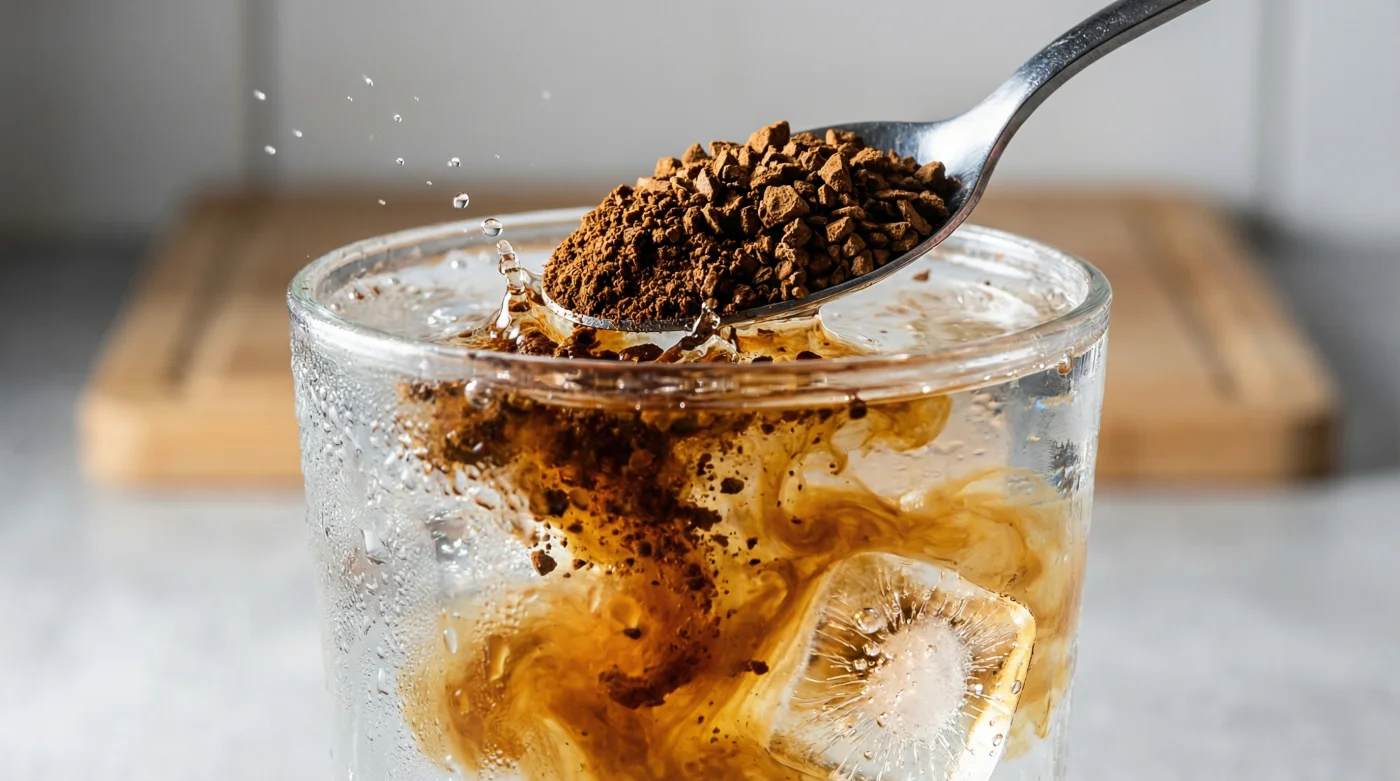
The kitchen is quietly breathing in the early light. Outside, the British drizzle hasn’t quite decided if it wants to be rain or fog, but inside, the kettle clicks off with a familiar, sudden finality. You grab your favourite mug, scoop in a heaped spoonful of instant coffee, and pour the boiling water straight over the top. The smell hits you instantly—a sharp, slightly burnt aroma that promises a sudden jolt to the system, but always delivers a lingering, metallic tang on the back of your tongue.
It is a morning ritual repeated in millions of homes, driven by strict necessity rather than any real joy. We accept the sharp bite and the acidic aftermath as the inevitable tax of convenience, believing there is no alternative. You brace against the sharp bitterness, quickly masking it with heavy splashes of milk or heaped spoonfuls of sugar, fully convinced that a quick coffee simply has to taste exactly like this.
But the harshness you taste isn’t an unchangeable flaw baked into the granules themselves. The true culprit is sitting right there, bubbling away in your kettle. By fundamentally altering how those freeze-dried crystals dissolve, you bypass the bitter extraction phase completely. The secret requires no expensive equipment; it just asks you to leave the kettle alone for a moment.
The Chemistry of Gentle Persuasion
When you pour boiling water directly onto instant coffee, you are effectively scalding the delicate chemical compounds left over from the commercial roasting process. Hot water acts like a sledgehammer, immediately smashing the cellular structure of the granules and dragging out the harsh tannins that dominate the flavour profile. It forces an aggressive heat extraction that leaves the resulting cup tasting overwhelmingly thin, highly acidic, and distinctly abrasive.
Cold water, by contrast, behaves completely differently when introduced to freeze-dried coffee. Think of it as coaxing the flavour awake, rather than demanding it perform. When you introduce a small splash of cold water to the dry granules first, you create a protective, hydrating paste. This ‘cold bloom’ carefully dissolves the solid matter without shocking the internal chemistry of the bean.
The result is a remarkably smooth syrup that holds onto the rich, deep notes of the roast while leaving the bitter acids entirely dormant. The acidity never gets the thermal trigger it desperately needs to release into your cup, keeping the harshness safely away from your palate.
Arthur Pendelton, a 42-year-old independent coffee roaster operating out of a cramped railway arch in Bermondsey, stumbled onto this dynamic entirely by accident during a frantic summer heatwave. With his commercial espresso machine suddenly malfunctioning, he desperately tried mixing a basic supermarket instant brand into cold oat milk for iced lattes. He expected a gritty, sour disaster, but instead poured a drink so sweet and structurally balanced that regular commuters assumed he had switched to a highly expensive cold brew concentrate. “Heat is the enemy of preserved coffee,” Arthur notes, standing amid towering hessian sacks of green beans. “You just need to wake it up gently, like breathing through a pillow.”
Tailoring the Temperature Shift
Once you grasp the cold bloom method, the possibilities expand rapidly across your kitchen worktop. This single, simple adjustment changes how you provision entirely, turning a cheap staple into a highly versatile ingredient.
For the Morning Traditionalist
If you still crave a steaming hot mug before braving the M25 traffic, the cold bloom principle still applies perfectly. Add your instant granules to the mug, stir in two tablespoons of tap-cold water until a thick, dark syrup forms, and only then pour in your freshly boiled water. The hot water now dilutes a chemically stable syrup rather than shocking dry, vulnerable granules, keeping the drink warming but entirely smooth.
For the Iced Coffee Enthusiast
During the warmer months, you can skip the hot water completely. Add your cold water to the granules and stir the thick paste vigorously until it shines. Top it straight up with chilled milk or a dairy alternative like almond or oat. The dissolved paste blends seamlessly, creating a cafe-tier iced drink that never waters down because you haven’t had to melt handfuls of ice just to cool a boiling shot of coffee.
For the Avid Home Baker
- Stale bread recovers fresh bakery crusts surviving this rapid cold drenching.
- Dijon mustard forces separating salad dressings into permanent creamy emulsions instantly.
- Tomato paste loses harsh metallic acidity enduring this brief intense frying.
- Garlic cloves peel absolutely cleanly resting inside warm water bowls briefly.
- Poached eggs form perfect teardrop shapes utilizing a fine mesh strainer.
The Five-Minute Morning Reset
Applying this professional pivot takes no extra time at all, only a slight, mindful reordering of your daily habits. It transforms a rushed, thoughtless necessity into a moment of intentional morning craft.
- The Granule Measure: Place exactly one heaped teaspoon of instant coffee into your favourite ceramic mug.
- The Cold Splash: Add precisely two tablespoons of cold water (filtered is best, but standard tap water works beautifully).
- The Gentle Emulsion: Stir briskly with a teaspoon. Watch closely as the pale, dry lumps melt into a glossy, dark crema.
- The Final Pour: Top the syrup with either hot water just off the boil, or cold milk and a handful of ice cubes.
Keep your liquid ratios tight for the best possible results. A 1:2 ratio of coffee granules to cold water guarantees a flawless, clump-free dissolution every single time. Whatever you do, never use lukewarm tap water; it exists in a frustrating middle ground that still manages to pull out the bitterness while failing to create a structurally proper syrup.
Reclaiming the Morning Cup
We often tolerate small, daily discomforts simply because we believe that is how things have always been done. The acidic bite of a quick morning brew is one of those stubborn compromises we make to save a few minutes before the workday begins.
But when you switch to cold dissolution, you aren’t just improving a beverage; you are actively taking control of the entire process. It is a perspective shift that reveals a hidden, powerful advantage residing in the most mundane pantry staple. The cheap jar transforms completely overnight, offering a genuinely comforting, rounded flavour profile that feels like an indulgence rather than a penalty.
You realise that true culinary quality often isn’t about buying the most expensive, artisanal ingredient sitting on the top shelf. It is about deeply understanding the materials you already have, treating them with a little bit of respect, and knowing exactly how to coax out their finest qualities without ever forcing the issue.
“True flavour isn’t forced out through aggressive heat; it is gently coaxed into the cup through patience and cold water.”
| Key Point | Detail | Added Value for the Reader |
|---|---|---|
| The Cold Bloom | Dissolving instant coffee in cold water before adding heat or milk. | Prevents the extraction of harsh tannins, saving your stomach from acid burn. |
| The 1:2 Ratio | One part coffee granules mixed with two parts cold tap water. | Creates a perfect, clump-free syrup that blends seamlessly into hot or cold drinks. |
| Temperature Shock | Avoiding direct contact between boiling water and dry granules. | Preserves the deeper, roasted notes of the coffee that usually burn away. |
Frequently Asked Questions
Does this work with decaffeinated instant coffee?
Absolutely. The chemical structure regarding tannins is identical, meaning decaf granules will benefit just as much from a cold bloom, becoming significantly smoother.Can I make a large batch of the cold syrup in advance?
Yes, you can scale the 1:2 ratio up and keep the resulting coffee syrup in an airtight jar in the fridge for up to 48 hours for instant iced lattes.Will the cold water cool down my hot morning coffee too much?
Not noticeably. Two tablespoons of cold water in a standard mug will only lower the final temperature slightly, bringing it to a highly drinkable heat immediately.Does the quality of the instant coffee matter for this technique?
While premium brands will naturally yield better flavour notes, this method actually provides the most dramatic improvement when applied to cheaper, harsher supermarket blends.Can I use a milk frother to mix the cold bloom?
You can, but a simple teaspoon is usually quicker and prevents the syrup from splattering up the sides of your mug before the main liquid is added.