You are standing at the kitchen counter, hands glistening with the sharp, acidic residue of freshly squeezed lemons. Perhaps you are making a sharp winter salad dressing, or putting together a quick syrup for a Friday evening sponge cake. Beside your chopping board lies the inevitable debris: exhausted, flattened yellow husks, stripped of their liquid and destined for the food waste caddy.
It feels entirely natural to scrape them into the bin. You have successfully extracted the watery tang that the recipes demand. But by throwing away that pitted, brightly coloured skin, you are discarding the botanical treasure. The true, enduring flavour of a lemon does not actually live in its highly acidic juice; it resides entirely in the volatile, aromatic oils trapped within the microscopic pockets of its rind.
Imagine breathing in the deep, floral scent of a lemon grove baked by the midday sun. That complex perfume cannot be squeezed from the pale flesh of the fruit. It is locked away in the bright yellow epidermis, defending the fruit from pests, just waiting for a solvent strong enough to coax it out.
You do not need specialised laboratory equipment, complex distillation setups, or expensive commercial extracts to capture this essence. A splash of perfectly ordinary vodka from the local off-licence is all it takes to transform your kitchen waste into a breathtakingly pure baking essence. It is a quiet act of kitchen rebellion that fundamentally redefines how you provision your pantry.
The Anatomy of the Rind
Think of a lemon not as a single ingredient, but as a brilliant dual-purpose system. The juice is merely the rain—sharp, fleeting, and highly acidic. The peel, however, is the rich, heavy soil. It holds the slow-release magic, the deep botanical compounds that give citrus its unmistakable, lingering identity on the palate.
When you purchase commercial lemon extract from the grocer, you are often paying a steep premium for synthetic flavourings suspended in low-grade alcohol, or watered-down oils that lost their potency months ago. By shifting your perspective, you realise that the spent citrus halves you casually toss away are actually capsules of premium flavour. The high alcohol content in everyday vodka acts as a molecular skeleton key, gently dissolving the tough cell walls of the zest to suspend those delicate oils in a permanent, shelf-stable liquid.
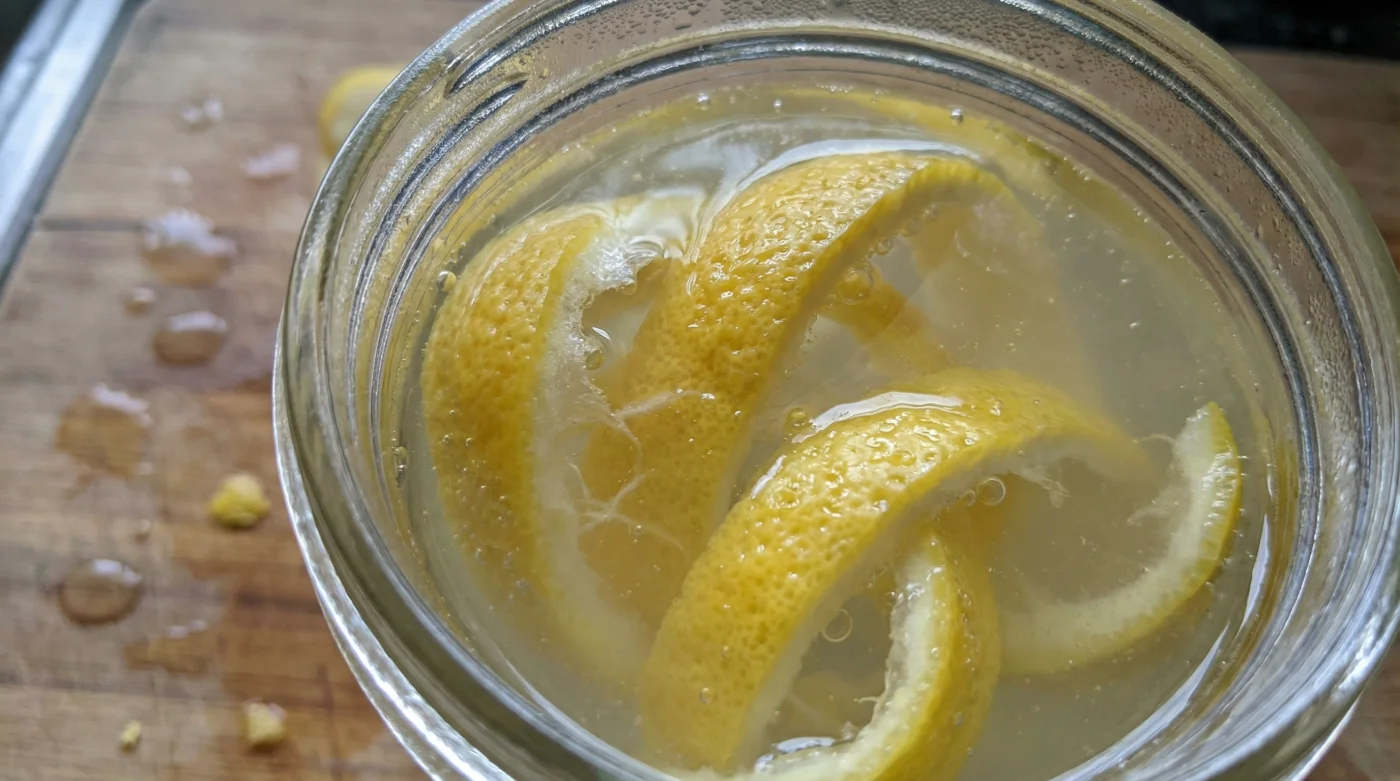
Consider Eleanor, a 42-year-old independent baker running a small pastry operation from a coastal kitchen in Cornwall. Frustrated by the soaring costs of pure vanilla and deeply dissatisfied with the artificial tang of supermarket citrus flavourings, she stopped buying them entirely. Instead, she began keeping a large glass kilner jar of cheap, neutral vodka on her flour shelf. Every time she juiced a lemon for her renowned shortbread, the leftover rinds went straight into the jar. Within a few short weeks, the clear liquid had deepened into a glowing, luminescent gold, smelling exactly like a sun-warmed orchard. It became her signature secret ingredient, costing mere pennies to produce and saving hundreds of pounds a year.
Customising Your Citrus Reserves
Depending on how you cook and what you value most in the kitchen, this fundamental technique adapts beautifully to your particular rhythm. You do not have to follow a rigid, inflexible recipe; you simply let your daily habits dictate the infusion. Customising your citrus reserves allows the extraction process to work seamlessly alongside your existing routines.
For the Weekend Baker
If you bake sporadically, you want an extract that hits hard and fast when you need it. Use the highest proof vodka you can legally find on the shelf. The stronger the alcohol, the faster the aromatic oils will bleed from the peel into the liquid. Strip the yellow zest carefully with a sharp vegetable peeler, avoiding the bitter white pith entirely, and submerge it. This creates a potent, sweet-smelling extract perfect for cutting through the rich butter of a heavy Victoria sponge.
For the Cocktail Enthusiast
Perhaps your mixing glass sees more action than your mixing bowl on a Friday night. In this case, you are looking for an aromatic tincture rather than a pure baking extract. Leave a slight amount of the white pith attached to your peels. It sounds counterintuitive, but that tiny fraction of bitterness adds a sophisticated, complex backbone to the infusion, beautifully mimicking the depth of professional cocktail bitters when dashed into a dry martini.
For the Frugal Providore
If your primary goal is zero-waste meal planning, adopt the rolling jar method. Keep a large jar half-filled with vodka at the back of the cupboard. Whenever you use a lemon for cooking, simply slice the squeezed husk into raw quarters and drop it whole into the liquid. It will not be as refined as a carefully peeled zest extract, but this rustic pantry hack requires zero extra prep time and yields a robust, fragrant liquid that is brilliant for deglazing roasting tins or spiking a winter marmalade.
The Mindful Extraction Protocol
- Broken hollandaise sauce emulsifies perfectly adding this single boiling water tablespoon.
- Baking soda transforms cheap tough beef cuts into premium melting steaks.
- Canned tuna achieves rich restaurant textures soaking inside warm clarified butter.
- Supermarket product recall targets popular lunchbox snacks over sudden packaging failures.
- Taco Tuesday promotions face permanent menu removal across massive pub chains.
First, wash your lemons thoroughly under warm water to melt away any protective wax applied by the grocer. Dry them meticulously with a clean towel, because introduced water will cloud your extract and drastically reduce the alcohol’s preservative power, potentially leading to spoilage over the long term.
Peel the fruit before you slice and juice it. Trying to zest a floppy, squeezed half-lemon is an exercise in utter frustration. A sharp vegetable peeler allows you to drag the blade smoothly over the firm contours, capturing the oil-rich yellow skin effortlessly.
Drop the ribbons of zest into a perfectly clean glass jar and pour over just enough vodka to submerge them completely. Seal the jar tightly and place it in a dark, cool cupboard. Light degrades the volatile compounds, completely dulling the bright citrus flavour you have worked so diligently to capture.
The Tactical Toolkit
- The Solvent: 40% ABV unflavoured supermarket vodka is the ideal balance of affordability and extraction power.
- The Ratio: Aim for approximately two large lemons worth of zest per 100 millilitres of alcohol.
- The Temperature: Strict room temperature, kept entirely away from radiators or direct sunlight.
- The Time: Four to six weeks for full, heavy saturation, though it is highly usable after two.
- The Agitation: Give the jar a gentle swirl for ten seconds once a week to disturb the oils.
The Alchemy of the Empty Bin
Mastering this incredibly simple technique does far more than just save a few pounds on baking supplies. It fundamentally shifts how you interact with your weekly provisions. You begin to look at your ingredients not as single-use items, but as complex resources with untapped potential waiting to be claimed. Mastering this simple technique provides immense satisfaction.
There is a profound sense of grounded satisfaction in opening a dark cupboard in the depths of a damp British December and unscrewing a jar that smells vividly of summer. You have captured a fleeting season, flatly refused to waste food, and refined your cooking without relying on heavy industrial processing. It brings a grounded, highly artisanal rhythm to your modern kitchen.
Every single time you add a measured teaspoon of this brilliant golden extract to a fresh batter or a buttercream frosting, you are quietly reminded of a simple truth. The absolute best flavours are rarely bought in tiny, expensive bottles; they are built slowly, mindfully, from the things we discard.
The moment you realise that flavour is built through preservation rather than immediate consumption, the rubbish bin becomes the most expensive mistake in your kitchen.
| Key Point | Detail | Added Value for the Reader |
|---|---|---|
| Freshly Squeezed Juice | High acidity, zero shelf life. | Immediate tang for cooking, but offers no long-term botanical depth. |
| Commercial Extract | Synthetic oils, highly expensive. | Convenient, but lacks the complex, sun-warmed floral notes of real fruit. |
| Vodka-Steeped Peels | Pure volatile oils, permanent shelf life. | Zero-waste, costs pennies, and delivers unparalleled artisanal flavour. |
Frequently Asked Questions
Can I use gin or white rum instead of vodka?
You certainly can, though vodka provides the most neutral canvas. Gin will introduce botanical clashes, whilst a light rum adds a subtle sugarcane sweetness that pairs beautifully with baking.Do I need to sterilise my jars first?
It is highly recommended. Washing your kilner jar in hot, soapy water and drying it in a low oven ensures no ambient bacteria compete with your extraction process.How long will the homemade extract last?
Because it is suspended in 40% alcohol, the extract is functionally indefinite. Keep it in a dark cupboard, and it will remain bright and potent for several years.Should I remove the peels once it is ready?
Yes. After six weeks, the peels will become translucent and brittle, having surrendered all their oils. Straining them out prevents the liquid from developing a muddy, bitter finish over time.Can I top the jar up as I go?
For the rustic rolling jar method, absolutely. However, if you are crafting a pure baking essence, it is better to create distinct, sealed batches so the extraction time remains consistent.