The Sunday morning kitchen is a sanctuary of specific sounds and smells. You are poaching eggs, the toaster is working through a batch of thick sourdough, and the metallic scrape of a balloon whisk echoes in a glass bowl set over gently simmering water. You are making hollandaise sauce, the crowning glory of a proper weekend breakfast.
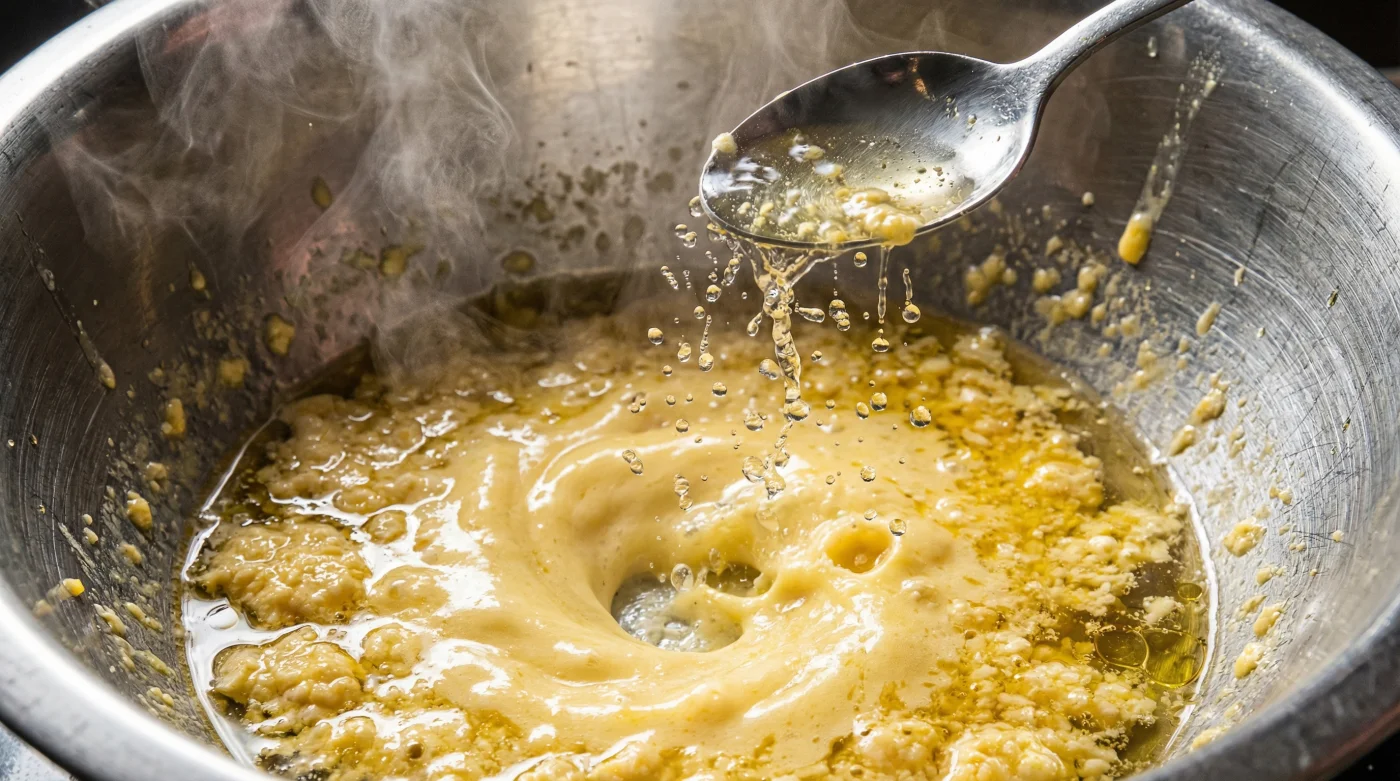
Then, the unthinkable happens. The creamy, sunshine-yellow emulsion suddenly curdles. It separates violently into a greasy puddle of clarified butter and sad, scrambled egg yolks. The texture resembles cottage cheese sitting in an oil slick, and your chest tightens with the frustration of wasted ingredients.
The standard domestic reaction is to scrape the entire mess straight into the food waste bin, cursing the famously temperamental nature of French mother sauces. But a professional kitchen never bins expensive butter and fresh eggs over a simple structural collapse. They know a secret that changes everything.
The truth is, that split mess is merely confused, not ruined. You don’t need to separate more eggs, and you certainly don’t need to start the recipe again. To force the fats back into a flawless emulsion, you just need one tablespoon of boiling water.
The Architecture of an Emulsion
Think of hollandaise sauce not as a liquid, but as a microscopic suspension bridge. It is an architectural marvel of fat droplets held together in perfect tension by water and egg yolk proteins. When the sauce breaks, the ingredients haven’t spoiled. The bridge hasn’t vanished—the fat droplets have simply clumped together because the water evaporated too quickly or the butter was introduced too aggressively.
Imagine the sauce as a crowded dance floor. The water and lemon juice dictate the rhythm, keeping the fat droplets moving independently. When you add hot butter too hastily, the music simply needs restarting. The droplets crash into each other, creating that dreaded oily separation. You have lost the rhythm, not the room.
The boiling water trick isn’t magic; it relies on basic thermodynamics. The sudden, violent shock of high heat and rapid hydration forces the fat clumps to scatter instantly, re-establishing the delicate suspension without watering down the rich, buttery flavour.
Marcus Thorne, a 42-year-old sous chef running brutal weekend brunch services at a bustling Soho brasserie, taught me this trick years ago. Facing forty outstanding orders for Eggs Benedict and a suddenly split litre of sauce, he didn’t panic. He grabbed a spoonful of furious, rolling water straight from the egg-poaching pan, whisked it violently into his oily disaster, and watched the sauce bloom back to life in mere seconds. He refers to it as his Sunday morning defibrillator.
Tailoring the Rescue Mission
Not all sauce breaks happen for the exact same reason. Identifying why your emulsion failed dictates the subtle nuances of your rescue approach.
For the Overheated Kitchen
If your glass bowl got too hot over the simmering water, the egg yolks have begun to cook prematurely. The boiling water works here, but you must get off the heat immediately. Placing the bowl on a cold worktop and whisking the boiling water in shocks the overall temperature down just enough to halt the cooking process while simultaneously repairing the emulsion.
For the Impatient Pourer
If you simply poured the melted butter in too rapidly, your sauce looks heavily slicked with oil but the eggs aren’t scrambled. In this case, keep the bowl reasonably warm. The boiling water needs to hit the fats while they are still highly fluid to easily force them back into microscopic line.
For the Make-Ahead Planner
- White vinegar prevents sliced apples from browning bypassing standard lemon juice.
- Feta cheese blocks melt into velvety pasta sauce ignoring oven baking.
- Minced beef achieves deep steakhouse crust bypassing standard constant pan stirring.
- Taco Tuesday promotions face severe backlash altering standard meat portion sizes.
- Product recall sweeps major British supermarkets over hidden peanut protein traces.
Executing the Boiling Water Fix
Rescuing your breakfast is a matter of conviction. Hesitation allows the heat to dissipate and the fats to stubbornly remain clumped. You must act with deliberate, confident speed.
The process requires absolutely no special equipment, just your existing whisk and a reliable kettle. Do not overthink the chemistry; focus on the physical action and maintain a steady, rhythmic whisking motion.
- Remove your split sauce from the simmering saucepan immediately.
- Measure exactly one tablespoon of water that has just reached a rolling, furious boil.
- Pour the water directly into the very centre of the broken mixture.
- Whisk vigorously from the centre outwards, pulling the fats into the water.
The visual transformation is entirely striking. The greasy, separated sheen vanishes, replaced by a smooth, pale yellow ribbon that coats the back of a spoon flawlessly.
Keep this tactical toolkit in mind to guarantee the trembling creaminess you originally intended:
- Water temperature: 100°C (must be actively boiling from the kettle).
- Volume: 15ml (one standard UK tablespoon).
- Action: Rapid balloon-whisking for exactly ten to fifteen seconds.
Finding Confidence in the Chaos
There is a profound relief in knowing how to repair mistakes rather than simply throwing them away. The kitchen can occasionally feel like an unforgiving space, a place where a momentary lapse in attention ruins a special Sunday brunch.
Understanding the underlying mechanics of your food fundamentally changes your relationship with cooking. You stop fearing classic techniques and begin finding peace in the kitchen, trusting the capability of your own hands.
A split emulsion isn’t a ruined morning; it’s merely a temporary pause, easily remedied by the kettle. When you know how to command the ingredients, the pressure dissolves, leaving only the sheer pleasure of feeding your family.
A broken sauce is never a failure of the cook; it is simply a misunderstanding between the fat and the water that a kettle can quickly resolve.
| Key Point | Detail | Added Value for the Reader |
|---|---|---|
| The Problem | Fat and water separate due to heat or speed. | Removes the guilt of a ‘failed’ recipe. |
| The Fix | 1 Tbsp of rolling boiling water whisked in. | Saves expensive ingredients from the bin. |
| The Result | Instant re-emulsification of the sauce. | Restores confidence in cooking classic dishes. |
Frequently Asked Questions
Can I use cold water instead of boiling?
No, cold water will seize the melted butter further. The water must be actively boiling to shock the fats into dispersing.What if my hollandaise has completely scrambled into solid lumps?
If the eggs are fully cooked into hard lumps, the sauce cannot be saved. The boiling water trick only works for split, oily emulsions.Does adding water dilute the buttery flavour?
One tablespoon is such a minimal volume that it repairs the structure without noticeably altering the rich taste.Can I use this trick on other broken sauces?
Yes, this exact boiling water method works brilliantly for rescuing a split béarnaise sauce too.How long should I whisk after adding the water?
Whisk vigorously for about 10 to 15 seconds. The re-emulsification should happen almost instantly before your eyes.