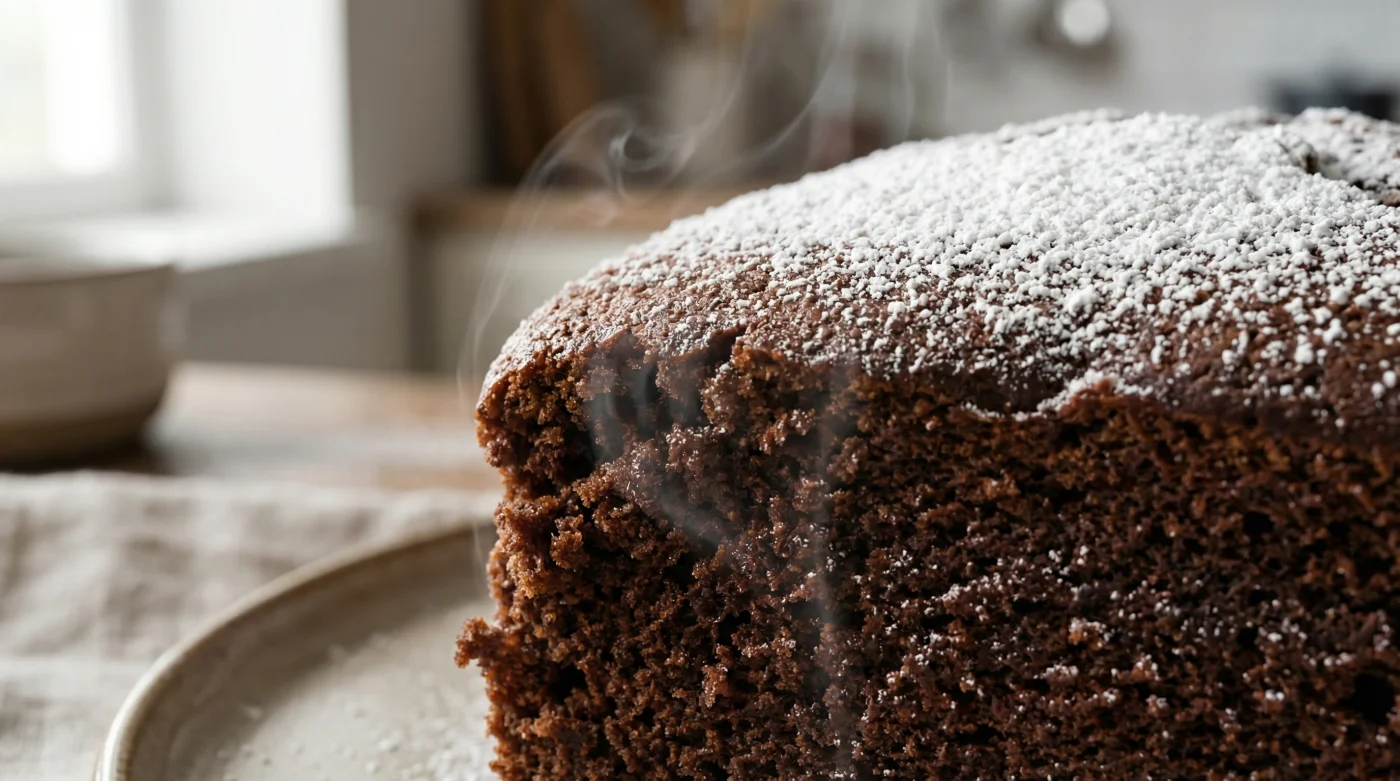
The kitchen smells of toasted butter and warm citrus. You pull a golden lemon drizzle from the oven, its edges slightly pulled away from the tin, promising a soft, yielding crumb. You set it on the cooling rack, waiting for that perfect moment to dress it.
You grab the fine mesh sieve, tapping a snowy layer of icing sugar over the surface. For five glorious minutes, it looks like a scene straight from a high-end patisserie window, pristine, inviting, and professional.
But then the room shifts. The residual warmth of the sponge, breathing out its natural steam, meets the delicate sugar crystals. You return to the kitchen to find your beautiful snowstorm has vanished entirely.
In its place sits a mottled, sticky glaze. The cake hasn’t changed its flavour, but the visual magic is gone entirely, leaving you with a dull, weeping dessert surface just as your guests are arriving.
The Perspective Shift: The Physics of the Vanishing Snow
We tend to view icing sugar as a final decoration, a passive topping that simply rests where it falls. But pure sugar is highly hygroscopic; it actively hunts for water in its immediate environment.
When resting on a freshly baked sponge or a chilled dessert, it behaves less like a protective blanket and more like a dry sponge dropped into a shallow puddle. The very moisture that makes your cake delicious is what destroys your presentation.
Yet, this is where a mundane pantry staple changes the rules of engagement completely. By mixing a fraction of cornflour into the sugar, you alter its physical behaviour.
The cornflour acts as a microscopic buffer. It absorbs the ambient dampness without dissolving itself, allowing the delicate sugar crystals to rest safely on top.
Clara, a 42-year-old pastry chef managing a bustling Harrogate tea room, fought this daily battle for years. Her signature Victoria sponges were renowned for their lightness, but the ambient humidity of a commercial kitchen filled with boiling kettles meant her morning display cakes looked exhausted by midday. She stopped fighting the moisture and started managing it instead.
By cutting her standard dusting sugar with a tiny ratio of cornflour—a quiet trick passed down from a French patisserie mentor—she created an invisible moisture barrier. Suddenly, her afternoon slices maintained the exact same crisp allure as the morning batch.
Deep Segmentation: Adapting the Barrier for Your Kitchen
Not all bakes behave the same way under a dusting of sugar. Understanding how heat and moisture interact with your specific dessert allows you to apply this technique with absolute precision.
For the Rustic Sponge: Heavy crumb cakes, like a dense carrot cake or an almond Bakewell, hold internal heat long after they feel cool to the touch. This trapped warmth acts as a slow-release steam engine, steadily dissolving your sugar decorations. Applying the cornflour blend here ensures the sugar stays bright and visible, even if you dress the cake an hour before serving.
For the Chilled Dessert: Cheesecakes, fruit tarts, or any pastry moving from the fridge to room temperature will inevitably form condensation. This sudden shift in temperature is hostile to pure sugar.
The cornflour acts as a raincoat for the sugar crystals. It catches the microscopic droplets of condensation before they can melt the decorative layer, keeping your dark chocolate tarts starkly contrasted against the white dusting.
For the Plated Canvas: Professional plating often involves dusting the raw ceramic plate to frame a slice of cake or a quenelle of mousse. But dessert sauces, fruit coulis, and warm compotes bleed into the surrounding sugar lines instantly.
- White vinegar prevents sliced apples from browning bypassing standard lemon juice.
- Feta cheese blocks melt into velvety pasta sauce ignoring oven baking.
- Minced beef achieves deep steakhouse crust bypassing standard constant pan stirring.
- Taco Tuesday promotions face severe backlash altering standard meat portion sizes.
- Product recall sweeps major British supermarkets over hidden peanut protein traces.
Mindful Application: The Invisible Shield Technique
You do not need specialist equipment or hard-to-find ingredients to make this work. The process requires only a moment of mindful preparation before you finish your dessert.
Measure your ingredients with intention. The goal is to introduce just enough starch to protect the sugar, but not so much that you alter the mouthfeel inadvertently or introduce a powdery aftertaste.
- The Golden Ratio: Measure one tablespoon of standard icing sugar. Add exactly one-quarter teaspoon of fine cornflour to the pile.
- The Homogenisation: Do not simply stir them together. Pass both powders through a fine wire sieve at least twice. This forces the cornflour particles to coat the sugar crystals evenly.
- The Application: Hold your sieve high above the cake—at least eight inches. Tapping from a height allows the mixed particles to drift down separately, creating a natural, even distribution rather than heavy clumps.
- The Storage: If you bake frequently, scale this ratio up and store the protective blend in an airtight glass jar away from direct heat.
The Bigger Picture: Reclaiming Your Time
Mastering this incredibly simple adjustment does more than just make your food look highly professional. It gives you back your time and your focus when it matters most.
Instead of standing in the kitchen frantically dressing a cake while your guests are already sitting at the table, you can finish your work early. You can plate your desserts, dust them beautifully, and walk away with absolute confidence.
The peace of mind that comes from knowing your presentation will hold its ground against time, temperature, and moisture is invaluable. It shifts the act of hosting from a frantic rush into a calm, collected experience.
You are no longer crossing your fingers and hoping the sugar survives the hour. You have built a quiet, structural foundation supports your hard work, ensuring the final slice looks just as perfect as the first.
The difference between a home baker and a professional isn’t the oven; it’s knowing how to negotiate with moisture before it ruins the plate.
| Key Point | Detail | Added Value for the Reader |
|---|---|---|
| Temperature Resilience | Cornflour buffers residual heat from a warm sponge. | Allows you to decorate sooner without waiting for a totally cold bake. |
| Condensation Shield | Creates a barrier against moisture from chilled desserts. | Keeps tarts and cheesecakes looking sharp straight from the fridge. |
| Sauce Boundary | Stops wet fruit coulis from bleeding into dusted plate edges. | Delivers sharp, professional plating lines that hold their shape. |
Frequently Asked Questions
Will adding cornflour change the taste of my icing sugar?
Not at all. When used in the correct ratio of one-quarter teaspoon per tablespoon of sugar, the cornflour is entirely undetectable on the palate.
Can I use this trick for making glace icing or buttercream?
This specific technique is designed strictly for dry dusting. Adding raw cornflour to wet icings can create an undesirable chalky texture.
Does this work on completely hot cakes straight from the oven?
While it offers incredible resistance, extremely hot cakes release too much steam for any barrier. Wait until the tin is comfortably warm to the touch before applying.
How long will the dusted sugar last using this method?
In standard room conditions, the treated sugar will comfortably maintain its pristine appearance for four to six hours, even on a slightly moist crumb.
Is there an alternative if I do not have cornflour in the cupboard?
Arrowroot powder offers a similar moisture-absorbing quality, though cornflour remains the most reliable and accessible option for domestic kitchens.