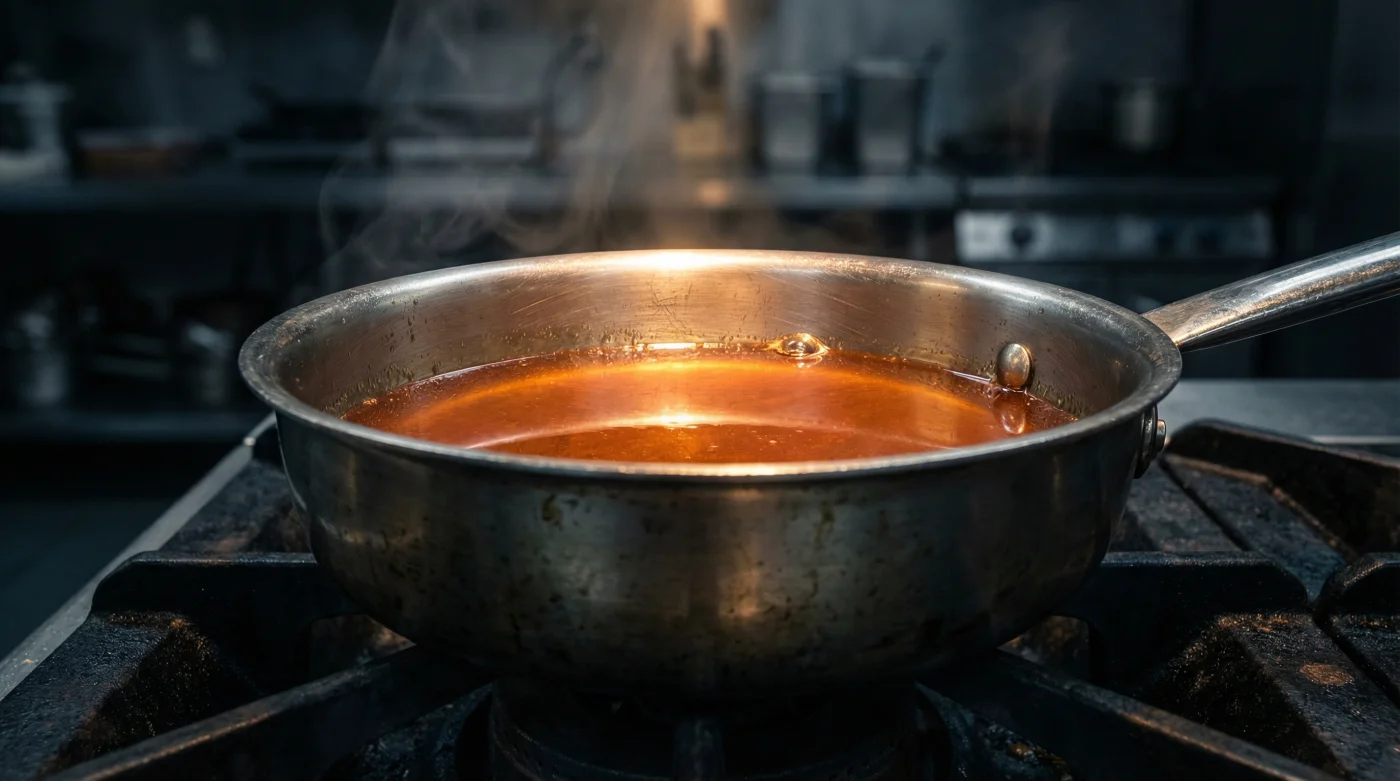
The kitchen smells faintly of toasted marshmallows, a sweet, heavy warmth that settles against the damp chill of a Tuesday afternoon. You stand over the hob, eyes locked on a stainless steel pan, holding a wooden spoon with a grip tight enough to whiten your knuckles. The caster sugar begins to melt at the edges, bubbling into a clear liquid that threatens to burn if you look away for even a second. It is a moment of high tension, familiar to anyone who has tried to recreate a restaurant-quality dessert at home.
Your instinct, honed by years of making risottos and porridge, screams at you to stir the melting mass. You want to drag that spoon through the centre, to force the stubborn white mounds of sugar to blend with the hot syrup. The moment you do, the syrup seizes. Within seconds, a gritty, opaque crust forms around the wood, turning your hopeful dessert into a panicked, granular disaster.
This is the exact moment where the amateur fails and the professional calmly waits. The truth about flawless, glass-smooth caramel sauce contradicts almost everything we are taught about cooking over high heat. The secret to that molten, buttery amber isn’t constant vigilance and motion. It is, quite simply, total stillness.
The Agitation Trap
To understand why a spoon ruins your sauce, you have to picture sugar molecules as a highly nervous herd of sheep. When they are cold, they sit in rigid, organised rows—the crystals in your bag of caster sugar. As heat applies to the base of the pan, these molecules loosen their grip on one another, flowing into a fluid state. However, they are deeply unstable in this form, desperately looking for an excuse to snap back into their rigid formation.
When you drag a cold wooden spoon or a metal whisk through that delicate, heating syrup, you trigger a chain reaction. The utensil drops the temperature of the syrup it touches by a fraction of a degree, while simultaneously introducing rough friction. One molecule decides to crystallise against the spoon, and suddenly, millions of others follow suit in a frantic rush. The result is a solid, cloudy rock of sugar sitting in a puddle of water, ruining your sauce before you even reach for the cream.
Leaving the pan completely alone removes the catalyst for that panic. By relying entirely on the even distribution of heat from your hob, the sugar melts organically. If a patch seems to be browning too fast, the solution isn’t stirring—it is a slow, deliberate swirl of the entire pan by its handle. You become an observer, gently guiding the heat rather than forcing the ingredients to submit to your spoon.
The Bath Pastry Prohibition
Elias Thorne, a 42-year-old pastry chef operating out of a famously draughty Georgian kitchen in Bath, runs his prep stations with a strict rule. ‘If I see a spoon near a sugar pan, it goes in the bin,’ he says, wiping down a cold marble slab. Elias spent his early twenties battling seized sugar, throwing away kilos of ruined product because he couldn’t stop himself from poking the melting puddles. It wasn’t until a senior French chef physically took his utensils away that he learned the discipline of letting the heat do the work. ‘Sugar knows how to melt,’ Elias notes. ‘Your anxiety is what ruins the caramel. You have to let it breathe, let the edges turn to glass, and trust the pan.’
Adapting to Your Sugar Pitch
Not all caramel methods demand the exact same brand of bravery. Depending on your comfort level and your recipe, you will likely fall into one of three distinct camps. Understanding which method you are using dictates how you manage the pan during those crucial minutes of silence.
The Wet Caramel Cautious
This is the safest route for a beginner. You add a splash of water to your caster sugar—just enough to give it the texture of wet sand—before turning on the heat. The water gives the sugar time to dissolve fully before the temperature climbs high enough to brown it. Here, your only job is to watch the bubbles. If rogue sugar crystals cling to the sides of the pan, you brush them down gently with a pastry brush dipped in cold water. The water boils away, leaving pure, evenly melting sugar behind. No stirring required.
- White vinegar prevents sliced apples from browning bypassing standard lemon juice.
- Feta cheese blocks melt into velvety pasta sauce ignoring oven baking.
- Minced beef achieves deep steakhouse crust bypassing standard constant pan stirring.
- Taco Tuesday promotions face severe backlash altering standard meat portion sizes.
- Product recall sweeps major British supermarkets over hidden peanut protein traces.
There is no water here. Just pure sugar hitting a hot pan. This method is faster but requires nerves of steel. As the edges liquify, you might be tempted to fold the dry centre into the liquid edge. Resist. Instead, use a heatproof spatula to very gently push the unmelted sugar toward the hot spots, barely disturbing the liquid beneath. You are shifting the powder, not mixing the syrup.
The Dairy-Free Pour
When making a vegan caramel using coconut cream or oat alternatives, the sugar base still requires the exact same silent treatment. However, plant milks carry different water contents than dairy double cream. Once your sugar hits that perfect copper tone, you still remove it from the heat, but you must pour your alternative cream in much slower to prevent sudden thermal shock that can cause a delayed crystallisation.
Mastering the Stillness
Applying this hands-off technique requires a slight shift in how you behave at the stove. It is an exercise in mindful restraint. Follow these physical cues to ensure your sauce turns out deeply flavoured, perfectly glossy, and entirely devoid of lumps.
- Choose the right vessel: A heavy-bottomed, light-coloured stainless steel pan is non-negotiable. You need to see the amber colour developing, which is impossible in a dark non-stick pan, and thin pans create severe hot spots.
- The swirling technique: Grasp the handle of the pan and make small, flat, circular motions just above the heat source. This redistributes the liquid safely without agitating the molecular structure.
- The acidic insurance policy: Squeeze two drops of lemon juice or a tiny spoon of liquid glucose into the sugar before heating. The acid gently interferes with the sugar’s ability to form rigid crystals, buying you a wider margin for error.
- The final incorporation: Once the sugar hits the colour of an old 2p coin, remove it from the heat immediately. Pour in your room-temperature double cream. It will spit and rage—this is the only time you are permitted to pick up a whisk and stir vigorously.
Remember that residual heat is your silent partner here. The sugar will continue to cook and darken for a few seconds even after you pull it off the hob, so pull it slightly before it reaches your ideal shade to prevent a bitter, burnt finish.
The Quiet Confidence of Leaving It Alone
There is a profound satisfaction in watching a solid, opaque powder transform into a complex, bittersweet liquid through nothing but heat and patience. Mastering caramel is rarely about buying better ingredients or investing in expensive digital thermometers. It is about unlearning the nervous habit of micromanagement. Cooking often asks us to chop, flip, toss, and whip, but true mastery sometimes demands we do absolutely nothing.
When you stop hovering and poking, you allow the physical properties of the ingredients to work exactly as they are meant to. Stepping back builds trust in your own judgement and your equipment. The next time you crave that rich, buttery finish for your Sunday sticky toffee pudding, leave the wooden spoon in the drawer. Stand back, watch the amber spread, and let the quiet chemistry happen without you.
‘The hardest technique to master in a professional kitchen isn’t knife skills or butchery; it is finding the courage to stand completely still while your food cooks.’ – Elias Thorne, Head Pastry Chef
| Key Point | Detail | Added Value for the Reader |
|---|---|---|
| Utensil Ban | Keeping spoons and whisks out of melting sugar. | Prevents the sudden, gritty crystallisation that ruins the texture of the sauce. |
| The Pan Swirl | Moving the whole pan in small, flat circles. | Redistributes heat safely without triggering molecular panic in the sugar. |
| Acidic Insurance | Adding a drop of lemon juice to the raw sugar. | Provides a chemical buffer against accidental crystallisation for beginners. |
Common Caramel Frustrations
Why did my sugar turn into a hard, cloudy lump?
You introduced a cold utensil or stirred too aggressively, causing the sugar molecules to rapidly bind together and crystallise into a solid mass.Can I save a crystallised batch of sugar?
If it has just started, you can add a splash of water and gently reheat to dissolve the lumps, but it is often faster and less frustrating to simply start fresh.Why is my wet caramel taking so long to turn brown?
The water must completely evaporate before the sugar’s temperature can climb high enough to caramelise. Be patient; the shift from clear to amber will happen very suddenly once the water is gone.What is the best sugar to use in the UK?
Standard white caster sugar is ideal. Its fine grain melts quickly and evenly compared to standard granulated sugar, reducing the risk of uneven cooking.Why did my sauce separate when I added the butter?
The butter was likely too cold, causing a temperature shock that split the fats. Ensure your double cream and butter are at room temperature before whisking them into the hot liquid.