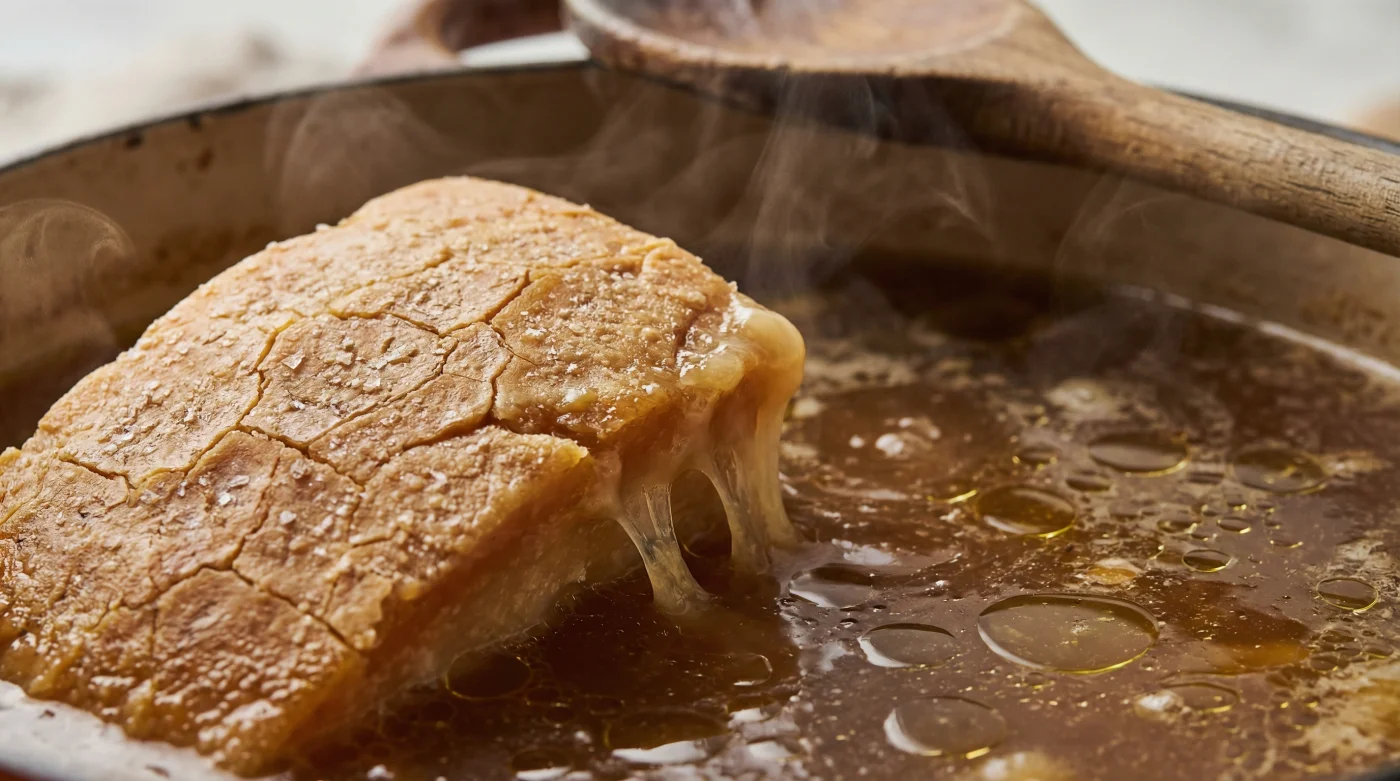
Picture your kitchen on a bleak Tuesday evening. You have just grated the last meaningful shower of Parmigiano-Reggiano over a bowl of steaming pasta. The air hangs heavy with that sharp, nutty aroma, but sitting on your chopping board is a stubborn, golden stump.
For most, this tough outer shell is destined for the food waste bin. It is too hard to grate, too waxy to chew, and feels like the inevitable tax of buying good quality Italian cheese. You simply throw it away, accepting the loss of those few precious pounds sterling.
Yet, inside professional kitchens, that hardened nub is treated with the reverence of a rare truffle. It is not rubbish; it is a dormant flavour bomb waiting for the right environment to wake up. By tossing it into the bin, you are discarding the very soul of the cheese.
When introduced to a low, slow simmer, this unyielding exterior softens and surrenders. It releases a profound, savoury richness that transforms thin, watery liquids into something entirely luxurious, releasing a texture akin to deep savoury gelatine.
The Golden Anchor of Flavour
Think of a Parmesan rind as a tightly clenched fist of umami. Over the months or years of ageing, the exterior of the cheese is exposed to the air, drying out and forming a protective crust. This crust acts like a sponge that has dried completely solid, trapping highly concentrated proteins and dairy fats within its matrix.
When you drop this golden stone into a simmering pot, the heat relaxes the tightly bound proteins, coaxing out naturally occurring glutamates. These are the exact same compounds that make roasted mushrooms or slow-cooked meats taste so deeply satisfying.
Instead of dissolving instantly and overwhelming the dish, the hard structure ensures a steady, measured infusion. It turns the very reason you discarded it into its greatest culinary advantage. The water thickens, taking on a lip-smacking, velvety weight that mimics the comfort of a slow-simmered bone broth.
Consider Marco, a 54-year-old delicatessen owner in West Yorkshire, who learned to cook from his grandmother in Siena. Every Sunday, Marco collects the stray rinds from his deli counter, storing them in a frosted Tupperware box in the freezer. When winter demands a restorative minestrone, he refuses to rely on shop-bought stock cubes. Instead, he buries three pale rinds beneath a mound of carrots, celery, and cavolo nero. ‘The broth should feel like a warm blanket,’ he tells his customers, ‘and the rind is the heavy wool that weaves it all together.’
Adapting the Technique for Your Kitchen
Not all broths require the same treatment, and understanding how to deploy your saved cheese rinds will change your weekly meal planning. Different routines demand different approaches, allowing you to tailor this zero-waste pantry hack to your exact lifestyle.
For the Weekend Purist
If you dedicate your Sundays to building layered, complex soups, treat the rind as a foundational aromatic. Add it alongside your bay leaves and peppercorns right at the beginning. As it bathes in the gentle heat for a couple of hours, it becomes a molten, chewy delicacy that enriches every drop of the surrounding liquid.
For the Midweek Batch Cooker
When time is tight and you rely on throwing lentils and tinned tomatoes into a slow cooker before heading to work, the rind is your safety net. It saves you from thin, disappointing dinners and requires absolute minimal effort from your tired hands.
Just drop it frozen into the pot. By the time you return, the harsh acidity of the tinned tomatoes will have been beautifully mellowed, because this method requires zero active meal preparation while delivering maximum comfort.
For the Plant-Forward Cook
- Lemon rinds transform cheap white vinegar into premium salad dressings.
- Mashed potatoes look incredibly luxurious incorporating warm cream through sieves.
- Overcooked broccoli florets regain firmness plunging into salted ice baths.
- Rolled oats deliver significantly more protein soaking in greek yoghurt.
- Smashed cucumber salads achieve extreme crunch marinating in hot water.
It works quietly in the background without dominating the delicate earthy notes of your produce. A single addition lends a meaty, savoury backbone to humble beans and seasonal greens.
The Tactical Extraction
Coaxing the magic from a Parmesan rind requires patience rather than force. If you boil it aggressively, the fats can split, leaving a greasy film on your soup. You want a lazy, rolling simmer where the surface of the liquid barely shivers.
Keep a dedicated container in your freezer for these offcuts. They never go off in this frozen state, which prevents any unwanted mould developing before you have the chance to use them.
When the cooking is done, retrieve the rind. It will have swollen into a pale, rubbery mass, having surrendered its flavour to the pot. At this point, its job is complete, and it can be gracefully retired to the compost bin.
Here is your tactical toolkit for perfect extraction when setting up your pot:
- Temperature: Maintain a steady 85°C to 90°C. The liquid should murmur, not roar.
- Timing: Allow a minimum of 45 minutes for the rind to fully soften and release its savoury compounds.
- Ratio: One piece of rind (roughly the size of a matchbox) is sufficient to enrich two litres of broth or soup.
- Cleaning: Gently scrape away any ink or wax stamps with a paring knife before freezing, ensuring only pure cheese enters your meal.
Reclaiming the Discarded
There is a quiet satisfaction in drawing out the hidden value of something the world tells you to throw away. It shifts your relationship with your weekly shop, turning perceived waste into a strategic asset. You stop seeing a finished wedge of cheese as an end, and start viewing it as the beginning of your next great meal.
This practice demands nothing of your time, yet it completely rewires the way you think about building flavour. It grounds your cooking in resourcefulness, reminding you that the most profound culinary secrets are rarely found in expensive jars.
The next time you feel the coarse edge of a Parmesan rind under your knuckles as the grater scrapes its final pass, pause. You hold in your hand the power to turn a humble pan of water into a rich, comforting elixir. All it asks is a little warmth and a little time.
A kitchen that respects the rind is a kitchen that understands the true architecture of flavour.
| Key Point | Detail | Added Value for the Reader |
|---|---|---|
| Flavour Extraction | Slow simmering at 85°C releases trapped glutamates into the water. | Turns flat, watery soups into rich, restaurant-quality meals with deep umami. |
| Zero-Waste Storage | Freezing the hard exterior stops degradation and mould. | Saves pounds sterling by utilising every gram of an expensive grocery item. |
| Texture Modification | Dairy proteins emulsify into the hot liquid over time. | Provides a thick, comforting mouthfeel without needing flour or cornstarch. |
Frequently Asked Questions
Do I need to wash the rind before freezing?
Just a gentle scrape with a knife to remove any surface wax or ink is enough. No soap or heavy scrubbing is required.Can I eat the rind after it has been boiled?
You can, though it becomes quite chewy. Most cooks prefer to discard it once it has surrendered its flavour to the broth.Will this work with other hard cheeses?
Yes. Pecorino and Grana Padano rinds perform wonderfully, offering slightly sharper or sweeter notes respectively.How long can I keep them in the freezer?
They will happily sit in a sealed container for up to six months without losing their potency or picking up freezer burn.Does it make the soup taste overly cheesy?
Not at all. It acts more like a seasoning, adding a deep, savoury base rather than a distinct, overwhelming dairy flavour.