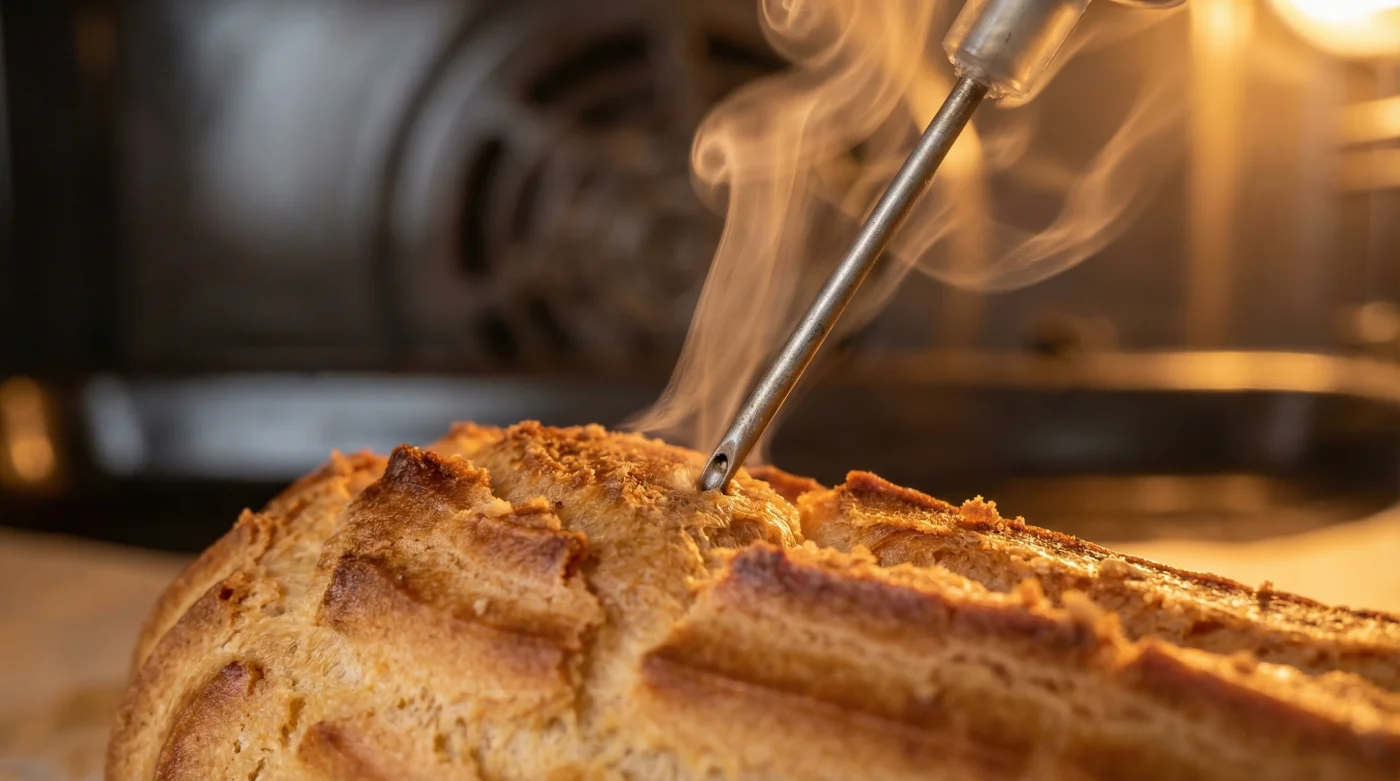
You stand in the quiet of a weekend kitchen, peering through the glass of your oven door. Inside, glossy ribbons of piped dough are swelling under the intense heat, butter sizzling softly against the baking paper. The kitchen fills with the deeply comforting scent of toasted flour and caramelising fats. It is a moment of quiet anticipation, watching a dense, sticky paste transform into something miraculously light.
For years, you have been taught to treat this moment with absolute reverence. The golden rule of baking dictates that opening the door is a cardinal sin, an act that invites a rush of cold air to ruin your delicate work. You wait, hands tied by culinary dogma, only to pull the tray out and witness those crisp shells collapse into sad, leathery pancakes the moment they hit the cooling rack.
The professional reality is far more counter-intuitive. Choux pastry éclairs maintain perfect hollow centres precisely because patissiers know exactly when to break that rigid domestic rule. It is a matter of managing internal weather systems rather than blindly following an outdated recipe card. The perfect éclair is not born from fear; it is born from understanding the physics of steam.
Once the exterior crust has firmly set, the trapped moisture inside becomes your greatest enemy. Piercing the shell deliberately releases this dangerous internal steam, preventing the structural collapse that plagues so many home cooks and securing a cavernous interior ready for fresh cream.
The Architecture of Controlled Pressure
Think of a choux éclair not as a standard cake batter, but as a miniature hot air balloon. The initial blast of heat turns the water in your dough into vapour, forcing the pastry to expand rapidly. Simultaneously, the proteins in the eggs coagulate, building the rigid, golden outer walls of this fragile balloon while the core hollows out.
If you leave that balloon entirely sealed, the moisture has nowhere to go once you remove it from the heat. As the pastry cools down on the kitchen counter, the trapped vapour immediately begins turning into a damp sponge, pulling the crisp architectural walls inward until they fold in on themselves, leaving you with a dense, soggy interior.
Arthur Penhaligon, a 42-year-old former structural engineer who now runs a notoriously precise patisserie in Bath, treats choux entirely like a high-stakes pressure valve. He notes that the moment the éclairs are golden and rigid, you must puncture the illusion. A swift prick with a skewer lets the balloon breathe, evicting the condensation before it has a chance to settle into the delicate crumb. It is a physical intervention that saves the bake.
The preparation of the dough itself dictates how well it will handle this sudden release of pressure. Cooking the initial paste, known as the panade, until a faint film coats the bottom of the saucepan ensures you have driven off enough raw moisture to give you complete control over the final texture. When you beat in the eggs, wait for that glossy, dropping consistency that falls from your wooden spoon in a heavy, reluctant ‘V’ shape.
Tailoring Your Approach
Not all choux requires the exact same handling. Depending on your confidence, the size of your bake, and the ambient humidity of your kitchen, you must adjust your strategy to suit the dough sitting in front of you. Understanding these subtle variables removes the blind guesswork from your baking and replaces it with intuition.
For the texture obsessive, consider laying a thin, frozen strip of craquelin over your piped dough before baking. This sugary butter paste will gently melt over the expanding dough, forcing an even rise and providing a secondary, crackling crust that reinforces the walls against the escaping steam. It is a professional touch that adds both flavour and crucial structural integrity.
If you are an anxious novice, piping long, uniform logs might feel intimidating. Begin by piping small, round spheres for profiteroles. The structural integrity of a sphere is naturally stronger, forgiving minor errors in your venting timing while still rewarding you with a crisp, hollow centre. Once you master the timing of the steam release on a sphere, you can graduate to the classic éclair shape.
- Lemon rinds transform cheap white vinegar into premium salad dressings.
- Mashed potatoes look incredibly luxurious incorporating warm cream through sieves.
- Overcooked broccoli florets regain firmness plunging into salted ice baths.
- Rolled oats deliver significantly more protein soaking in greek yoghurt.
- Smashed cucumber salads achieve extreme crunch marinating in hot water.
The Mindful Application
Mastering this technique requires a shift from frantic rushing to deliberate, measured actions. You are not fighting the dough; you are simply allowing it to exhale at the precise moment it needs to breathe. The piping itself should be done with a star nozzle, scoring the surface of the dough to allow even expansion without violent cracking.
The tactical toolkit requires a few specific parameters:
- Initial Heat: 200°C (gas mark 6) to force the rapid steam expansion.
- The Turning Point: 25 minutes in, when the surface is entirely brown and feels hard to a gentle tap.
- The Intervention: A fine metal skewer or the sharp tip of a paring knife.
- The Drying Phase: 160°C (gas mark 3) for a final 10 minutes with the door slightly ajar.
When the shells are visibly rigid and deeply golden, open the oven door swiftly. Do not hesitate or panic about the loss of heat; the structure is already set. Take your skewer and calmly pierce one small pressure hole at the end of each éclair, right where the nozzle of your piping bag will later inject the rich filling.
Return them to the heat instantly. You will actually hear a faint, high-pitched hiss as the trapped water vapour rushes out of the newly created vents. You are letting the interior dry completely, ensuring the hollow cavern remains pristine. This brief, calculated exposure to the cool kitchen air is exactly what sets a professional bake apart from an amateur attempt.
Beyond the Bake
There is a profound satisfaction in conquering a technique that relies entirely on timing and physical intuition. Stepping away from strict, fear-based rules and understanding the actual science of your food completely restores your quiet kitchen agency. You are no longer at the mercy of a temperamental oven; you are the conductor of the heat.
When you finally pull those weightless, crisp shells from the baking tray, tapping their hollow bottoms and hearing a satisfying, drum-like echo, you realise the anxiety of the kitchen is largely self-imposed. Knowing how and when to break the rules gives you the quiet confidence to build something truly beautiful from scratch.
To master choux is to master moisture; the oven door is merely an instrument, not a lock.
| Key Point | Detail | Added Value for You |
|---|---|---|
| The Panade Stage | Cooking the flour paste in the saucepan until a thin film forms on the base. | Ensures the dough can absorb enough egg for maximum expansion in the oven. |
| The Mid-Bake Vent | Piercing the pastry at the 25-minute mark. | Evicts trapped water vapour, preventing leathery, collapsed shells as they cool. |
| The Drying Out | Dropping the heat and leaving the door slightly ajar for the final 10 minutes. | Creates a brittle, sturdy structure ready to support heavy pastry creams and glazes. |
Frequently Asked Questions
Why did my éclairs deflate when I took them out?
They contained too much trapped steam. The moisture condensed as they cooled, pulling the walls inward. Venting mid-bake solves this issue completely.Can I use a fan oven for choux pastry?
Yes, but you must monitor the heat closely. A fan drives rapid expansion but can also skew the shape if the air current is too fierce. Drop the temperature slightly if your fan is powerful.How do I know the initial dough is cooked enough?
Watch the bottom of your saucepan. When a distinct, starchy film coats the base and the dough forms a cohesive ball that pulls away from the sides, it is ready for the eggs.Is it possible to rescue a soft, un-vented éclair?
If they have just come out and feel soft, immediately pierce them and return them to a low oven (150°C) for five to ten minutes to slowly dry the interior without burning the crust.Why do my éclairs crack so violently on top?
This usually stems from piping with a completely smooth, round nozzle. Using a star nozzle creates distinct ridges that allow the dough to expand evenly without tearing the surface.