Picture a typical midweek evening, standing before the kitchen hob as the autumn rain lashes against the window glass. You have a plastic tray of supermarket minced beef on the counter and a wooden spoon in your hand. The moment the meat hits the hot metal of the frying pan, a deeply ingrained domestic reflex kicks in. You immediately begin hacking, stirring, and prodding the mince, working it until it breaks down into a steaming, bubbling mound of grey gravel.
This frantic, restless stirring is how most of us were taught to approach the evening meal. We equate constant physical movement with culinary effort, holding onto the belief that an idle pan is a neglected pan. But the result of this nervous energy is always the same: the meat rapidly leaches its internal moisture, dropping the temperature of the metal and effectively boiling the beef in its own tepid juices rather than actually frying it.
Step inside the kitchen of a high-end Mayfair steakhouse, and the acoustic landscape shifts entirely. You will not hear the wet, apologetic splutter of boiling beef. Instead, the room is filled with the violent, steady roar of fat rendering against ferociously hot steel. The chefs working the line are performing the exact opposite of the domestic hustle; they are practising the art of calculated neglect.
The secret lies in stillness, allowing the meat to fuse with the heat until a profound, mahogany crust forms. It is a fundamental professional pivot based on a surprisingly simple two-ingredient modification: high-fat minced beef and coarse sea salt, with the critical caveat that the salt is applied only after the crust is formed. Swapping constant agitation for deliberate patience turns a modest pack of Tuesday-night mince into something that rivals the depth of a dry-aged sirloin.
The Architecture of the Crust
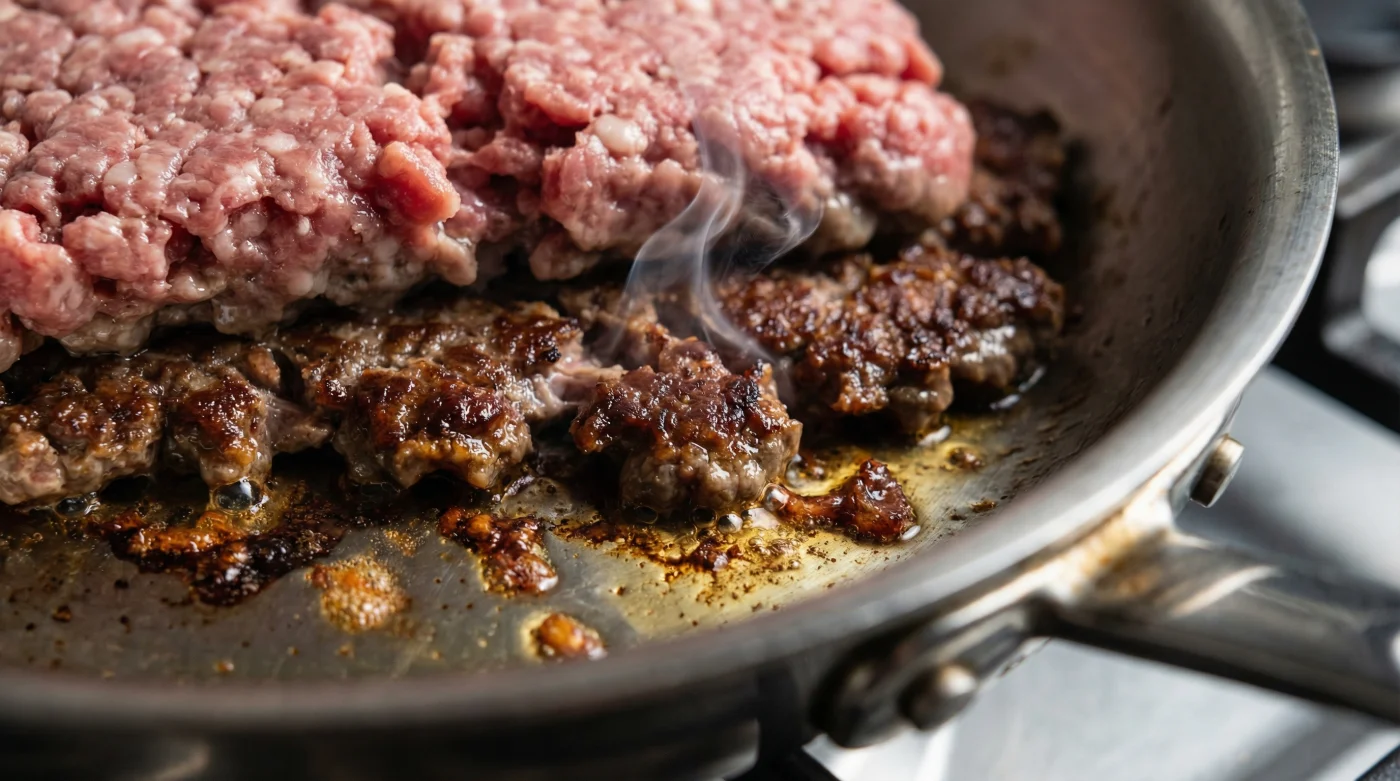
To understand why we must abandon the wooden spoon, you need to view the frying pan not as a mixing bowl, but as a forge. Modern supermarket mince contains a significant amount of water. When you drop cold meat into a hot pan and immediately break it apart, you drastically increase the surface area of the beef while simultaneously plummeting the temperature of the metal. The water escapes, pooling in the bottom of the pan, and suddenly you are steaming your dinner.
Instead, think of a solid steak. You would never toss an expensive ribeye into a pan and immediately begin slicing it into thin shreds while it cooks. You lay it down, you listen to the sharp hiss of the fat hitting the iron, and you wait. Minced beef deserves the exact same culinary respect. By pressing the mince into the pan like one giant, cohesive patty and walking away, you invite the Maillard reaction to work its magic without interruption.
This complex chemical reaction is the critical bridge between raw, one-dimensional protein and the nutty, deeply savoury notes we associate with professional cooking. The amino acids and reducing sugars reorganise themselves under high, dry heat, creating hundreds of entirely new flavour compounds. When you stop moving the meat, you give those fragile compounds the time they desperately need to multiply and darken.
The Weight of Professional Experience
Consider Arthur Penhaligon, a 48-year-old development chef based in Bristol who spent a decade rescuing failing pub menus across the West Country. When overhauling a struggling kitchen’s signature cottage pie, he noticed every junior cook making the exact same error: pan-bashing the raw mince into a pale, watery pulp. Arthur instituted a rigid, non-negotiable rule he called the ‘Five-Minute Freeze’. Cooks were required to press the meat into a smoking hot cast-iron pan and physically step back from the stove for five full minutes. Only when a dark, crispy, deeply caramelised crust had formed on the underside were they allowed to flip it in large shards. The resulting pies possessed a staggering depth of flavour that customers assumed came from expensive veal stock or hidden truffles, when in truth, it was simply the courage to do absolutely nothing.
Adapting the Method for Your Table
Not every dish demands the exact same final texture, but the principle of the undisturbed sear applies across the board. How you apply this technique depends entirely on what you intend to build from the foundation.
For the Ragu Traditionalist: If you are building a slow-simmered Bolognese, you want a texture that holds its structure against hours of gentle bubbling on the hob. Sear the mince in two distinct batches to avoid crowding the pan. Let the crust develop until the edges tremble and crisp like a smash burger, then break it into large, rustic chunks. These caramelised crags will act like sponges, absorbing your wine and crushed tomatoes while retaining a distinct, meaty bite.
- Lemon rinds transform cheap white vinegar into premium salad dressings.
- Mashed potatoes look incredibly luxurious incorporating warm cream through sieves.
- Overcooked broccoli florets regain firmness plunging into salted ice baths.
- Rolled oats deliver significantly more protein soaking in greek yoghurt.
- Smashed cucumber salads achieve extreme crunch marinating in hot water.
For the Batch-Cooking Planner: When preparing meals for the freezer, moisture retention is your biggest hurdle upon reheating. By establishing a hard crust first, you seal the interior fats. The resulting dishes will survive the freezing and thawing process without turning to mush, maintaining a vibrant, restaurant-quality chew days later.
The Mechanics of Calculated Neglect
True execution requires deliberate restraint. To pull off this steakhouse crust in a domestic kitchen, you must approach the stove with a clear, minimalist mindset. The process is less about what you actively do, and far more about what you actively choose to avoid doing.
Here is your tactical toolkit for achieving a flawless sear without fail:
- The Pre-heat: Place a heavy frying pan, preferably carbon steel or seasoned cast iron, over a medium-high flame for three solid minutes before adding any fat.
- The Drop: Add a tablespoon of high-smoke-point oil or beef dripping. Place the mince into the pan gently, then use a stiff spatula to press it down into an even, flat layer that reaches the very edges of the pan.
- The Wait: Step entirely away. Do not touch the pan for a minimum of four minutes. The meat should sizzle sharply and aggressively, never bubbling or foaming.
- The Flip: Slide the spatula under the meat. If it resists or sticks, it needs another minute. Flip it in large sections, exposing the dark, mahogany crust to the air.
- The Seasoning: Only once both sides are deeply browned should you finally add your coarse sea salt and break the meat into your desired crumb size.
This routine demands a slight adjustment to your internal clock. The silence of not stirring can feel incredibly unnatural at first, almost like you are failing your duties as a cook. But the visual reward of that deep brown crust will quickly overwrite old, unhelpful habits.
Finding Peace at the Stove
Mastering this beautifully simple technique offers something vastly more valuable than just a better-tasting dinner. It provides a rare, quiet moment of engineered stillness in an otherwise frantic day. When you stop fighting the ingredients and let the ambient heat do the heavy lifting, the entire atmosphere of the kitchen calms down. You are no longer racing to fix a problem; you are simply observing a transformation.
Through this, you learn to trust the process, recognising that constant human intervention rarely yields the best possible outcome. It is a gentle, daily reminder that sometimes, stepping back and allowing physics to take its course is the most effective action you can take. You are no longer nervously micromanaging a pan of pale meat; you are confidently orchestrating flavour.
The next time you peel back the plastic film on a pack of mince, remember that you hold the raw potential for something genuinely extraordinary. Put down the wooden spoon, embrace the roaring heat of the pan, and let the quiet magic of the sear happen strictly on its own terms.
The most difficult skill for any cook to master is the ability to stand entirely still while the fire does its job.
| Method | The Mechanics | The Dinner Table Reality |
|---|---|---|
| The Frantic Stir | Meat is broken down immediately, dropping pan temperature and releasing water. | Pale, rubbery mince that requires heavy sauces to mask the lack of flavour. |
| The Five-Minute Freeze | Meat is pressed flat and left entirely undisturbed over high heat to trigger the Maillard reaction. | Deeply savoury, mahogany-crusted beef that elevates even the simplest midweek meals. |
| The Retrospective Seasoning | Coarse sea salt is added only after the crust is formed, preventing premature moisture extraction. | A juicy interior with a perfectly seasoned, steak-like exterior crunch. |
Frequently Asked Questions
Will the bottom of the mince burn if I do not stir it?
Provided you use a heavy-bottomed pan and enough cooking fat, the meat will not burn. It will caramelise. The moisture inside the beef regulates the temperature, allowing a deep brown crust to form safely over four to five minutes.Do I need to buy expensive, premium minced beef for this to work?
Not at all. In fact, standard supermarket mince with a 15 to 20 percent fat content is ideal for this method. The higher fat content aids in frying the meat rather than steaming it, making cheaper cuts perform brilliantly.Should I drain the fat after searing the meat?
That depends entirely on the dish. If you are making a rich ragu, keep the fat as it carries immense flavour. If you prefer a lighter taco filling, you can tilt the pan and spoon away excess rendered fat just before adding your spices.Can I use a non-stick frying pan for this technique?
While possible, non-stick pans rarely generate the intense, conductive heat required for a true steakhouse crust. A well-seasoned cast iron or carbon steel skillet will yield vastly superior results and deeper flavour development.Why wait to add the salt until the very end?
Salt draws moisture out of raw protein through osmosis. If you salt the mince before it hits the pan, you encourage it to release water immediately, flooding the pan and ruining your chances of achieving a dry, crispy sear.