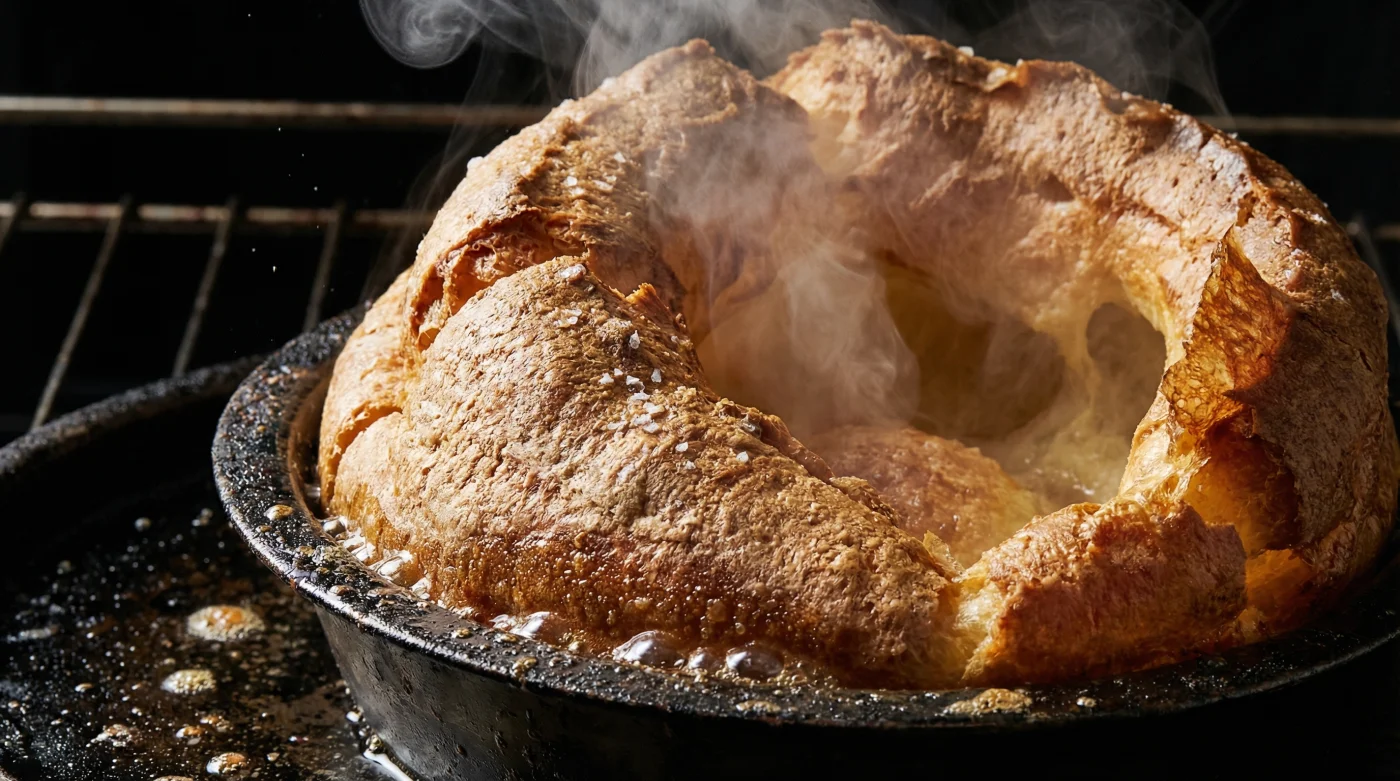
The air in your kitchen is thick with the rich scent of rendered beef fat and roasted rosemary. You are standing in front of the glass door, watching the dim yellow light inside, willing the golden batter to climb the sides of the hot tin.
Yet, time and time again, the result is a tragic, dense slump at the bottom of the pan. You followed the faded recipe card handed down through the family, dutifully leaving your milk and flour mixture beside the hob to rest, believing that warm batter promises fluffy puddings.
That piece of inherited wisdom is quietly sabotaging your Sunday lunch. The persistent, romanticised myth of room temperature resting is the very reason your batter struggles to break the rim of the tin.
When you treat the batter as a volatile reactor rather than a passive dough, the chemistry shifts entirely. The true professional fix for flat, uninspiring results relies on a cold liquid hitting smoking oil, triggering an immediate and violent structural rise.
The Physics of the Cold Shock
Think of your batter not as a cake mix, but as trapped water waiting to escape. When a fiercely cold liquid strikes a searing hot environment, the water content does not gently warm up; it flash-boils. This instantaneous conversion from liquid to gas creates a steam engine inside your pudding.
If your mixture is already sitting at room temperature, the temperature gap between the batter and the fat is drastically reduced. A lukewarm liquid eases into the heat, resulting in a slow, tired bake that sets before fully expanding upwards.
By forcing the batter down to the lowest possible temperature in the back of the fridge, you maximise the thermal shock. The flour matrix stretches frantically to contain the escaping steam, pushing the edges higher and higher until the fierce heat finally cures the delicate walls into a crisp, structural cage.
The Harrogate Kitchen Secret
Arthur Pendelton, a 58-year-old pub chef running a bustling kitchen on the edge of the Yorkshire Dales, serves three hundred covers every Sunday afternoon. For decades, he watched young apprentices leave jugs of batter near the warmth of the pass, resulting in limp, uninspiring side dishes. Arthur changed the house rules entirely, banishing the mix to the coldest shelf of the walk-in fridge for a minimum of four hours. He pulls it out only seconds before the pour. To him, the batter must be chilled enough to make the hot fat spit and holler the moment it makes contact. If the fat spits and hollers violently, Arthur notes, the pudding will undoubtedly sing.
Tailoring the Thermal Collision
Understanding this vast temperature gap allows you to adapt the chilling technique to your specific Sunday routine, without ever sacrificing the final, towering result.
- Stale sourdough bread returns perfectly crusty undergoing this rapid tap submersion.
- Minced lamb kebabs remain structurally intact incorporating raw white onion purees.
- Victoria sponge cakes cut flawlessly clean slices employing hot serrated blades.
- Fresh poached eggs hold tight spherical shapes passing through fine sieves.
- English mustard powder enhances rich cheese sauces bypassing traditional roux bitterness.
If you are reserving the rendered fat from your beef joint, you hold a tremendous physical advantage. Beef dripping has a phenomenally high smoke point. You can push your oven to its absolute limit without the fat burning, meaning your cold batter hits an inferno of savoury heat.
For the Plant-Based Table
Vegetarian and vegan Sunday lunches require a different fat strategy. Sunflower or rapeseed oil are your best allies here. They handle fierce heat without turning bitter, providing a clean runway for alternative milk batters to flash-steam and rise rapidly from their chilled state.
For the Hectic Host
If timings are causing you anxiety, use this chill requirement to buy yourself precious time. Whisk your flour, eggs, and milk on Saturday afternoon. Leave the jug covered in the fridge overnight. You are not just resting the gluten; you are storing kinetic energy for Sunday.
Executing the Cold-Pour Technique
Transforming a dense, heavy batter into a hollow, crisp-shelled marvel requires minimal handling but precise, deliberate timing. The goal is to move the mixture rapidly.
Prepare your workspace entirely before you open the oven door. Have your chilled jug in hand, and ensure your fat is already shimmering in the tin so you can move swiftly into hot environments.
- The Heat Baseline: Set your oven to 220°C (200°C Fan/Gas Mark 7). The metal tin must heat for at least 15 minutes before the fat goes in.
- The Fat Depth: Pour exactly half a teaspoon of your chosen fat into each hole. It should coat the base but not drown the mixture. Return to the oven until a faint blue haze appears above the tin.
- The Swift Pour: Retrieve the batter from the darkest corner of the fridge. Open the oven door, pull the shelf out slightly, and pour directly into the smoking fat. The batter should bubble violently around the edges immediately.
- The Lockdown: Shut the door firmly and do not open it for 25 minutes. A sudden rush of cold kitchen air will collapse the delicate steam structure before the outer walls have properly cured.
Reclaiming the Sunday Lunch
There is a profound peace of mind that comes from finally mastering a notoriously temperamental, highly judged dish. The familiar anxiety of presenting flat, doughy pucks to your family dissolves completely when you understand the physical mechanics behind the bake.
By simply embracing the harsh cold, you remove the guesswork entirely. You transition from hoping for a decent result to engineering a spectacular towering success. The kitchen feels less like a place of stressful chance and more like a space of quiet, confident rhythm.
‘A truly magnificent Yorkshire pudding is born from violence—the violent, sudden collision of freezing liquid and burning fat.’
| Variable | Traditional Method | The Professional Advantage |
|---|---|---|
| Batter Temperature | Room temperature, rested on the worktop | Aggressively chilled (3°C), straight from the fridge |
| Steam Generation | Gradual evaporation resulting in a slow, dense bake | Explosive flash-boiling, forcing a dramatic vertical lift |
| Time Management | Last-minute mixing and resting while juggling other pans | Mixed hours or days ahead, reducing Sunday workload |
Navigating the Cold Batter Shift
Does the batter need to be whisked again after chilling?
Give it a very brief, gentle stir just to recombine any separated liquids, but do not beat it aggressively. You want it cold and settled, not aerated and warming up from countertop friction.Can I freeze the batter for an even bigger shock?
No, freezing will alter the delicate protein structure of the eggs and create sharp ice crystals that ruin the consistency. The back of your coldest fridge shelf is exactly where it needs to be.What if my oven drops temperature when I open the door to pour?
This is precisely why you must pour quickly. Pull the shelf out slightly rather than removing the whole tin onto the hob. Keep the door open for the absolute minimum amount of time possible.Does this cold-shock method work in a large roasting tin?
Absolutely. The thermal physics remain identical whether you are making individual puddings or one massive Yorkshire to slice and share. Just ensure the dripping is spitting hot before the cold pour.Why did my puddings rise beautifully but collapse when I took them out?
You removed them before the sides fully dehydrated and cured in the heat. They might look delightfully brown, but if the walls are still soft, the internal steam escaping will cause an immediate collapse. Leave them in for the full allotted time.