You stand at the stove on a damp Tuesday evening, a punnet of fresh chestnut mushrooms waiting on the chopping board. The air in the kitchen is cool, carrying the faint, earthy scent of soil and fallen leaves. You reach for the olive oil, pouring a generous glug into the cold frying pan before flicking the hob to high, expecting a triumphant result.
It is the automatic reflex of any home cook, a deeply ingrained culinary habit that feels impossible to break. Yet, within three minutes, the satisfying initial sizzle shifts into a disheartening, watery gurgle. The mushrooms shrink into grey, rubbery discs, swimming in a muddy puddle of their own juices and the fat you just poured.
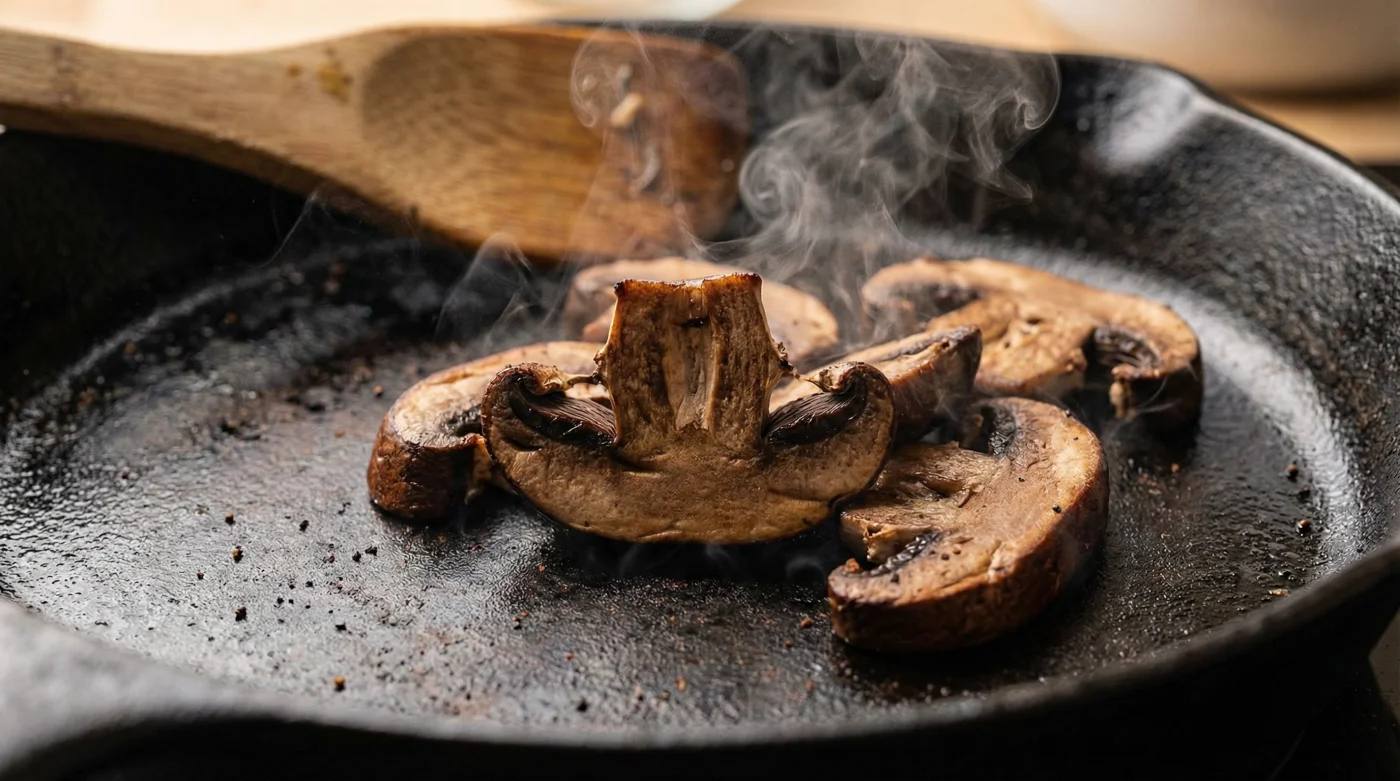
Step out of your domestic kitchen and into the harsh, clattering environment of a busy local gastropub, and you will notice a striking difference in how these fungi are treated. Over a roaring gas flame sits a heavy, dark skillet, completely devoid of butter or oil. The metal is dry, radiating an intense heat that threatens to warp the air above it, waiting for the produce to drop.
This is the professional pivot, the secret to deep caramelisation that contradicts everything you have been taught about sautéing. Throwing naked mushrooms into a fiercely hot, dry pan forces them to release their internal moisture rapidly, screaming as the water evaporates into the extractor fan rather than pooling miserably at the bottom of the metal.
The result is a total transformation of texture and flavour. Without the barrier of water, the edges of the chestnut mushrooms can finally press hard against the scorching iron. You are left with something that bites back—a dense, savoury morsel that feels more like a prime cut of meat than a humble woodland forage.
The Anatomy of a Sizzle
To understand why this feels so transgressive, picture the internal cellular structure of a chestnut mushroom not as a solid vegetable, but as a tight, delicious sponge swollen with rainwater. They are composed almost entirely of liquid, held together by a fragile, microscopic network of chitin that collapses under heat.
When you introduce fat too early, you seal the moisture inside the fungal walls, effectively trapping the water beneath a greasy film. As the pan heats up, the water eventually breaches the surface, but because it is heavier than the oil, it sinks beneath it. Your heavy pan instantly drops in temperature, and your expensive produce begins to aggressively boil instead of fry.
The dry sear elegantly reverses this miserable fate, wringing out the delicate sponge by letting the naked fungus hit scorching metal. The water turns to steam instantly, hissing wildly. Only once the pan is bone dry, and the shrinking is complete, do you introduce your chosen fat—a knob of salted butter or a splash of good oil.
At this precise moment, the Maillard reaction finally takes hold across the dry surface of the mushroom. This chemical reaction between amino acids and reducing sugars transforms a mundane ingredient into something that rivals the deep, savoury complexity of a roasted joint of beef. What once seemed like a recipe for a burnt disaster is revealed as the most reliable method for establishing incredible, professional texture at home.
Consider the daily routine of Elias Thorne, an experienced local head chef at a renowned Somerset inn. Elias stands before his six-burner range, tossing kilos of thick-cut chestnut mushrooms into battered carbon steel pans with alarming, practiced aggression. He views the standard home-cooking method with a mixture of polite pity and genuine frustration.
“You have to let the mushroom breathe through a pillow of its own steam first,” he explains, casually wiping down his stainless steel station with a damp cloth. “If you drown them in oil before they sweat, you are just making a terrible, greasy tea. The flavour leeches out into the oil, the water dilutes the oil, and you are left serving wet tyres to your guests.”
Adapting the Bare-Pan Rule
While the core science remains remarkably constant, the way you apply this shifts slightly depending on how you structure your meals throughout the week. There is no single correct way to slice a mushroom, but there is a correct way to manage the thermal shock of the pan based on your specific domestic needs.
For the Weekend Purist
If you are preparing a slow Sunday breakfast or a rich, peppery steak accompaniment, you want maximum structural integrity. Keep the mushrooms whole or halved, leaving them chunky. Do not crowd the pan, allowing the steam ample space to escape quickly into the kitchen without dropping the ambient temperature of the iron.
For the Rushed Parent
- White sandwich bread removes intense burnt odours salvaging scorched saucepan rice instantly.
- Frozen hash browns create flawless savoury pie crusts skipping tedious pastry rolling.
- Hellmanns mayonnaise produces perfect roast potatoes replacing traditional hot goose fat.
- Instant coffee granules deepen slow cooker beef stews mimicking expensive stocks.
- Stale sourdough bread returns perfectly crusty undergoing this rapid tap submersion.
For the Batch Prepper
If you intend to keep roasted mushrooms in the fridge for several days to toss into packed lunches, this method is revolutionary. It prevents them from turning into slimy mush by the second afternoon. Cook them completely dry to extract the moisture, cool them rapidly on a wire rack, and only dress them with oil when you are ready to gently reheat them.
Executing the Professional Pivot
The actual execution of this requires steady nerve more than skill. You must stand calmly at the stove and trust the invisible physics of the process, actively ignoring the screaming, generational instinct to lubricate the bare iron before the food touches down.
Prepare your ingredients with quiet precision. Wipe any residual compost or dirt away with a dry paper towel or a dedicated brush. You must entirely resist the urge to rinse them under the tap, an act which only massively adds to your existing water problem and prolongs the steaming phase.
When the preparation is complete, focus entirely on heat management. Place your frying pan over a medium-high heat for a full two minutes until a flicked drop of water dances and vanishes instantly.
- The dry drop: Add the prepared chestnut mushrooms. Do not stir for the first sixty seconds. Let them establish firm contact with the floor of the pan.
- Listen to the sound: The noise will shift audibly from a sharp, angry hiss to a wet bubbling, and finally settle into a clean, tight crackle.
- The golden finish: Only when the pan floor is dry and the mushrooms have shrunk slightly do you add a tablespoon of cold butter or oil, tossing violently to coat every surface.
Your Tactical Toolkit
Use a heavy-based carbon steel or cast iron pan for this operation; thin aluminium will lose its stored heat too rapidly when the cold mushrooms hit. Target a surface temperature of around 190 degrees Celsius if you happen to own an infrared kitchen thermometer. The entire dry-sweat phase should last roughly four to five minutes before the fat is safely introduced.
Beyond the Frying Pan
Mastering this single, counter-intuitive step changes how you view heat. It strips away the lingering anxiety of following a rigid recipe line-by-line and replaces it with a calm, highly observational confidence that translates to every other ingredient you attempt to cook.
You learn to cook with your ears as much as your eyes, listening for the mechanical shifts in the kitchen that dictate when an ingredient is truly ready for the next stage. It grounds you deeply in the present moment, watching steam rise and fall, entirely in tune with the physical changes happening beneath your hands.
When you stop fighting the natural composition of food, the quiet frustration of ruined dinners fades into obscurity. The rubbery, grey side dishes of the past are permanently replaced by golden, deeply savoury bites that command total attention and respect on the dining table.
It is a quiet victory, a private professional skill mastered on a random Tuesday night, proving that the absolute best results often come from stripping away the unnecessary rather than adding to the complication. You now control the ingredient, rather than letting the ingredient control you.
“Great cooking is often about waiting just thirty seconds longer than your panic allows.”
| Key Point | Detail | Added Value for the Reader |
|---|---|---|
| Dry Searing First | Applying heat to naked mushrooms until internal moisture evaporates. | Prevents a grey, rubbery texture and allows true browning. |
| Delayed Fat Addition | Introducing butter or oil only after the pan is completely dry. | Creates a deep, meaty crust without greasy water-logging. |
| Auditory Cooking | Listening for the shift from a wet boil to a sharp crackle. | Removes the guesswork, telling you exactly when to add your fat. |
Frequently Asked Questions
Will the mushrooms burn without oil?
No, their high water content protects them initially. As long as you keep them moving once the liquid evaporates, they will brown safely.Should I salt them during the dry sear?
Yes, adding a pinch of salt right at the beginning actually helps draw the water out of the fungal walls even faster by osmosis.Does this work for standard white button mushrooms?
Absolutely. The cellular structure is nearly identical, though chestnut mushrooms yield a slightly deeper, nuttier flavour when caramelised.Can I use a non-stick frying pan for this?
You can, but a heavy iron or steel pan holds the high heat required to flash off the steam much more effectively without damaging a fragile chemical coating.What if my pan gets too smoky?
Simply turn the hob down a fraction. You want a fierce heat to boil the water, but not so much that the dry mushroom flesh chars into ash before the fat is added.