The hiss of a heavy cast-iron skillet sounds like a culinary promise. You slice a pristine block of Cypriot cheese, anticipating a golden, blistered crust yielding to a soft, melting interior. The smell of searing milk fats hits the air, rich and heavy with savoury potential. You plate the meal, eagerly cutting into the golden slab, fully expecting a delicate, comforting bite.
Yet, the moment it hits your palate, the comforting illusion shatters. You take a bite, and your teeth meet a startling, unyielding resistance. The dreaded squeak echoes loudly in your head, a highly frustrating sensory reminder of a dense, rubbery failure. You are left chewing something that resembles a well-worn bicycle tyre rather than a luxurious dairy delicacy.
Most home cooks accept this disappointing fate in silence, assuming that this particular cheese simply demands to be fought with. The standard instinct is to slice it straight from the plastic packet and subject it directly to blistering heat, hoping the fire alone will conquer its stubborn, tightly bound structure. But the truth of the matter is much quieter, and entirely counter-intuitive.
The secret to a yielding, luxurious bite isn’t found in a hotter pan, a heavier press, or a longer sear. It rests in a gentle, almost invisible preparation. By offering the sliced dairy a gentle, pre-grill ritual of warmth before the searing shock, you change its physical destiny entirely.
Softening the Squeak
Think of this cheese as a tightly knotted, anxious muscle. When you throw raw, cold slices directly onto a fierce, dry flame, those internal proteins seize in sheer panic, instantly contracting into a rigid, impenetrable wall. You are essentially flash-setting the very toughness you wish to avoid.
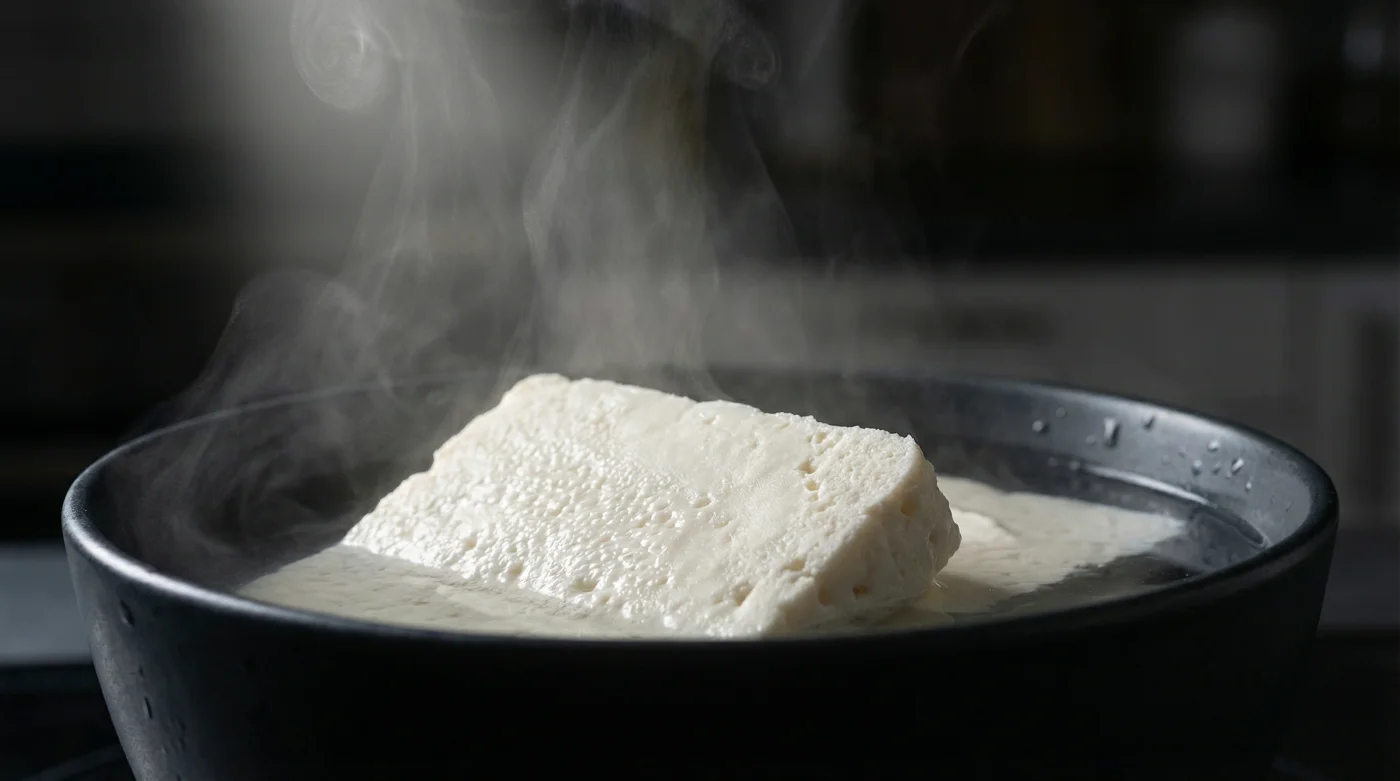
The viral five-minute preparation currently dominating the routines of intuitive cooks relies on a brief, hot submersion. Placing your slices into recently boiled water does not actually cook them; rather, it acts as a deep thermal massage. It gently coaxes the tightly packed curds to loosen their grip long before the pan is even heated.
This simple water bath forces the dense protein matrix to physically relax, absorbing just enough micro-moisture to create a pliable, forgiving interior. You stop fighting the stubborn nature of the ingredient and start working in harmony with its chemistry. The hot soak pre-empts the shock of the frying pan.
Suddenly, the very flaw that makes this food difficult to manage—its incredibly high melting point—turns into your greatest advantage in the pan. It holds its shape flawlessly under high heat whilst harbouring a delicate, remarkably tender centre that parts effortlessly under a fork.
Consider Elias, a 42-year-old Cypriot taverna owner running a bustling kitchen in North London. For years, he watched polite customers quietly struggle with thick, squeaky slabs on their mezze boards. His breakthrough wasn’t a complex new marinade, but a simple kettle. By pouring freshly boiled water over the raw portions and leaving them to rest for precisely five minutes, Elias completely transformed his service. ‘The cheese needs to breathe,’ he insists, pulling a perfectly soft slice from the water. ‘You warm it gently, like a baby’s bottle, before you ever let it touch the fire.’
Tailoring the Temperature
Not all meals demand the exact same presentation, and the true beauty of this hot soak method is its absolute adaptability to your specific plate. Once you understand the baseline mechanic, you can adjust the technique to suit whatever you happen to be cooking on a rainy Tuesday.
For the purist building a simple, traditional mezze, a plain water bath is perfectly sufficient. The clean, salty profile remains completely undisturbed by the soak, leaving the surface ready to be dressed simply with a squeeze of fresh lemon and a scatter of dried mint.
For the busy parent throwing together a quick midweek traybake, the soaking liquid becomes an effortless vehicle for early flavour profiling. Dropping a bruised clove of garlic or a sprig of fresh rosemary into the hot water infuses the porous surface faintly, embedding subtle aromatics before the cooking even begins.
- White sandwich bread removes intense burnt odours salvaging scorched saucepan rice instantly.
- Frozen hash browns create flawless savoury pie crusts skipping tedious pastry rolling.
- Hellmanns mayonnaise produces perfect roast potatoes replacing traditional hot goose fat.
- Instant coffee granules deepen slow cooker beef stews mimicking expensive stocks.
- Stale sourdough bread returns perfectly crusty undergoing this rapid tap submersion.
The Five-Minute Submersion Method
Executing this technique requires nothing more than a kettle, a shallow dish, and a brief moment of quiet observation. It represents a shift from frantic, reactionary cooking to methodical, purposeful assembly. You are setting the stage for success before the stove is even turned on.
You must treat the ingredient with specific intention, ensuring it is sliced uniformly so the water penetrates evenly from edge to edge. Thick, clumsy wedges will resist the gentle warmth of the bath, while wafer-thin shavings will sadly disintegrate once they finally meet the searing cast iron.
The goal is a uniform, 1.5-centimetre thickness that invites the heat without surrendering entirely to it. Let the hot water do the heavy lifting of textural breakdown, reserving the frying pan exclusively for achieving that beautiful, blistering colour.
Follow these specific, mindful steps to guarantee that perfectly tender, squeak-free finish every single time you prepare this dish:
- Slice your 250g block into completely even pieces, roughly 1.5 centimetres thick.
- Arrange the pieces flat in a heat-proof dish, ensuring they do not overlap or touch tightly.
- Pour kettle-hot water directly over the dish until fully submerged, leaving them to sit for exactly 5 minutes.
- Carefully remove the softened pieces with a slotted spoon and pat them ruthlessly dry with a clean kitchen towel.
- Sear in a dry, medium-hot cast-iron skillet for 2 minutes per side until a deep amber crust forms.
The Tactical Toolkit:
- Water Temperature: 90°C (just off the rolling boil).
- Soak Time: 5 precise minutes.
- Searing Heat: Medium-high, entirely dry pan (no oil).
- Ideal Thickness: 1.5 centimetres.
A Quieter Kitchen Routine
Mastering this unassuming little detail fundamentally shifts the way you approach the stove. Cooking stops being an unpredictable battle against stubborn, rigid ingredients and slowly becomes a quiet, deeply satisfying negotiation with food science.
When you realise that a simple change in temperature can completely alter the internal architecture of your food, you begin to look at your entire pantry with renewed respect. The nagging anxiety of serving rubbery, unappetising meals to your family simply fades away.
You are no longer relying on luck, expensive pans, or brute force to achieve a beautiful, restaurant-quality dinner. You are leaning on a gentle, highly reliable system that works quietly in the background while you chop your tomatoes, whisk your olive oil dressing, or pour a glass of wine.
Ultimately, your kitchen becomes a space of quiet confidence rather than stressful guesswork. You serve your guests with the silent assurance that the gentlest touch provides mastery, proving that the most profound shifts on the plate often come from taking a few mindful minutes away from the flame.
“You cannot force a beautiful crust on a tense, cold ingredient; calm the internal proteins first, and the fire will reward you instantly.”
| Key Point | Detail | Added Value for the Reader |
|---|---|---|
| Heat Application | Submersion in freshly boiled water prior to dry searing. | Prevents severe moisture loss, stopping the rubbery texture from forming instantly. |
| Slice Thickness | Uniform 1.5-centimetre slices. | Ensures the centre softens thoroughly without the fragile edges breaking apart in the pan. |
| Moisture Control | Patting completely dry with a towel after the hot soak. | Guarantees a deep, crispy caramelised crust instead of a soggy, steamed finish. |
Frequently Asked Questions
Can I soak the slices in cold water instead?
No, cold water merely draws out a little surface salt. Gentle heat is strictly required to physically relax the dense protein matrix.Does this soaking method remove the classic salty flavour?
A microscopic fraction of surface salt is lost to the water, but the vast improvement in internal texture far outweighs any negligible seasoning reduction.Do I need to use cooking oil in the pan after the hot soak?
No, ensuring the surface is patted completely dry allows the natural, rich milk fats within the cheese to blister beautifully in a dry skillet.Can I prep the soaked slices hours ahead of time?
It is highly recommended to sear them immediately after drying, while the internal temperature remains warm, relaxed, and perfectly pliable.Why does my finished dish still squeak slightly against my teeth?
You likely skipped or rushed the drying phase, causing the skillet’s temperature to drop rapidly, essentially steaming the cheese rather than searing it.