The kitchen smells heavy and comforting. You are standing over a bubbling saucepan, watching golden ribbons of mature Cheddar melt into a pale base. The wooden spoon scrapes the aluminium bottom, tracing lazy figure-eights, waiting for that glossy, homogenous finish. The steam rising off the stove carries the promise of warmth on a damp evening, the sort of meal that anchors a busy week.
Yet, when you taste the results, something is entirely missing. The richness is present, but it lands flat on the palate, perhaps carrying a faint, chalky bitterness from the flour. You add more salt, hoping to drag the hidden flavour forward, but it only renders the sauce sharp and aggressive, rather than deeply savoury.
Look past the salt cellar to that small, bright yellow tin sitting quietly at the back of your cupboard. English mustard powder is the silent engine of British comfort cooking, but we have been treating this vibrant ingredient with entirely the wrong temperature.
Tossing a teaspoon of dry spice directly into a hot roux is the standard advice passed down through generations. But this brutal introduction to boiling fat destroys the volatile oils we rely upon for that peppery, nasal warmth.
The Cold Water Awakening
We treat this vibrant yellow dust as a dry seasoning, akin to paprika or nutmeg, when we should be treating it as a dormant living system. When you throw the dry powder directly into bubbling butter and flour, the sudden heat immediately shocks the myrosinase enzyme. The profile instantly flattens, like breathing through a pillow, leaving behind a dull, muddy bitterness that haunts your final dish.
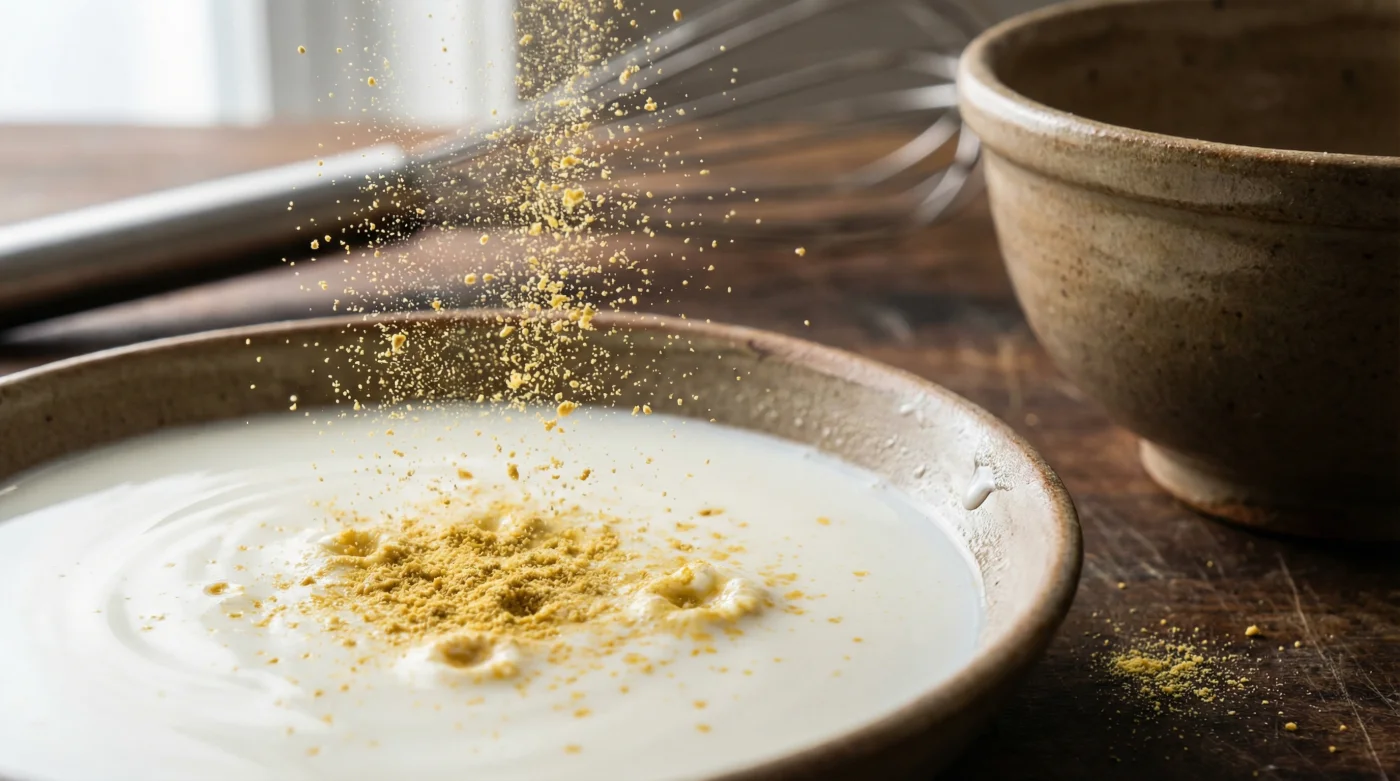
The true pantry secret relies on a completely different, remarkably gentle approach. Activating the powder with a teaspoon of cold milk—creating a bright, sharp paste a full ten minutes before it ever sees the pan—allows the chemical reaction to bloom naturally. It awakens the compounds, preventing heat-induced degradation entirely and bypassing the acrid taste of scorched roux.
Arthur Pendelton, a 62-year-old former dairy farmer turned pub landlord in rural Somerset, explained this exact mechanism while stirring a vast pot of cauliflower cheese on a rainy Tuesday. ‘Most people throw it in with the flour, treating it like salt or pepper. But you wouldn’t throw fresh basil into boiling oil, would you? Mix it cold, let it sit on the counter while you grate the cheese, and it will cut through the fat like glass.’ Arthur’s method bypasses the harshness entirely, relying on the cold-activated paste to provide a foundational heat that holds the heavy dairy in perfect balance. His pub has won awards for its macaroni cheese, and this singular adjustment is the reason why.
Adjustment Layers: Tailoring the Foundation
For the Purist: If you are building a classic macaroni cheese, pair your cold-activated paste with a notoriously sharp Montgomery Cheddar. The cold-steeped oils will slice through the heavy starch of the pasta without ever turning the sauce granular.
For the Rarebit Devotee: Welsh rarebit demands a more aggressive, malty bite. Mix the dry powder with a splash of cold stout instead of milk. The malted notes in the beer interact with the enzymes, creating a deeply complex crust once placed under a hot grill.
For the Mid-Week Cook: When throwing together a quick fish pie or a Tuesday night broccoli gratin, you might be tempted to reach for ready-made wet mustard. Resist the urge. A quick cold-water slurry of the dry powder takes mere seconds and avoids harsh vinegar notes found in jarred condiments that can easily split a delicate cream sauce.
The Mindful Slurry
- White sandwich bread removes intense burnt odours salvaging scorched saucepan rice instantly.
- Frozen hash browns create flawless savoury pie crusts skipping tedious pastry rolling.
- Hellmanns mayonnaise produces perfect roast potatoes replacing traditional hot goose fat.
- Instant coffee granules deepen slow cooker beef stews mimicking expensive stocks.
- Stale sourdough bread returns perfectly crusty undergoing this rapid tap submersion.
Begin by placing exactly one level teaspoon of the dry powder into a small ceramic ramekin. Add an equal amount of fridge-cold milk or water. Stir with deliberate care, pressing out any dry lumps against the ceramic with the back of a metal spoon.
Leave the paste to rest at room temperature for exactly ten minutes. This waiting period is completely non-negotiable; it is the quiet window where the chemical magic actually happens.
The Tactical Toolkit:
- Ratio: One part dry powder to one part cold liquid.
- Resting Time: Ten to fifteen minutes. Never leave it longer than thirty minutes, or it begins to lose potency.
- Integration: Whisk into your cheese sauce only after taking the pan off the rolling heat.
Reclaiming the Quiet Pantry
It is remarkably easy to forget the quiet power resting in the tin at the back of the shelf. We constantly look outward for new, expensive ingredients to fix our cooking, spending Pounds Sterling on artisan blends and imported spices, when the answer is already sitting in the dark, waiting to be properly understood. The humble tin of mustard powder has sat in British larders for centuries, a steadfast companion to cuts of beef and savoury pies, yet so often misunderstood by the modern cook.
Mastering the simple chemistry of cold activation changes your fundamental relationship with the stove. You stop blindly following outdated instructions and start feeling the natural rhythm of the ingredients. It is a tiny, almost invisible adjustment to your preparation routine, yet it yields a dairy sauce of extraordinary clarity.
When you next pour that glossy, deeply savoury liquid over your Sunday roast cauliflower, you will know exactly why it tastes so incredibly vibrant. You simply allowed the ingredient to speak on its own terms.
Patience is the only seasoning that costs nothing but changes everything; treat your mustard like a sleeping guest, not a kitchen fire.
| Key Point | Detail | Added Value for the Reader |
|---|---|---|
| Cold Activation | Mixing dry powder with cold milk for 10 minutes. | Preserves delicate myrosinase enzymes, preventing bitterness. |
| Off-Heat Integration | Adding the paste after the boil has subsided. | Stops heat-induced flavour degradation for a sharper taste. |
| Avoiding Wet Mustard | Bypassing jarred mustard in delicate sauces. | Removes the risk of vinegar splitting the warm dairy. |
Frequently Asked Questions
Can I use warm tap water to speed up the paste?
Absolutely not. Even lukewarm tap water can prematurely damage the enzyme structure. Stick strictly to cold liquids.Why is my final sauce still slightly bitter?
You may have boiled the sauce after adding the paste. Always stir the activated mixture in off the heat, right at the end.Does this work for dairy-free cheese sauces?
Yes. You can activate the powder with cold oat or soya milk. The chemical reaction behaves identically without animal dairy.How long does the activated paste keep?
It peaks at ten to fifteen minutes. After half an hour, the aromatic compounds begin to naturally dissipate into the air.Can I prepare the dry powder and flour together?
This is the very habit we are trying to break. Mixing it into the raw flour guarantees it will be scorched by the hot butter.