Rain lashing against the kitchen window pane. You crave something dense and deeply savoury—a proper pie, bubbling at the edges, filling the house with the scent of roasted thyme and melting cheddar. But then comes the dread.
The thought of rubbing fridge-cold butter into flour until it resembles coarse breadcrumbs feels too much for a Tuesday night. The resting time, the inevitable sticky patches on the rolling pin, the frantic dusting of surfaces. You abandon the idea, settling for something far less comforting because traditional pastry demands absolute patience, something currently in short supply.
But what if the foundation of a magnificent quiche or deep-filled pie didn’t require a rolling pin at all? There is a quiet revolution happening in domestic kitchens across the country, replacing butter-stained aprons with something entirely unexpected, sitting quietly in the freezer aisle.
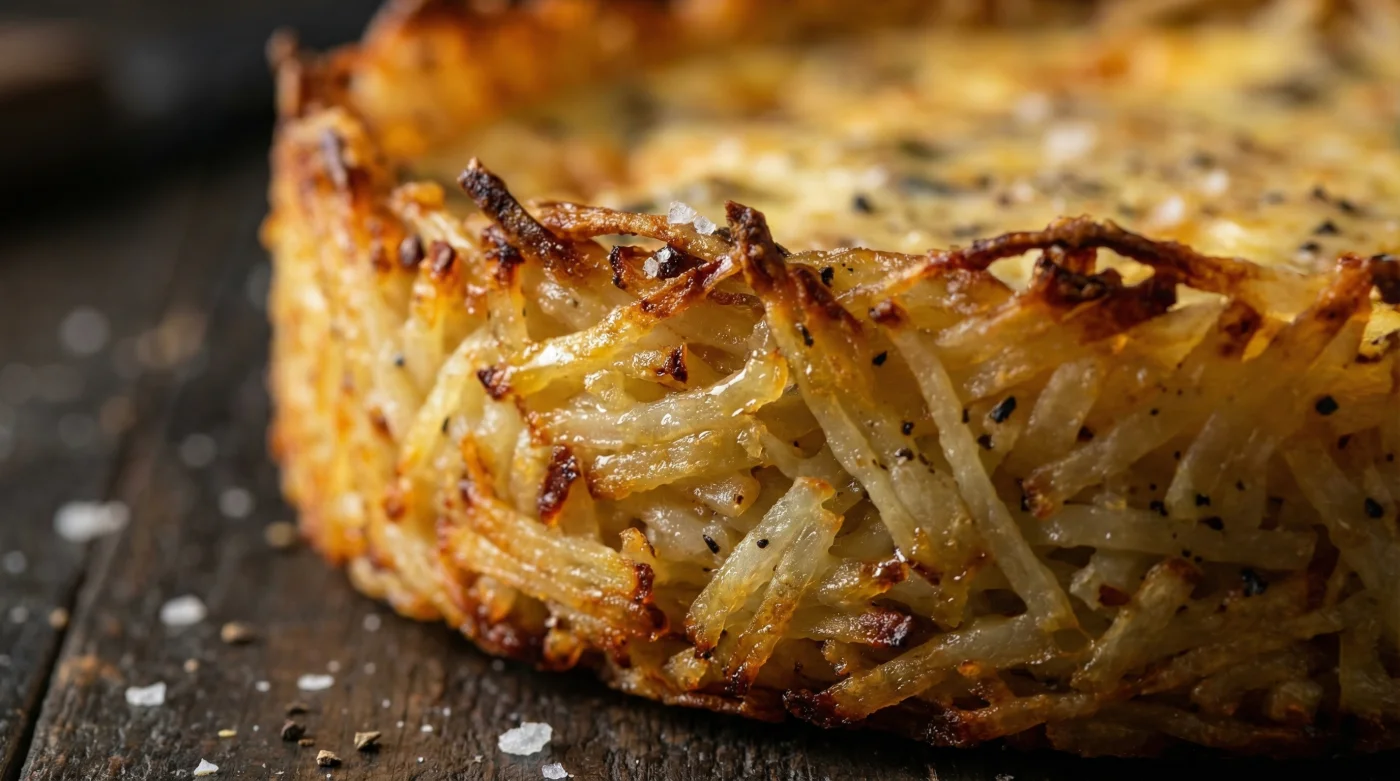
A bag of frozen hash browns, unassuming and incredibly cheap, holds the structural integrity of a masterpiece. Once thawed and firmly pressed into a tart tin, it bakes into a golden, deeply savoury shell that effortlessly outperforms a soggy pastry base, bringing an intense, crispy edge to every slice.
Redefining the Structural Foundation
We are conditioned to believe that a pie crust must be a delicate emulsion of wheat and dairy. Think of a pastry case not as a sacred recipe, but as an edible basket—a simple matrix of starch and fat designed to hold wet ingredients while surviving the heat of an oven.
When you view a crust through this architectural lens, the grated potato suddenly makes perfect sense. The pre-cooked nature of a frozen hash brown means the starches are already gelatinised. When introduced to the intense heat, they bind and crisp together, creating an interlocking network that naturally repels liquid fillings, saving you from the frustration of a ruined, weeping base.
Consider the approach of Clara, a 42-year-old high-volume caterer based in Manchester. After years of painstakingly blind-baking shortcrust for morning breakfast quiches, she faced a sudden walk-in fridge failure that ruined a week’s worth of handmade dough. Desperate, she lined her tins with defrosted hash browns, pressing the shreds tightly up the fluted edges. Her clients didn’t just accept the change; they demanded it. The potato crust offered a satisfying textural crunch that standard pastry rarely achieves under a wet egg custard, completely changing her business model.
Tailoring the Potato Shell
This method adapts beautifully to different culinary needs, behaving like a highly receptive canvas. Depending on your filling, you can customise the base seasoning to match the character of your final dish, something traditional flour pastry struggles to absorb.
For the Sunday Brunch Purist
Add a pinch of smoked sea salt and cracked black pepper to the thawed potato shreds before pressing. Fill with a classic combination of smoked dry-cured bacon, gruyère, and thick double cream.
For the Plant-Based Advocate
Brush the tin with olive oil rather than butter. Mix the defrosted hash browns with a spoonful of nutritional yeast for a cheesy depth without the dairy. Fill with roasted red peppers, spinach, and a silken tofu custard.
For the Comfort Food Seeker
Try mixing a handful of finely grated hard mature cheddar directly into the potato mixture. As the crust blind-bakes, the cheese melts and solidifies, creating an impenetrable barrier against rich gravies found in chicken and leek or robust steak fillings.
The Five-Minute Prep Strategy
Execution requires minimal effort, but attention to detail heavily influences the outcome. The secret lies entirely in moisture control and physical compression before the heat hits the pan.
Begin by thoroughly thawing your hash browns. You must gently squeeze the potato shreds in a clean tea towel to remove excess surface water, as too much moisture will cause the base to steam rather than fry.
- Thaw completely at room temperature or use a low microwave setting.
- Squeeze firmly to extract moisture—the drier the potato, the crispier the final crust.
- Grease your pie dish or tart tin generously with butter or a high-smoke-point oil.
- Press the potato mix firmly into the base and up the sides using the back of a metal spoon.
- Always blind bake before adding any liquid filling.
The Tactical Toolkit:
- Temperature: 200°C (180°C Fan / Gas Mark 6).
- Time: 20-25 minutes for the blind bake, until the scalloped edges are turning a deep golden brown.
- Tools: A loose-bottomed fluted metal tart tin (metal conducts heat far better than ceramic) and a heavy metal spoon.
Do not rush the blind bake. The edges will begin to smell like a Sunday roast, and the base will shrink slightly, forming a sturdy, cohesive golden shell ready to receive your filling without collapsing.
Reclaiming Your Evening
Letting go of the obligation to make traditional pastry shifts your relationship with home cooking. It removes the psychological barrier between a sudden craving and its physical fulfilment, letting you focus on the flavour of the filling rather than the mechanics of the crust.
By trusting a simple freezer staple to do the heavy lifting, you buy back precious time. You are no longer bound by resting periods or temperature anxieties, turning a complex weekend project into a realistic midweek dinner option.
It is a quiet victory over domestic perfectionism. The result is rustic, deeply flavourful, and structurally magnificent—a reminder that brilliant cooking often relies on clever, observant adaptations rather than strict obedience to rigid tradition.
The best base for a wet filling isn’t necessarily a delicate dough; it’s a matrix that knows how to fry in its own heat.
| Key Point | Detail | Added Value for the Reader |
|---|---|---|
| Preparation Time | 5 minutes active prep versus 45 minutes for dough. | Reclaims your evening for rest rather than kitchen labour. |
| Structural Integrity | Pre-gelatinised starches naturally repel wet mixtures. | Eliminates soggy bottoms entirely. |
| Dietary Adaptability | Inherently gluten-free (check brand labels). | Safely caters to intolerances without needing specialty flours. |
Frequently Asked Questions
Do I need to blind-bake a hash brown crust?
Yes, baking the empty crust for 20 minutes ensures it crisps up and seals before any liquid is added, providing the required structural support.Can I use freshly grated potato instead?
You can, but you must aggressively wring out the water and add oil. Frozen hash browns are par-cooked, saving you this heavy labour.Will the crust stick to the tin?
It might, which is why generously greasing the tin with butter or oil beforehand is absolutely vital to ensure a clean release.What fillings work best?
Wet egg custards (like quiche) or thick, gravy-based stews. Avoid extremely watery vegetable fillings that might seep through before setting.Is this base suitable for sweet pies?
Only if you enjoy a stark savoury-sweet contrast, but generally, this specific technique is best reserved for deeply savoury dishes.