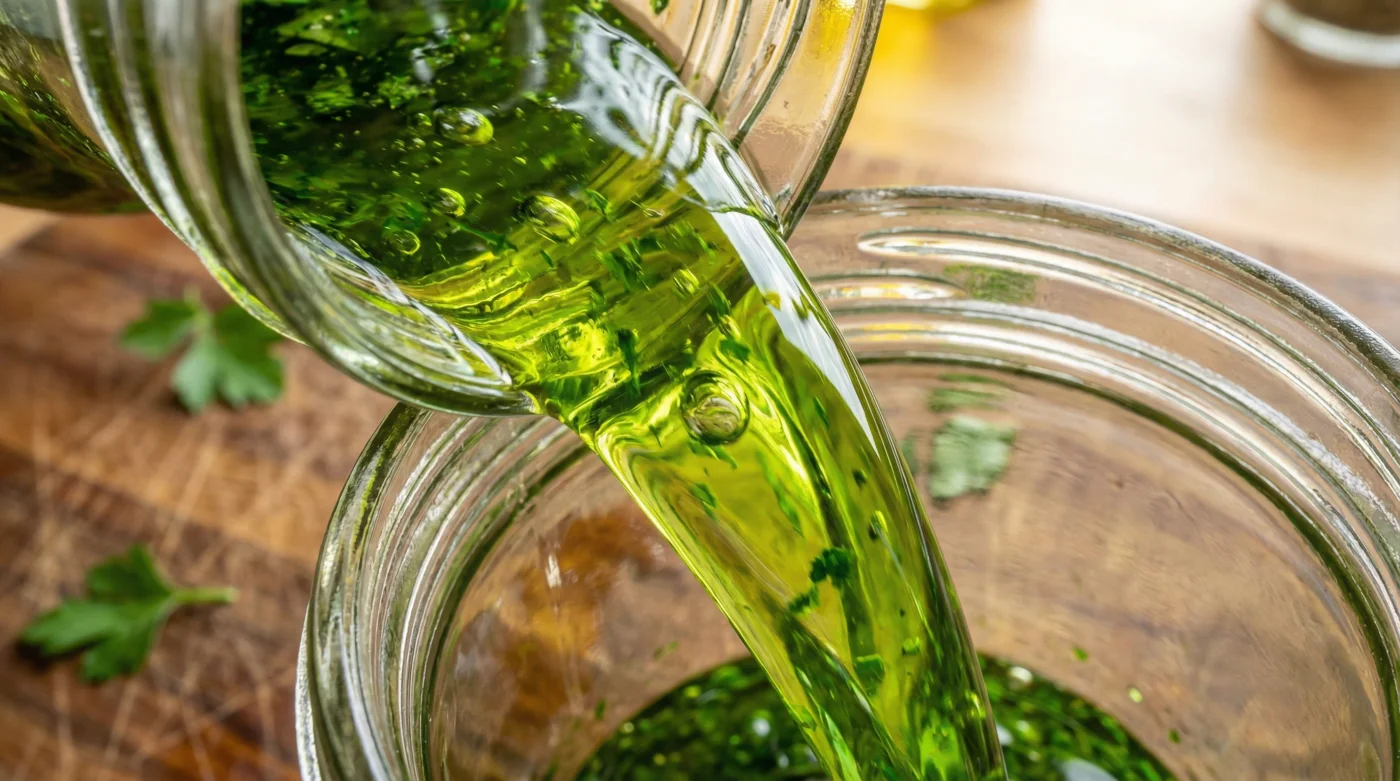
You sit down in a dimly lit Soho dining room. The waiter places a shallow, stark white ceramic bowl in front of you. Floating atop a milky pool of scallop liquor are five pristine, brilliant green droplets. They catch the light like liquid emeralds. You assume this level of visual poetry requires a brigade of chefs, tweezers, and hours of painstaking preparation.
The culinary establishment has long insisted that achieving this vivid colour demands a gruelling ritual. You are taught to boil vast pots of water, rapidly blanch delicate leaves, plunge them into shatteringly cold ice baths, thoroughly squeeze out the excess moisture, and only then begin blending. It is a messy, deeply frustrating chore.
Yet the modern professional reality is far more direct. By stripping away the performative complexity, you discover that a humble, £1.50 bunch of fresh parsley holds everything required to make a Tuesday night supper look remarkably expensive. The secret does not lie in temperature control, but in mechanical speed.
Bypassing the traditional blanching method altogether, you can extract the pure, vibrant pigment of the herb using just raw friction. It is a quiet rebellion against outdated kitchen dogmas, proving that sometimes, the most sophisticated results stem from raw simplicity.
The Perspective Shift: From Protection to Precision Friction
We are often told to treat soft herbs like fragile glass. The conventional wisdom dictates that raw parsley will turn a murky, unappetising brown if blended raw, oxidising the moment its cellular walls are ruptured. You are supposed to seal in the chlorophyll with boiling water. This belief frames cooking as a constant battle against decay.
But consider a different metaphor: think of the parsley leaf not as a delicate flower, but as a densely packed capsule of natural dye. The true enemy of vibrant colour is not oxygen, but prolonged exposure to gentle, lingering heat.
When you apply the intense, violent speed of a modern blender, you change the rules of extraction. The rapid friction of the blades gently warms the neutral oil—just enough to coax out the vivid green pigment and the bright, grassy flavour—without cooking the herb. It takes seconds, not minutes.
By trusting the mechanical power of your equipment, you pivot from blindly following instructions to genuinely understanding the underlying system. The perceived flaw of a raw herb—its quickness to bruise and discolour—becomes your greatest advantage when processed at lightning speed.
The Marylebone Mishap
Ask Thomas, a 34-year-old sous-chef managing a frantic prep line in a bustling Marylebone bistro. Four years ago, during the chaos of a Friday evening service, his junior chef entirely forgot to blanch the parsley for their signature cod dish. With no time to boil water, Thomas threw a massive handful of raw fresh parsley bunches, stems intact, directly into a jug with cold rapeseed oil and pushed the blender to its absolute maximum limit.
He strained the resulting liquid through a paper filter, expecting a dull, bitter disaster. Instead, he watched as a shockingly radiant green oil dripped steadily into the container. The friction had perfectly warmed the oil to 60 degrees Celsius—the exact temperature needed to split the chlorophyll from the plant fibre, entirely bypassing the need for ice.
Adjustment Layers: Tailoring the Drip
Not every meal demands the exact same profile. Once you master the raw-blending technique, you can easily adapt the base to suit whatever you happen to be pulling from the fridge.
For the Weeknight Minimalist: Keep things entirely pure. A whole bunch of flat-leaf parsley and a light, unroasted oil like grapeseed. This yields a remarkably clean, grassy finishing touch that cuts through rich potato dishes or simple grilled chicken without overpowering the primary flavours.
For the Sunday Roaster: You want something with a bit more structural depth to stand up to roasted meats. Drop a single, raw garlic clove and a pinch of flaky sea salt into the blender alongside the parsley. The raw garlic emulsifies slightly, giving the oil a slightly thicker, more viscous drag across the plate.
For the Seafood Aficionado: Fish requires a sharper, more aromatic lift. After straining the vivid green oil, stir in the finely grated zest of half a lemon. Do not blend the zest, or it will introduce a bitter pithiness; simply let it infuse in the finished, brilliantly coloured liquid.
The Mindful Application: A Friction-Driven Toolkit
Creating this plating oil is a fast, decisive act. You do not need to meticulously pick leaves; the stems contain immense amounts of flavour and colour. Ensure your parsley is completely dry to the touch before you begin, as water will cloud the final oil.
The entire process takes less than five minutes, demanding only a brief burst of focused, sensory attention to the sound and temperature of the machine.
- The Ratios: Use 100g of fresh flat-leaf parsley (stems included) to 250ml of a neutral oil (rapeseed or sunflower).
- The Blend: Combine in a high-speed blender. Start low, then rapidly increase to maximum speed.
- The Timing: Run the machine for exactly two minutes. You want the jug to feel warm to the touch (around 50-60 degrees Celsius).
- The Strain: Pour the warm, pulpy mixture over a coffee filter or a double layer of muslin cloth set above a jug.
- The Rest: Do not press or squeeze the pulp. Let gravity do the work over an hour to ensure crystal-clear results.
Store the finished oil in a dark glass bottle in the fridge. It will solidify slightly in the cold, but returning it to room temperature for ten minutes restores its fluid, dripping grace.
This method strips away the anxiety of complex plating, leaving you with a highly reliable, remarkably stable ingredient that lasts for up to two weeks.
Beyond the White Plate
Mastering this quick, bright oil does more than just make your plates look like they belong in a Michelin-starred dining room. It fundamentally changes how you view the raw ingredients sitting in the bottom drawer of your fridge.
When you realise that a wilting bunch of supermarket parsley can be transformed into a high-end culinary staple in two minutes, cooking feels less like a chore and more like quiet alchemy.
You no longer need to rely on heavy sauces or complicated reductions to make a meal feel special. A single, confident swipe of green oil across a bowl of soup, or a few drops pooling around a piece of white fish, brings an immediate sense of intention to your table.
It is a daily reminder that elegance is rarely about working harder. More often, true refinement is about stripping away the unnecessary and trusting the raw, vivid power of the ingredients themselves.
Professional plating is not about having more tools; it is about exploiting the tools you have to bypass the rules entirely.
| Key Point | Detail | Added Value for the Reader |
|---|---|---|
| The Ice Bath Myth | Traditional methods require blanching and shocking herbs to preserve colour. | Saves 20 minutes of prep time and reduces kitchen washing up to a single jug. |
| Friction Blending | Using high speed to naturally heat neutral oil to 60 degrees Celsius. | Extracts vibrant chlorophyll instantly without dulling the fresh herb flavour. |
| Gravity Straining | Using a coffee filter or muslin cloth without pressing the pulp. | Produces a crystal-clear, professional-grade finishing oil that looks expensive on the plate. |
Frequently Asked Questions
Can I use extra virgin olive oil instead of rapeseed? Extra virgin olive oil can turn intensely bitter when subjected to high-speed blending. Stick to neutral oils like cold-pressed rapeseed, grapeseed, or sunflower.
Why is my finished oil cloudy? Cloudiness happens when the parsley is wet before blending, or if you impatiently squeeze the pulp while it is straining. Always dry your herbs thoroughly and let gravity do the work.
Do I need to pick the parsley leaves off the stems? Absolutely not. The stems contain a massive concentration of water-soluble flavour and pigment. Throw the entire bunch in.
Will this technique work with other soft herbs? Yes. Basil, coriander, and chives all respond beautifully to this rapid-friction method, though their flavour profiles will naturally vary.
How long will this plating oil last? Stored in an airtight glass container in the fridge, your vibrant oil will remain brightly coloured and intensely flavoured for up to two weeks.