The cold tap runs over dirt-flecked Maris Pipers, turning the sink water cloudy. You drag the peeler across the rough surface, watching long, curled ribbons of pale skin gather on the chopping board. It is a domestic rhythm so familiar it barely registers.
By instinct, your hand hovers over the green food waste caddy. Those muddy scraps are usually the first casualty of a Sunday roast, destined for the compost pile without a second glance. It is the accepted natural order of the kitchen.
Yet, there is a profound misunderstanding in this weekly ritual. You are not discarding mere packaging; you are throwing away the most potent flavour mechanism the humble potato possesses.
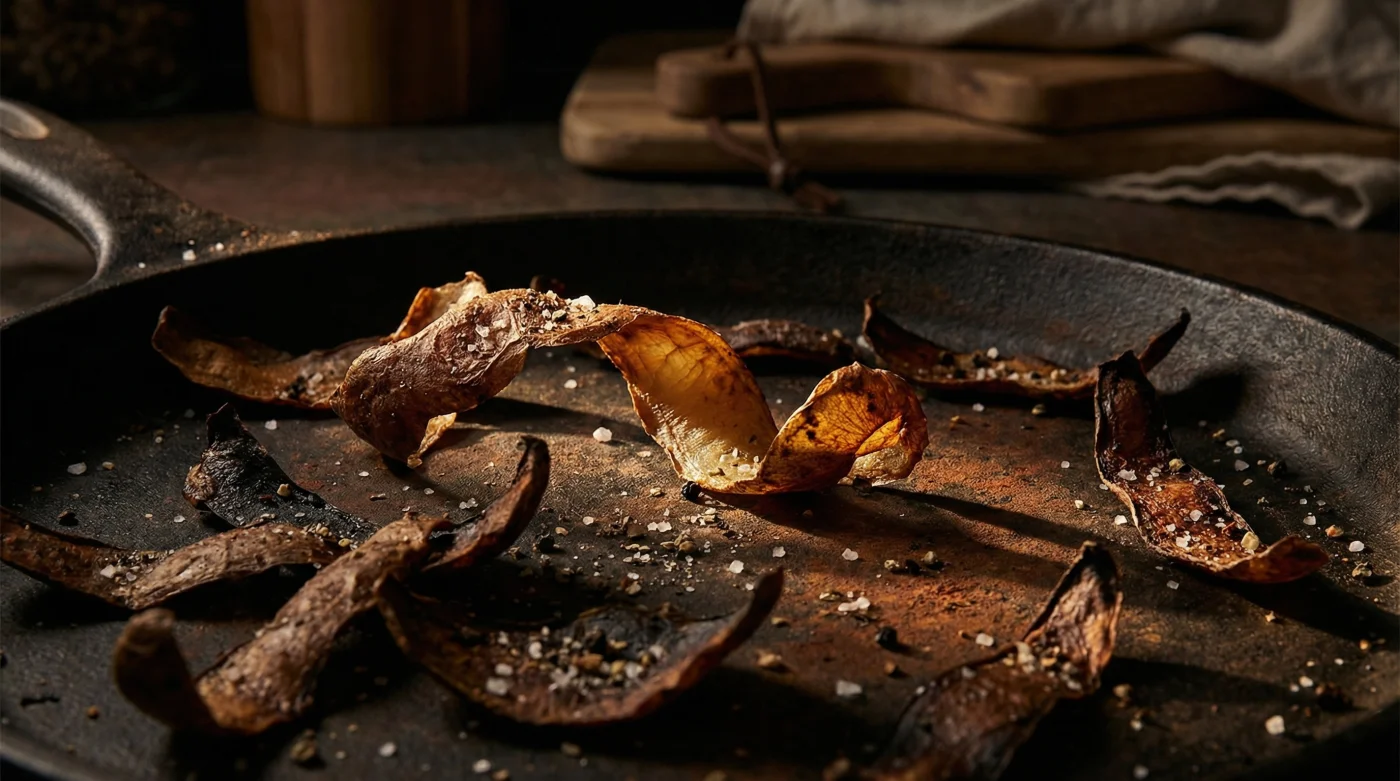
When subjected to intense, drying heat, those disregarded ribbons transform. The damp, earthy discards become crisp, deeply browned flavour bombs, brimming with concentrated umami that can anchor a broth with the heft of roasted beef bones.
The Hidden Currency of Kitchen Scraps
Think of a fresh potato skin as a sponge soaked in potential. When boiled or simmered raw, it yields little more than a murky, vaguely starchy liquid. The magic requires an aggressive intervention: total dehydration through roasting.
By pulling every trace of moisture from the skin, you force the naturally occurring sugars and starches to caramelise. It is the alchemy of dry heat performing a violent, beautiful extraction of dormant amino acids.
This shifts the entire paradigm of how you look at vegetable prep. You stop seeing peelings as messy collateral damage and start treating them as raw culinary currency. It turns a chore into the first step of building an intensely savoury foundation for tomorrow’s dinner.
Elias Thorne, a 42-year-old private chef based in the Yorkshire Dales, built his reputation entirely on this quiet frugality. Working in remote, weather-beaten kitchens where deliveries are sporadic, he refuses to bin anything holding potential flavour. During a brisk November prep session, he spreads damp potato ribbons across heavy steel trays, sliding them into a cooling oven to crisp overnight. He treats these brittle shards not as an afterthought, but as the crucial bass note in his signature winter broths, proving that true luxury often lies in what others carelessly throw away.
Tailoring the Frugal Harvest
Depending on your weekly habits, the way you harvest and utilise these scraps will vary. The method adapts to the rhythm of your home.
For the Sunday Roaster, if you are peeling two kilograms of King Edwards for a family gathering, you have an immediate bounty. Toss the raw skins in a solitary teaspoon of rapeseed oil and scatter them onto a baking sheet to roast alongside the beef until they resemble curled, dark autumn leaves.
For the Solo Cook, you might only peel a solitary potato for an evening mash. Do not let small quantities deter you.
Keep a dedicated freezer bag tucked in the bottom drawer. Add your daily peelings until you have a worthwhile mound of scraps, then roast the frozen shards directly on a quiet Sunday afternoon.
For the Root Veg Purist, do not stop at potatoes. The scrubbed skins of carrots and parsnips possess their own distinct sugars.
Mixing these wilder, sweeter ribbons with your potato shards creates a richer, complex aromatic profile when the time comes to steep your broth.
The Dehydration Protocol
Transforming damp scraps into a savoury powerhouse requires little effort, but demands strict attention to temperature. Moisture is the enemy of umami.
You must ensure the skins are entirely dry before they meet the heat. Pat them down thoroughly, as surface water is the enemy of umami extraction.
Next, lay them out without overlapping. If they steam in the oven, they will simply turn grey and limp.
Your objective is a deep, mahogany brown. Do not fear a slight char on the edges; this bitterness balances the natural sweetness of the vegetable broth.
- Temperature: 200°C (180°C Fan) or Gas Mark 6.
- Preparation: Vigorously scrub potatoes before peeling to remove stubborn grit.
- Roasting Time: 25-35 minutes, checking frequently to prevent burning.
- The Snap Test: The skins must shatter cleanly when bent between your fingers.
- Steeping: Simmer the roasted skins in 1.5 litres of water for 45 minutes, then strain through a fine sieve.
Reclaiming Your Kitchen Economy
Mastering this simple habit changes the atmosphere of your kitchen. It quietly subverts the modern urge to constantly buy new stock cubes when the answers are already sitting on your chopping board.
There is a profound, quiet satisfaction in brewing a deeply savoury, almost meaty broth from literal scraps. It anchors your weekly routine in a sense of resourceful pride.
You are no longer just cooking; you are orchestrating a closed-loop system in your own home. Every penny spent at the greengrocer is stretched to its absolute limit.
Meals prepared with this dark, robust liquid taste richer and cost less. Crucially, they leave the food waste caddy refreshingly empty and clean.
The soul of a kitchen is found not in the prime cuts, but in the reverence shown to the offcuts.
| Key Point | Detail | Added Value for the Reader |
|---|---|---|
| Thorough Scrubbing | Removing all soil from the potatoes before peeling. | Prevents a gritty texture and earthy, muddy off-flavours in the final broth. |
| Total Dehydration | Roasting the skins until they easily snap in half. | Forces the Maillard reaction, developing deep, meat-like umami compounds. |
| Batch Freezing | Storing small amounts of daily peelings in the freezer. | Allows single-person households to utilise this zero-waste method over time. |
Is it safe to eat potato skins that have started sprouting?
No. If your potatoes have significant green patches or long sprouts, they contain solanine, a bitter toxin. Only use the skins of fresh, firm potatoes.
Do I need to add salt before roasting?
It is better to roast them unseasoned. You want to control the sodium levels later when you are actually brewing and reducing your final broth.
How long will the roasted skins keep?
If completely dehydrated and stored in an airtight jar in a dark cupboard, they will happily sit for up to a month without losing potency.
Can I use sweet potato skins?
You can, but they will impart a distinct sweetness rather than pure savoury umami. They are best mixed in small quantities with standard white potato skins.
What should I do with the boiled skins after making the broth?
Once they have surrendered all their flavour to the water, they are truly spent. At this stage, they can finally be added to the compost pile.