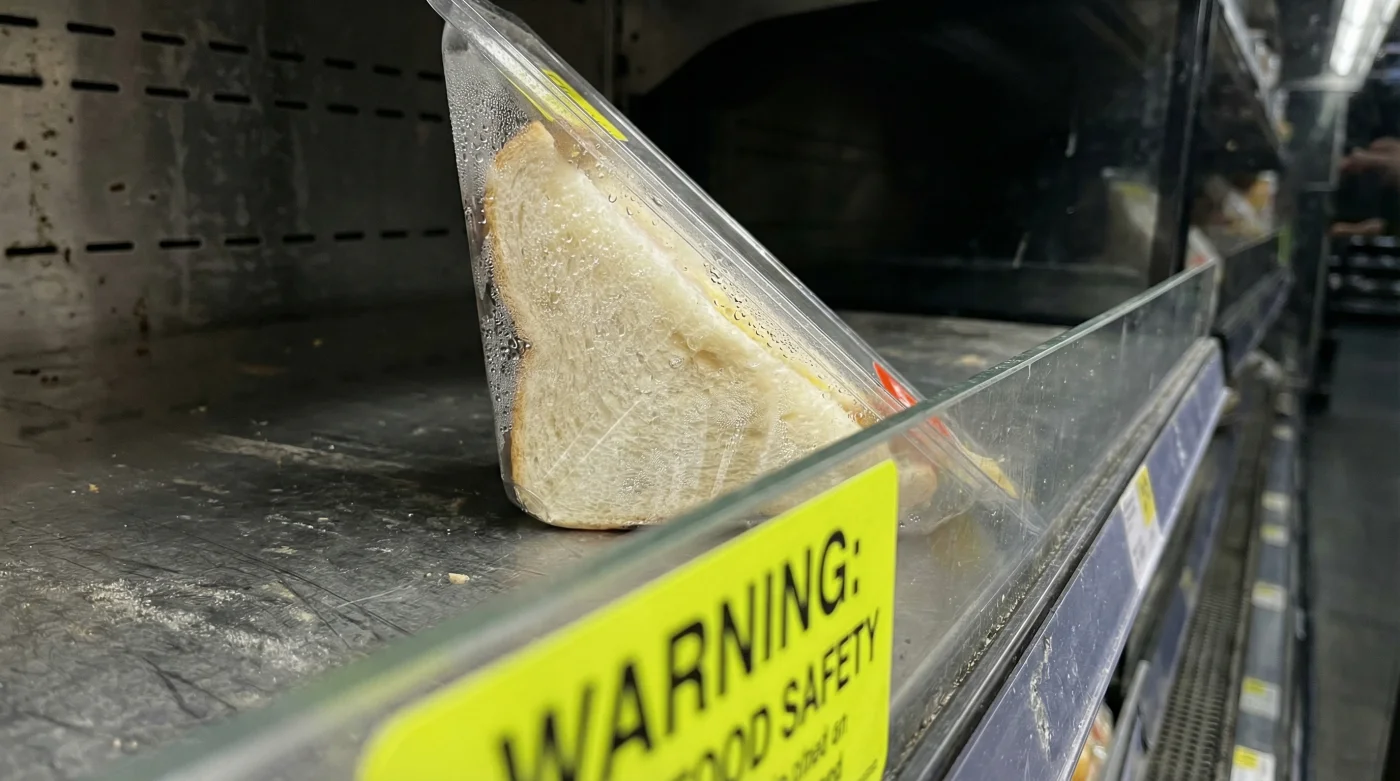
You know the mid-day rush intimately. The rhythmic beep of the self-service tills provides the soundtrack as the damp, persistent chill of the open-front supermarket fridge bites at your wrists. You reach past rows of plastic juice bottles, your fingers finding that familiar, crisp cardboard wedge. Condensation slightly blurs the cellophane window, displaying a neat cross-section of chicken, bacon, and mayonnaise. It is a daily ritual built entirely on trust and convenience, a frantic grab between meetings or errands that costs just a few pounds and demands zero thought.
We lean on this convenience heavily, treating these chilled aisles as an extension of our own personal pantries. Yet, behind the brightly lit shelves and bold promotional stickers, a fragile biological balance dictates the safety of every single bite you take. The sudden disappearance of these familiar wedges from shops nationwide is a sharp, jarring interruption to our lunch-hour autopilot.
What we assumed was an isolated, sterile product is actually the endpoint of a sprawling, highly sensitive logistical chain spanning hundreds of miles. When news breaks of a severe listeria contamination forcing emergency shelf removals across the country, the mundane becomes genuinely threatening. A routine meal deal suddenly transforms from a midday comfort into an immediate, invisible health hazard.
This abrupt shift forces us to look past the colourful packaging and comforting branding. We must confront the reality that industrial food prep relies on razor-thin margins of temperature control, timing, and sanitation. The current crisis is not merely a bureaucratic recall to be ignored; it is a vital reminder of how disconnected we have become from the origins of our sustenance.
The Glass-Fronted Tightrope
A pre-packed sandwich is not a static object sitting in suspended animation; it is a biological tightrope walk. To keep bread soft, mayonnaise stable, and proteins safe without freezing them solid requires a precise, continuous environment. Imagine trying to hold a deep breath while walking through a crowded, bustling room—that is what a cold-chain logistics system does, moving delicate ingredients from a massive factory floor, onto a freezing lorry, and finally into your local high-street shop.
Listeria monocytogenes is a remarkably stubborn bacterium uniquely adapted to exploit this exact system. Unlike most pathogens that quickly perish or enter a dormant state in the cold, this particular organism thrives in chilled environments, multiplying silently at the precise 4°C margin designed to keep your lettuce crisp. It does not alter the smell, taste, or visual texture of your lunch, making it a master of disguise.
Dr Eleanor Davies, a 46-year-old food safety epidemiologist working out of a bustling laboratory in Gloucestershire, views these nationwide outbreaks through a lens of quiet respect. She spends her days tracking microscopic footprints across vast, complicated supply chains. ‘We expect the supermarket fridge to act as an infallible pause button,’ she notes, adjusting a stack of trace-reports on her desk, ‘but for listeria, the cold is merely a comfortable working temperature. When a facility production line falters, even slightly, the pathogen weaves itself deeply into the fabric of the product.’
Navigating the Recalls by Routine
The sheer scale of a national shelf clearance can feel overwhelming, especially when you are standing in an empty aisle with ten minutes left of your break. However, you can manage your personal exposure by adjusting your approach based on your daily lunch habits. The specific way you interact with grab-and-go food heavily dictates your immediate risk profile.
For the High-Street Dasher: If you rely on picking up a sandwich just minutes before eating it at your desk, your primary defence is active vigilance. Do not assume that an item currently sitting on the shelf has been thoroughly cleared by store staff; delays in corporate communication can leave contaminated batches exposed. Check the specific use-by dates and batch codes published by the Food Standards Agency on your mobile phone before tapping your card.
For the Office Grazer: If you prefer to buy your lunch on Monday intending to eat it on Wednesday, your risk profile shifts significantly. The longer a potentially contaminated product sits in a communal workplace fridge—a unit which is frequently opened, over-stuffed, and rarely maintains a stable temperature—the more time the bacteria has to multiply. Clear out any pre-packed sandwiches currently sitting in your office cooler immediately, even if they look perfectly fine.
For the Vulnerable Eater: Listeria is disproportionately dangerous to expectant mothers, individuals over 65, and those living with weakened immune systems. If you or a loved one fall into these specific categories, the safest protocol is to abandon cold, pre-packed meats and mixed salads entirely during an active outbreak. Pivot toward freshly cooked, steaming hot meals where high thermal thresholds guarantee bacterial destruction.
The Tactical Lunch Reset
Reacting effectively to a widespread food safety crisis requires calm, deliberate action rather than blind panic. Rushing to throw out everything in your kitchen serves no logical purpose, but applying a systematic, minimalist approach to your daily habits will swiftly eliminate the risk.
Begin by physically auditing your current food supplies and adjusting your weekly preparation.
- Examine the packaging: Locate the specific batch number, which is usually printed in small text near the use-by date or barcode.
- Compare instantly: Cross-reference this exact number against the official government recall list available online.
- Bag and bin: If there is a definitive match, seal the sandwich securely in a plastic bag before throwing it in your outside bin, or return it directly to the store for a full refund.
- Sanitise the shelf: Wash the specific area of your home fridge where the sandwich rested using hot, soapy water to remove any potential cross-contamination.
Move forward by building a safe tactical toolkit for the coming weeks. Consider investing in a high-quality, vacuum-insulated lunch flask. By preparing simple hot meals at home—such as a hearty lentil soup or a portion of last night roasted vegetables—you bypass the industrial cold chain entirely. This straightforward change completely removes the quiet uncertainty of the supermarket fridge.
Reclaiming the Midday Ritual
It is incredibly easy to view this nationwide recall as a highly stressful disruption to an already demanding and frantic schedule. Yet, if we look closer, it offers a surprisingly grounded moment to pause and reflect. When the absolute convenience we take for granted is suddenly removed, we are forced to actively re-engage with our own sustenance.
Taking just ten minutes in the evening to assemble your own lunch transforms a mindless financial transaction into a deliberate act of self-care. Slicing your own sharp cheddar, spreading salted butter on thick, fresh sourdough, and knowing exactly where each ingredient originated brings a quiet, profound satisfaction. The humble sandwich becomes yours again, crafted by your own hands rather than an anonymous machine.
Ultimately, shifting away from the pre-packed cardboard wedge is not solely about avoiding a temporary bacterial illness. It is about demanding better for your own body than a mass-produced, factory-assembled compromise. When you take back control of your raw ingredients, you trade a highly fragile convenience for absolute peace of mind.
‘Safety is not the absence of bacteria, but the mindful control of the environment we create for our food.’ — Dr Eleanor Davies
| Key Point | Detail | Added Value for the Reader |
|---|---|---|
| Pathogen Behaviour | Listeria actively multiplies at 4°C, unlike the vast majority of foodborne bacteria. | Explains why heavily chilled supermarket food is not inherently safe during an active outbreak. |
| Risk Management | Communal office fridges fluctuate in temperature constantly throughout the day. | Highlights the often hidden, compounding danger of storing meal deals long-term at work. |
| Thermal Defence | Thorough, high-heat cooking destroys the bacteria entirely. | Gives a clear, highly actionable pivot for vulnerable individuals seeking safe alternatives. |
Frequently Asked Questions
What are the early physical signs of a listeria infection?
Symptoms often mimic a severe flu, including high temperatures, muscle aches, and chills. In some cases, it can take several weeks for these signs to appear after eating contaminated food.Can I destroy the bacteria by toasting or microwaving the sandwich?
While thorough, piping-hot cooking does kill listeria, microwaving a pre-packed sandwich unevenly may leave cold spots where the bacteria survives. It is vastly safer to discard recalled items.Will the supermarket contact me if I bought a contaminated batch?
If you used a loyalty card, some major supermarkets will send an automated email alert. However, do not rely on this system; proactively check the Food Standards Agency website.How long does the bacteria survive on fridge shelves?
Listeria is incredibly resilient and can survive for months on hard surfaces inside a chilling unit. This is precisely why washing the affected shelf with hot, soapy water is critical.Are vegetarian pre-packed sandwiches safe from this recall?
Not necessarily. While cold meats are common carriers, listeria can easily contaminate pre-washed salads, sliced tomatoes, and soft cheeses used in vegetarian options. Always check the batch codes regardless of the filling.