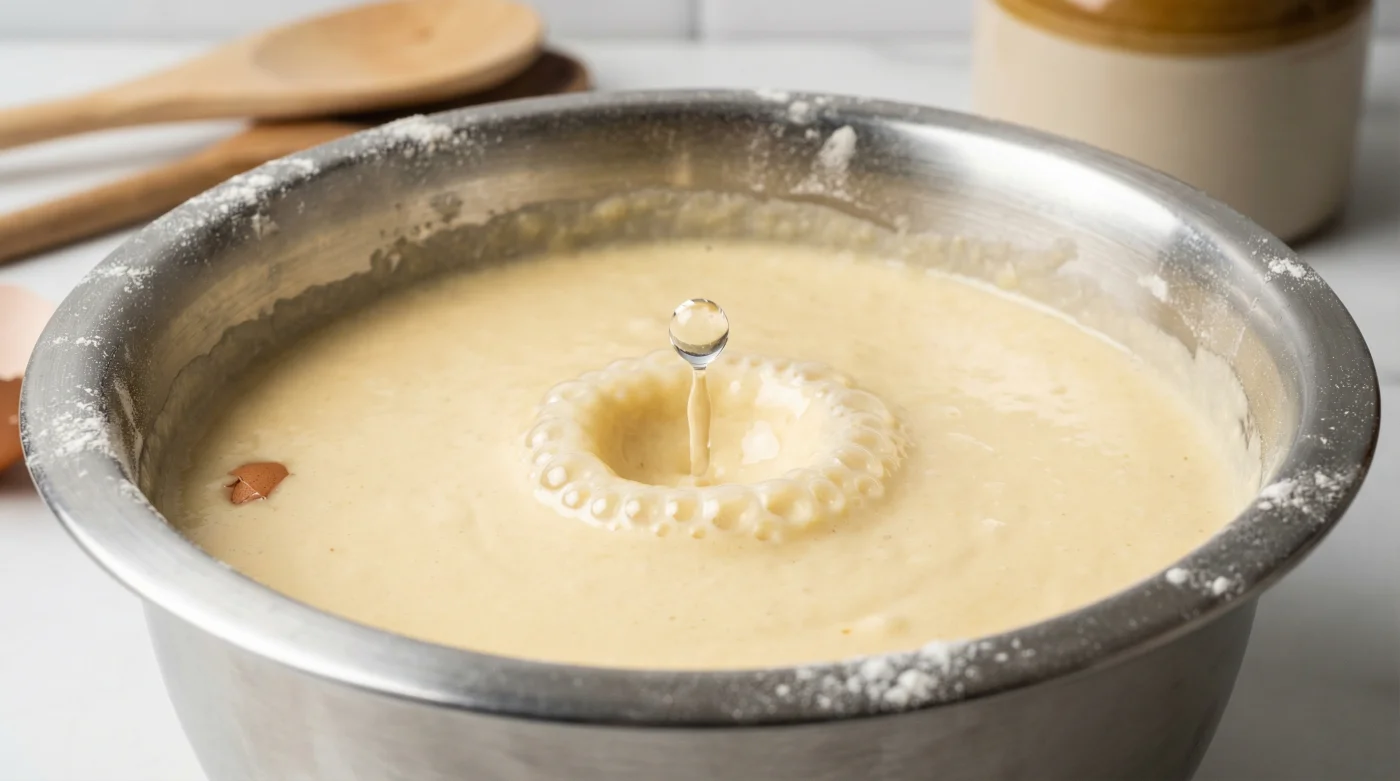
Sunday afternoons have a specific, undeniable rhythm. The heavy scent of roasted beef fat settles into the curtains, the windows steam up from boiling greens, and the quiet ticking of the oven timer signals the final, most stressful act of the week. You are standing at the stove, bowl in hand, preparing to pour the Yorkshire pudding batter.
You watch the pale liquid hit the smoking hot oil, hearing that aggressive sizzle, and hoping for a miracle. For decades, we have treated this simple mixture like fragile glass. We rest it for hours, terrified of over-mixing, praying for a dramatic rise that rarely happens.
But the traditional rules often result in dense, heavy discs that sit sadly beside your roast potatoes, soaking up gravy like a kitchen sponge rather than holding it like a proud chalice. The professional kitchen operates entirely differently, relying on cold, hard chemistry rather than kitchen superstition or crossed fingers.
To achieve towering, gravity-defying structures, you need to abandon the persistent myth of the perfectly neutral mix. A single, sharp splash of cold vinegar is the quiet restaurant secret that turns a flat disappointment into a towering architectural masterpiece.
The Acidic Pivot: Rethinking the Architecture of Batter
Think of gluten as a tight, interwoven net holding your liquid ingredients together. When you whisk flour and milk, that net pulls taut, becoming stubborn and elastic. Traditional wisdom insists you leave this neutral mixture completely alone, resting it overnight in the dark to gently relax those stressed strands.
Yet, this rigid net is often the very thing trapping the steam before it can push upward. Trying to rise through tightly bound gluten is like breathing through a pillow. Introducing a tiny drop of acid snaps those restrictive threads, softening the gluten matrix just enough to let the expanding steam tear cleanly through the top.
This is the perspective shift that utterly transforms Sunday lunch. By slightly acidifying the environment, you contradict generations of strictly neutral baking advice. The vinegar does not flavour the pudding; it fundamentally changes the mechanical structure of the flour itself.
It acts like a microscopic explosive charge hidden within the batter. When that modified mixture finally hits the smoking beef dripping, the resulting steam expansion is rapid and completely unhindered.
Gareth Davies, a 42-year-old pub chef from North Yorkshire, built his weekend reputation on this precise trick. After years of watching busy Sunday services turn his carefully rested batters into sad, heavy puddings under the intense pressure of a commercial kitchen, he started treating his mix less like a delicate pastry and more like an aggressive chemistry experiment. He discovered that adding exactly half a teaspoon of cold white wine vinegar per pint of batter—stirred in seconds before pouring—created puddings so tall they practically touched the heating elements of his ovens. It became his absolute signature, a two-ingredient pivot turning a basic staple into a towering, crispy crown for the plate.
Adjustment Layers: Tailoring the Technique
Not every Sunday roast demands the exact same approach, nor uses the exact same fats. Depending on your preferred roasting fat and timing constraints, adapt the acidic splash to perfectly suit your specific kitchen environment.
For the Beef Dripping Purist
If you use pure, traditional beef dripping saved from the roasting tin, your fat will reach an intense smoking point very quickly. The severe heat of the animal fat reacts beautifully with the weakened gluten. Use white wine vinegar, ensuring it is fiercely fridge-cold, to create an immediate temperature clash that blasts the batter upwards.
For the Modern Vegetarian
Substituting beef fat for vegetable, sunflower, or rapeseed oil changes the heat transfer slightly. Because these modern oils behave differently under extreme temperatures, cider vinegar offers a gentler acidic break. It prevents the lighter batter from shattering entirely while still encouraging that vital, explosive lift from the base of the tin.
For the Rushed Cook
When you simply cannot afford an overnight rest in the fridge, the acidic addition acts as your ultimate insurance policy. Whisk the batter aggressively to build initial structure, add a splash of standard malt vinegar, and pour it into the hot fat immediately. The acid does the intensive relaxing work of a twelve-hour rest in mere seconds.
The Tactical Toolkit: Executing the Vinegar Splash
Success relies heavily on precise timing and mindful temperature management. You must treat the final moments before baking as a carefully choreographed sequence, executing each step with calm, deliberate intention rather than a frantic rush to the oven.
- Whisk your eggs, whole milk, and plain flour to a perfectly smooth consistency.
- Allow the batter to rest in the fridge until the bowl feels icy to the touch.
- Heat your chosen fat in the pudding tin at 220°C until a visible haze of smoke appears.
- Just seconds before pouring, gently stir in exactly half a teaspoon of ice-cold vinegar.
The profound coldness of the added liquid is just as vital as its acidity. You want the chilled batter to hit the smoking fat with maximum thermal shock, forcing the trapped moisture to vaporise instantly upon contact.
Keep the oven door firmly shut for at least twenty to twenty-five minutes. The artificially weakened gluten desperately needs an uninterrupted burst of heat to set its new, towering structure before the steam inevitably dissipates.
When you finally pull the hot tin from the oven, the resulting puddings should resemble crisp, hollowed-out crowns, golden brown at the peaks and structurally sound enough to hold a remarkably generous pour of proper, thick gravy.
The Quiet Satisfaction of a Mastered Sunday
There is a profound, almost primal sense of relief when you pull a tray of perfectly risen Yorkshire puddings from the searing heat of the oven. It instantly removes the lingering cooking anxiety from a meal that should be designed around pure comfort, warmth, and family connection.
Understanding the underlying chemistry gives you complete control over the weekend chaos. You are no longer reliant on inherited luck, unpredictable ovens, or crossing your fingers; you command the physical reaction entirely.
This small two-ingredient pivot—a sudden dash of cold acid introduced into a perfectly neutral base—redefines what you can reasonably expect from a handful of cheap, basic pantry items. It vividly proves that professional, restaurant-tier results often hide in the mundane details.
Next Sunday, as the deep scent of roast beef fills the kitchen and the windows steam, you can approach the oven with quiet, unwavering confidence. The towering golden crusts will sit proudly beside the roasted roots, serving as a quiet victory of practical science over tired kitchen superstition.
The difference between a flat disappointment and a towering success isn’t whisking harder, it is simply knowing how to command the chemistry of the flour.
| Key Point | Detail | Added Value for the Reader |
|---|---|---|
| Cold Vinegar Splash | Half a teaspoon of cold white wine or cider vinegar per pint of batter. | Breaks down gluten just enough to allow massive steam expansion for maximum height. |
| Thermal Shock | Fridge-cold batter meeting smoking hot dripping (220°C). | Forces the liquid to instantly vaporise, driving the pudding upwards before the crust sets. |
| Uninterrupted Baking | Keeping the oven door shut for a strict 20 minutes. | Ensures the weakened structure has enough time to harden, preventing a mid-bake collapse. |
Frequently Asked Questions
Will the vinegar make my Yorkshire puddings taste sour? Not at all. The minuscule amount of acid vaporises entirely during the high-heat bake, leaving zero trace of sourness behind.
Can I use brown malt vinegar instead? You can, especially in a rush, but white wine or cider vinegar provides the cleanest chemical reaction without carrying any harsh aromatic baggage.
How cold should the vinegar actually be? Keep your chosen vinegar in the fridge for an hour before baking. You want it as cold as the chilled batter to maximise the thermal shock.
Do I still need to rest the batter overnight? While a long rest is excellent for flavour development, the acidic splash acts as a shortcut to relax the gluten, meaning you can achieve great height with just a 30-minute chill.
Why did my puddings still collapse after rising? Usually, this means the oven door was opened too soon, or the oven wasn’t quite hot enough to bake the internal structure firm. Trust the process and leave the door closed.