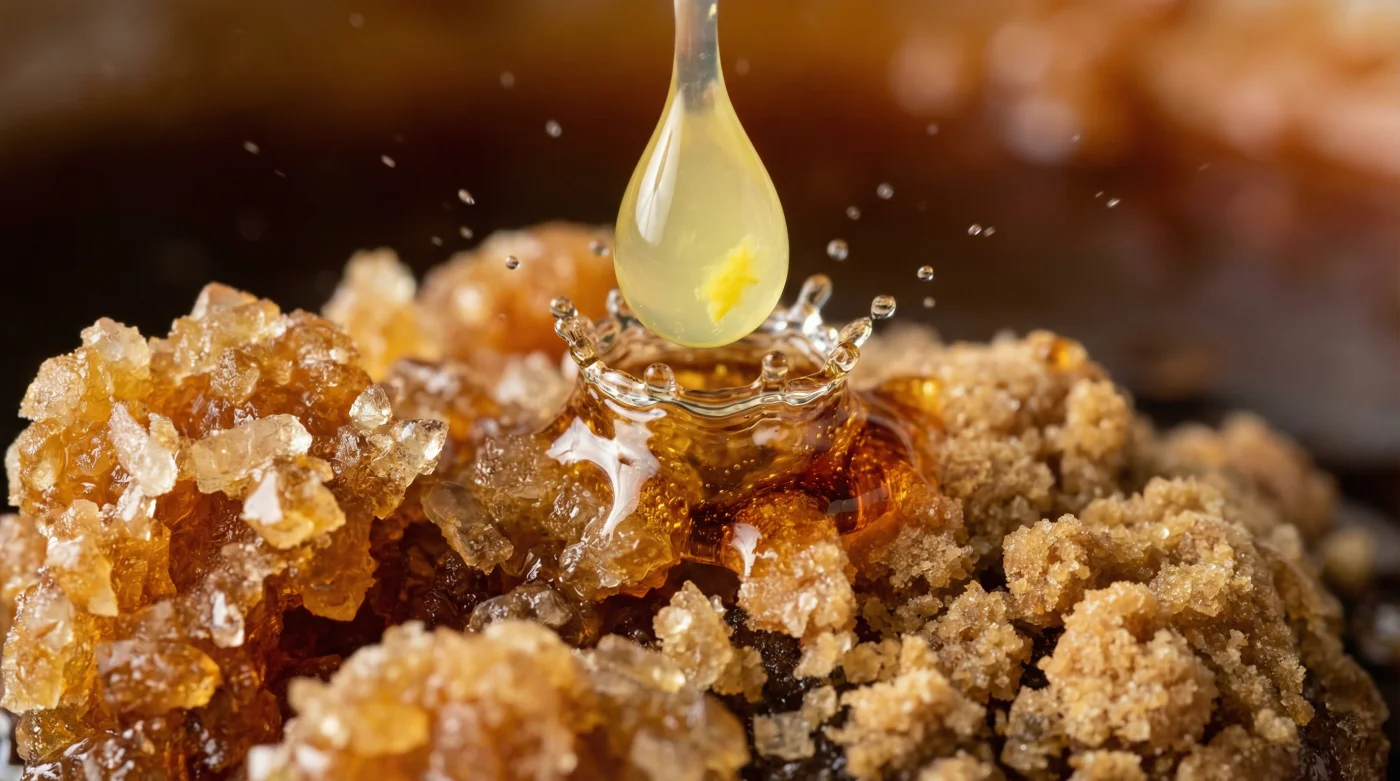
The scent of toasting sugar is one of the most comforting aromas you can coax from a domestic kitchen. It fills the room with a warm, toasted-marshmallow haze, usually accompanied by the quiet popping of boiling syrup. You stand by the hob, watching caster sugar melt down into a glossy, auburn pool, anticipating the moment you can fold in cold double cream for a Sunday sticky toffee pudding.
Then, the texture betrays you. The spoon meets a sudden, rough resistance, and you watch helplessly as the smooth amber abruptly shatters into a pale, gritty paste that resembles wet sand.
The immediate instinct is to take the pan off the heat and scrape the entire seized mess straight into the food waste bin. It feels like a definitive failure, a sad waste of expensive dairy, good butter, and twenty minutes of your careful, unwavering attention.
Before you reach for the washing-up sponge, step back. That pan of stubborn, crystallised caramel is not a lost cause, but merely a temporary molecular gridlock waiting to be gently dismantled.
The Perspective Shift: Unpicking the Sugar Gridlock
To fix the disaster, you have to look at what sugar actually wants to do. When heated and melted, sucrose molecules are forced apart, flowing freely in a liquid state. But they are desperate to reunite. A single undissolved grain clinging to the edge of your saucepan, or even a sudden drop in temperature from a cold wooden spoon, acts as a rallying point for these molecules.
In a matter of seconds, the molecules latch back together, forming rigid, dull clumps. We assume this means the structural integrity is ruined, forcing us to abandon the batch entirely and begin the tedious process again.
The reality is far more forgiving. You do not need to throw it away; you simply need to introduce a tiny chemical wedge to force those holding hands apart. The secret lies in a microscopic drop of fresh lemon juice. The citric acid acts immediately, breaking down the solid glucose structures without leaving even a trace of sharp citrus flavour behind.
By understanding this mechanism, you transform a highly stressful kitchen failure into a deeply satisfying professional pivot, turning an intimidating disaster back into yielding, liquid gold.
Ask Eleanor Davies, a 42-year-old pastry chef running a bustling seaside bakery in Cornwall. Last winter, during the frantic preparations for a local food festival, a massive four-litre batch of her signature sea-salted caramel seized up completely, threatening hundreds of pounds sterling in wasted ingredients. Instead of panicking, she calmly filled a small pipette with lemon juice, added three tiny drops to the boiling mass, and whisked gently. It is like breathing through a pillow, she explains. You just need to take the tension out of the sugar, let it relax, and it melts straight back into glass.
Her method highlights a quiet truth about professional cooking: mastery is rarely about achieving perfection on the first try. Instead, true culinary confidence comes from knowing how to navigate mistakes without losing your nerve.
Deep Segmentation: Tailoring the Acid Rescue
Not all sugar syrups seize at the exact same stage of the cooking process. Depending on what you are making, the rescue operation requires a slightly different approach to ensure the final texture remains luscious and smooth.
If you are a purist making a wet caramel, where only sugar and water are in the pan, the fix is straightforward. When the sugar crystallises before taking on any colour, simply add your microscopic lemon drop alongside a tablespoon of boiling water, and keep the heat remarkably low until the crystals dissolve again.
For those making a rich butterscotch or toffee sauce, the dairy is usually already in the pan. If the mixture splits and turns grainy after the butter goes in, the lemon juice still works, but it needs the help of vigorous physical agitation. Take the pan off the heat entirely, add the citric acid, and whisk as though your life depends on it.
Vegan bakers face a slightly different hurdle. Plant-based alternatives like oat cream or coconut milk lack the stabilising proteins of cow milk. If your dairy-free caramel seizes, adding acid risks curdling the delicate plant fats, so you must add the lemon drop incredibly slowly, whisking it into a teaspoon of warm water first to dilute its immediate impact.
Mindful Application: The Rescue Protocol
Executing this kitchen fix requires a calm demeanour and a remarkably light touch. Do not aggressively scrape the sides of the pan, as this will only drag more stubborn, dry crystals directly into the melting mix.
Instead, treat the process as a quiet, mindful correction. Keep your movements slow, and allow the heat and acid to do the heavy lifting for you while you simply observe.
Follow these precise steps to resurrect your sauce:
- Remove the pan from direct heat the moment you notice the gritty, sandy texture forming.
- Squeeze exactly one drop of fresh lemon juice (no more than an eighth of a teaspoon) into the centre of the sugar.
- Add one tablespoon of freshly boiled water from the kettle to provide a tiny bit of liquid mobility.
- Return to a very low heat, gently swirling the pan rather than stirring, until the opaque clumps melt back into a clear syrup.
To ensure you are fully prepared, you should always keep a small Tactical Rescue Toolkit nearby: a fresh lemon, a clean pastry brush sitting in a mug of hot water to wash down stray crystals, and a heavy-based saucepan.
The Bigger Picture: Peace of Mind at the Stove
Cooking, at its core, is a constant conversation with heat, timing, and chemistry. When things go wrong, as they inevitably do, the frustration usually stems from a profound feeling of powerlessness. We blame the recipe, or the temperamental nature of sugar, rather than recognising that the ingredients are just rigidly following their natural inclinations.
Learning to un-seize caramel does more than just save a Sunday dessert. It fundamentally rewires how you approach delicate culinary challenges, replacing a lingering fear of failure with an arsenal of highly reliable solutions.
The next time your sugar shatters into stubborn, opaque clumps, you will not feel that familiar, heavy sink of disappointment. You will simply reach for a lemon, slice it open, and quietly reverse the damage. You become the master of the pan, rather than a helpless bystander.
The art of pastry is not in avoiding the collapse of sugar, but in knowing precisely how to talk it down from the ledge.
| Key Point | Detail | Added Value for the Reader |
|---|---|---|
| The Catalyst | A microscopic drop of citric acid (lemon juice). | Breaks molecular bonds without adding sourness. |
| The Method | Low heat, no harsh stirring, gentle swirling. | Prevents further crystallisation and saves physical effort. |
| The Mindset | Mistakes are just temporary gridlocks. | Builds lasting confidence in handling temperamental ingredients. |
Frequently Asked Questions
Q: Will the lemon juice make my caramel taste sour?
A: Not at all. The amount of citric acid needed to break the glucose bonds is so microscopic that it burns off instantly, leaving only the deep, toasted flavour of the sugar.Q: Can I use bottled lemon juice instead of fresh?
A: Fresh is always best, but a drop of bottled juice will absolutely work in an emergency to break down the crystals.Q: What if I have already added the cream before it seized?
A: You can still use the lemon drop, but you must whisk vigorously off the heat to encourage the fats and sugars to re-emulsify safely.Q: Does white vinegar work the same way?
A: It does have the necessary acid, but vinegar carries a much stronger, lingering aroma that can taint delicate dessert sauces. Stick to lemon.Q: How long does it take for the crystals to melt back?
A: Usually between two to three minutes over a very low heat. Patience is vital here; do not rush the process.