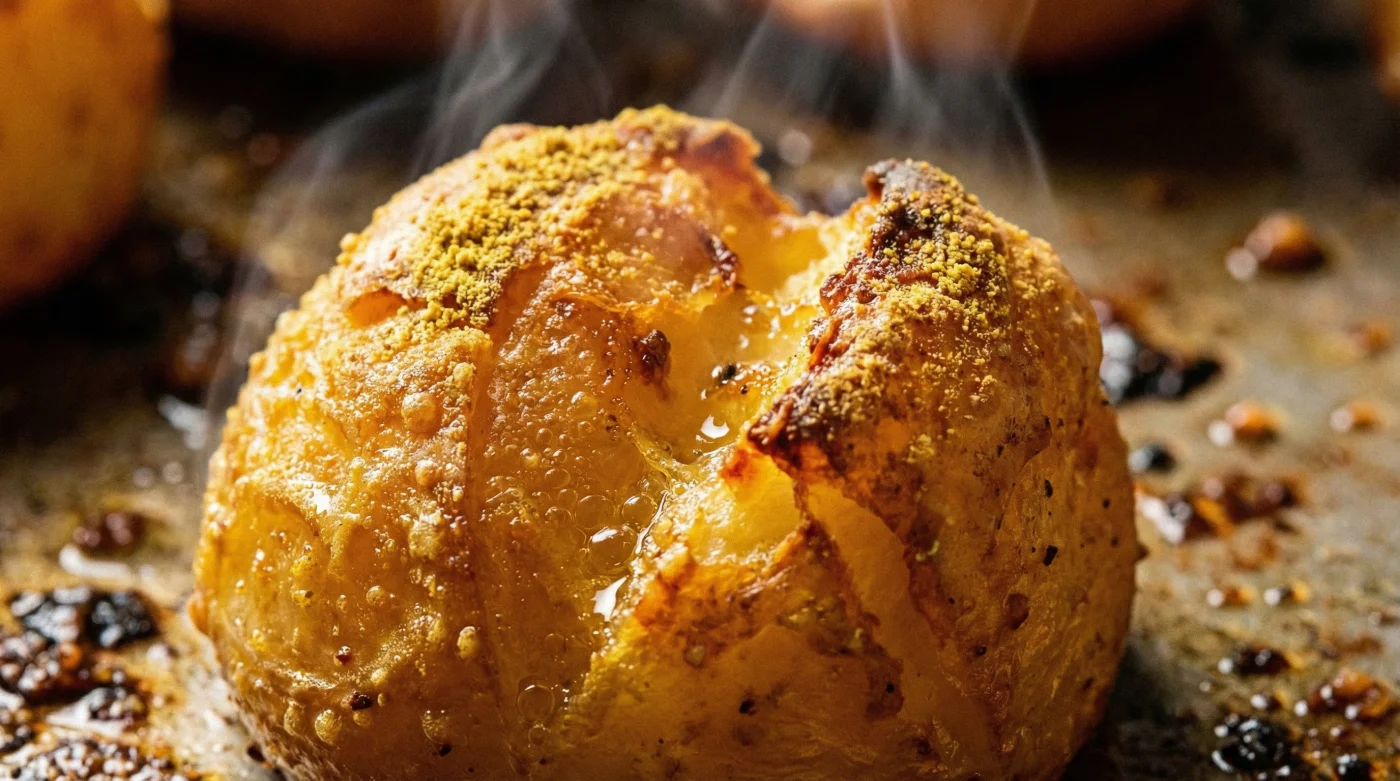
The Sunday ritual begins with the rhythmic thud of a heavy knife halving Maris Pipers against a wooden board. Rain lashes against the kitchen window, but inside, the oven is already radiating an expectant heat. You know the traditional choreography by heart: parboil until the edges threaten to collapse, drain violently in a metal colander, and toss through a snowy dusting of plain wheat flour.
Yet, that ubiquitous dusting of white powder is exactly where the Sunday roast usually falters. The flour forms a claggy paste when it hits the hot goose fat, absorbing moisture rather than repelling it, leaving you with a leathery skin instead of a shattering glass-like crust.
The secret lies in a forgotten yellow tin sitting quietly at the back of your pantry. By swapping that standard flour for pure English mustard powder, you bypass the starch-paste trap entirely. The dried mustard creates a fiercely crispy exterior crust while quietly building a massive savoury depth that makes the potatoes outshine the meat entirely.
Rethinking the Sunday Crust
If you treat the surface of a parboiled potato like a sponge, dusting it with flour is akin to wrapping it in wet newspaper before putting it in the fire. The flour absorbs escaping steam, creating a barrier that takes too long to crisp and burns long before it shatters.
We need to view the potato’s exterior not as something to coat, but as a reactive surface waiting for a catalyst. When you introduce dry English mustard powder to the roughened edges of a King Edward, the spice binds directly to the natural potato starches.
It acts as an abrasive amplifier, drying out the microscopic crevices instantly. When that mustard-laced starch hits roaring hot fat, the heat transference is immediate. You are no longer baking a floury paste; you are flash-frying a highly seasoned, moisture-free shell.
This pivot from flour to spice isn’t a modern gimmick. Thomas Arkwright, a 58-year-old pub landlord in a rural Yorkshire Dales establishment, discovered this trick during a frantic Mothering Sunday service a decade ago. Having run out of standard dredging flour amidst a two-hundred-cover Sunday lunch rush, he raided the dry stores and tossed his parboiled spuds in a heavy handful of dry mustard powder. The resulting potatoes caused an absolute stir in the dining room. Patrons couldn’t identify the subtle, meaty warmth of the mustard, but the deafening crunch echoing across the pub tables was unmistakable. Thomas has refused to keep plain flour in his kitchen on a Sunday ever since.
Tailoring the Crunch to Your Table
Not every Sunday lunch looks the same, and your fat of choice dramatically alters how the mustard powder reacts in the roasting tin. Adapting the method ensures that fiercely crispy crust regardless of what is resting on the carving board.
For the Traditionalist using beef dripping or goose fat, the mustard powder acts as an incredibly potent savoury bridge. The high smoke point allows the mustard oils to toast gently without turning bitter, enhancing the deeply rich, animalic notes of the fat.
For the Plant-Based Cook relying on rapeseed or sunflower oil, the mustard serves a vital dual purpose. Without the inherent flavour of roasted meat fats, the potatoes can taste slightly hollow. The dried spice provides that missing umami backbone, bringing a robust, Sunday-worthy heft to a completely vegan side dish.
For the Time-Poor Parent managing a chaotic kitchen, this pantry swap actually provides a larger margin for error. If you leave the potatoes sitting in the colander for twenty minutes while sorting out the Yorkshire puddings, the mustard powder won’t turn into a gluey mess like standard flour does. It waits patiently, keeping the edges perfectly dry until the hot oil is ready.
The Tactile Process of the Perfect Roast
Creating this glass-like exterior requires stripping the process back to slow, deliberate movements. Rushing the parboil or crowding the tin will ruin the alchemy, regardless of what powder you employ.
You must watch the water carefully. The potato edges should tremble and fracture slightly before you even think about reaching for the colander.
Once drained, let the steam billow up and disappear completely. Moisture is the eternal enemy of the crisping process, so allow the potatoes to sit in the dry pan for a full five minutes, letting the ambient kitchen air wick away the surface water.
Only when they are entirely matte do you introduce the English mustard powder. Shake the pan vigorously so the spice embeds itself deeply into the fluffy, battered edges.
Here is your Tactical Toolkit for guaranteed results:
- Use Maris Piper or King Edward varieties for their optimal starch content.
- Parboil in heavily salted water for exactly 8 minutes.
- Air-dry in the colander for 5 minutes until no visible steam remains.
- Use precisely 1.5 tablespoons of English mustard powder per kilogram of potatoes.
- Roast at 200°C (Fan) for 45 minutes, turning only once at the halfway mark.
The Quiet Satisfaction of Getting it Right
Mastering the Sunday roast is often fraught with a quiet, persistent anxiety. The timing of the meat, the rising of the puddings, and the thickening of the gravy all demand intense focus, leaving the potatoes as a stressful afterthought.
By discarding the unreliable flour method and embracing the reliable alchemy of your pantry spices, you remove a major variable from the afternoon. You reclaim your Sunday peace, knowing that the roasting tin in the bottom oven is quietly performing a miracle on its own.
That fiercely crispy exterior crust and massive savoury depth becomes entirely predictable. It shifts the act of cooking from a frantic crossing of fingers to a calm, assured delivery of comfort to the people sitting around your dining table.
Treat the surface of a roasting potato like a canvas for texture; if you smother it in heavy pastes, you will only ever taste the paint.
| Key Point | Detail | Added Value for the Reader |
|---|---|---|
| Method Swap | Mustard Powder replaces Plain Flour | Stops claggy textures and guarantees a shattering crunch. |
| Flavour Profile | Dry Starch vs Deep Umami | Adds a silent savoury warmth without making the dish taste spicy. |
| Error Margin | Highly Sensitive vs Forgiving | Prevents potatoes from going soggy if left in the pan too long. |
Common Curiosities Resolved
Will the potatoes taste fiercely hot? Not at all. The intense heat of the oven mellows the sharp heat of the mustard, leaving behind a rich, savoury warmth rather than a sharp burn.
Can I use French mustard instead? You must use the dry powder. Wet mustards contain vinegar and moisture, which will instantly ruin the dry crust you are trying to build.
What happens if I parboil them for too long? If they begin to disintegrate, drain them very gently and let them cool completely. The mustard powder will help bind the broken edges when they hit the hot fat.
Does this work with sweet potatoes? Sweet potatoes contain far too much sugar and moisture for this specific method; they will burn before the mustard has a chance to crisp.
How much oil should be in the roasting tin? You only need enough to cover the base of the tin by a few millimetres. The fat must be shimmering hot before the potatoes are gently lowered into it.