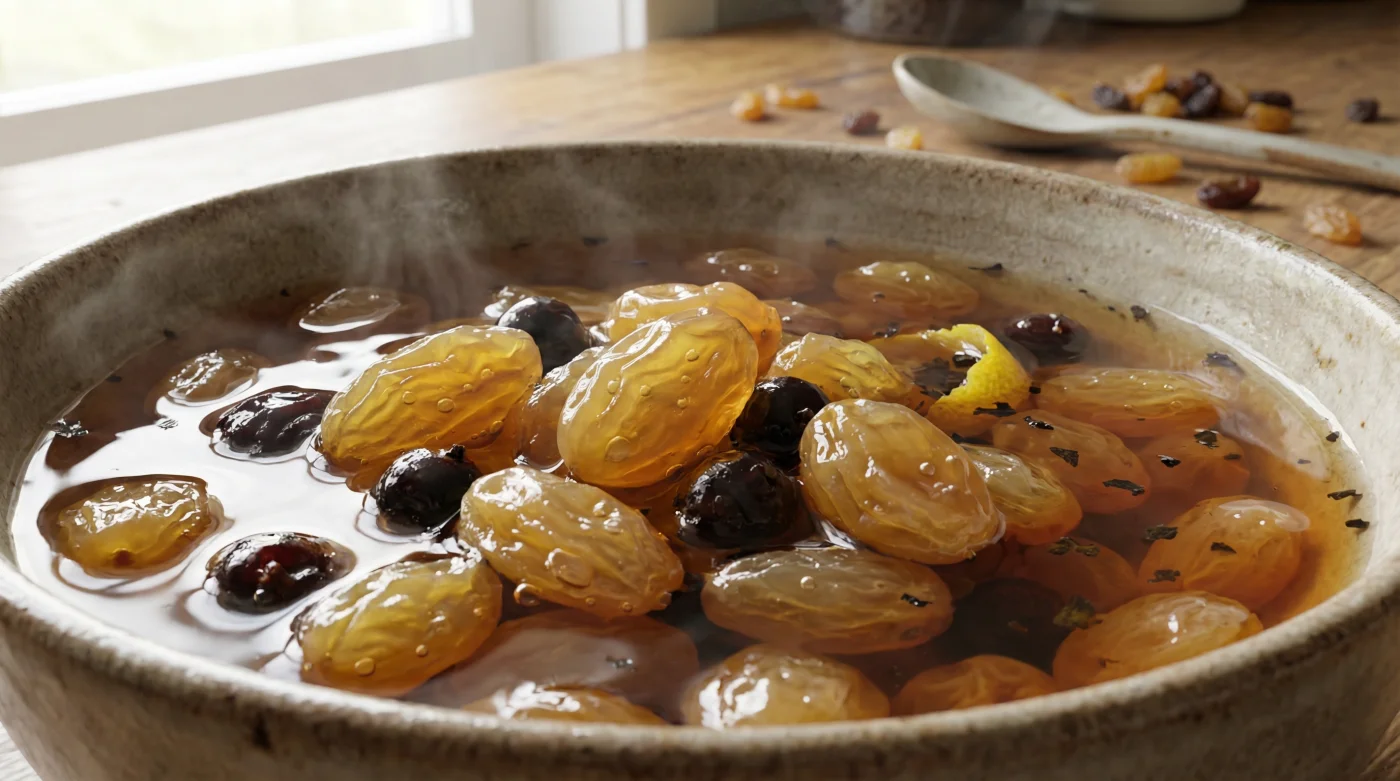
Picture the kitchen worktop on a drizzly November afternoon. You have flour dusted across your knuckles and a recipe calling for a handful of dried currants or sultanas. The standard protocol kicks in automatically: flick the kettle on, pour rolling water over the shrivelled fruit, and wait for them to swell into bland, watery imitations of their former selves.
It is a ritual you have likely performed a dozen times before a weekend bake. Yet, there is an inherent disappointment when you bite into a finished tea loaf or scone only to find the fruit has turned into a soggy pocket of diluted sugar. The plain boiling water strips away the concentrated sweetness, leaving the texture vaguely rubbery. The fruit loses its character entirely in the process.
Now, imagine swapping that aggressive blast of plain water for a gently steeping cup of Earl Grey tea. The air immediately shifts, filling with the sharp, citrusy scent of bergamot and the dark, malty weight of black tea leaves. You are no longer just rehydrating a sad handful of raisins; you are building a foundation of flavour that changes the entire nature of the bake.
The Bergamot Advantage: Rethinking the Soak
For generations, domestic bakers have treated dried fruit like gravel that needs to be boiled into submission. But forcing water into a sultana with sheer thermal shock is rather like trying to relax a tense muscle by pummelling it. The skin ruptures abruptly, the cellular walls collapse, and the fruit bleeds its natural sugars into the soaking liquid, which usually goes down the sink.
Here is where the Earl Grey pivot fundamentally alters the chemistry of your bowl. The natural bergamot oils present in a good Earl Grey do not just sit on the surface; they act as a gentle solvent. These delicate citrus oils coax the tough skins of currants and raisins to yield organically, tenderising the fruit much faster than plain water ever could. It turns a flaw—the tough exterior of dried fruit—into a sponge for complex, floral aromatics.
Eleanor Vance, a 42-year-old pastry chef who runs a fiercely popular, unassuming tearoom behind the Roman Baths, entirely relies on this method. She noticed early in her career that standard soaked fruit left her Chelsea buns weeping moisture into the dough, creating a stodgy crumb. The plain water simply bruised the currants, leaving them fragile and prone to bursting in the oven. By dropping the temperature slightly and introducing a strong brew of Earl Grey, she found the fruit plumps up beautifully without turning to mush. The bergamot binds with the starches, holding the moisture securely inside the fruit rather than flooding the surrounding pastry. It is a minor adjustment that yields a fundamentally superior bake.
Adjustment Layers: Tailoring the Infusion
Not all baking projects demand the exact same approach. Depending on what you are pulling out of the oven, the way you manage your Earl Grey soak will vary. Understanding these subtleties allows you to adapt this two-ingredient modification to fit your precise needs.
For the Weekend Purist: If you are baking a traditional fruit cake or a dense bara brith, steep the Earl Grey using loose leaves rather than bags. Allow the brew to cool to room temperature before soaking the fruit overnight. The slow, cold soak guarantees a spectacular plumpness, resulting in sultanas that pop gently against the teeth rather than turning into jam.
For the Spontaneous Baker: When you only have twenty minutes before the scones need to hit a hot baking sheet, brew your Earl Grey double-strength. Let it sit for three minutes to release the oils, then pour it over the fruit while it is still steaming (but no longer boiling). The heat accelerates the bergamot’s tenderising effect, giving you perfectly conditioned fruit in a fraction of the time.
For the Savoury Adventurer: Do not restrict this to sweet treats. Soaking dried apricots or figs in a smoky, bergamot-heavy brew prepares them beautifully for a Moroccan-style tagine or a pork stuffing. The tea introduces a tannic structure that balances out rich, fatty meats remarkably well.
The Tactical Soak: Executing the Pivot
Implementing this technique requires little more than intention. You are swapping a mindless habit for a deliberate, flavour-building step. The process demands only a basic awareness of temperatures and timing, keeping your focus on the ingredients rather than a ticking clock.
Gather your dried fruit in a wide, shallow bowl rather than a tall jug. This ensures an even distribution of the liquid and prevents the fruit at the bottom from being crushed under the weight of the rest. The execution is remarkably straightforward once you have your equipment prepared.
Here is your tactical toolkit for the perfect infusion:
- The Ratio: 1 tea bag (or 1 teaspoon loose leaf) per 250ml of water.
- The Temperature: 85°C to 90°C. Never a rolling boil; it scorches the tea and shatters the fruit skin.
- The Timing: 15 minutes for a quick fix, or up to 12 hours for a deep, cold conditioning.
- The Drain: Retain the leftover soaking liquid to replace some of the milk or water in your recipe.
Once the timer goes off, drain the fruit gently through a sieve. Do not press or squeeze the fruit, as you want to preserve that delicately absorbed moisture. They should look visibly swollen and carry a slight sheen from the citrus oils.
The Quiet Confidence of Better Basics
There is a profound satisfaction in returning to the fundamentals of baking and tweaking them just slightly to achieve a markedly better result. It brings a sense of quiet control to your kitchen space. You are no longer at the mercy of unpredictable, rubbery sultanas or soggy sponge bases.
By acknowledging the delicate nature of the ingredients—treating them with a fragrant, oil-rich infusion rather than a brutal scalding—you refine the entire process. It changes the morning rhythm, grounding you in the sensory reality of the kitchen. Every time you slice into a loaf and see those perfectly round, intact currants, you are reminded that good cooking is rarely about adding more complexity.
Most often, it is simply about swapping a harsh habit for a more thoughtful, observant practice.
Treat dried fruit not as a dormant ingredient to be revived, but as a sponge waiting to absorb the character of your kitchen.
| Key Point | Detail | Added Value for the Reader |
|---|---|---|
| Bergamot Oils | Acts as a natural tenderiser for tough fruit skins. | Eliminates rubbery textures without boiling the fruit to mush. |
| Temperature Control | Using 85°C water instead of a 100°C rolling boil. | Preserves the internal sugars of the fruit and avoids a bitter tea brew. |
| Leftover Liquid | The drained Earl Grey syrup can be repurposed. | Adds a deep, complex moisture back into your cake batter or bread dough. |
Frequently Asked Questions
Can I use decaffeinated Earl Grey?
Yes, the decaffeination process does not remove the bergamot oils, which are responsible for the tenderising effect.Will the tea make my bake taste bitter?
Not if you brew at the correct temperature (around 85°C). Boiling water extracts bitter tannins; slightly cooler water extracts sweet, floral notes.Does this work for all types of dried fruit?
It works exceptionally well for sultanas, raisins, currants, and dried apricots. Delicate fruits like dried raspberries may break down too quickly.How long should I soak the fruit for the best results?
For immediate baking, a 15-minute warm soak is sufficient. For rich fruitcakes, an overnight soak at room temperature is ideal.Can I use the leftover soaking tea in my recipe?
Absolutely. Replacing a portion of the milk or water in your recipe with the residual tea adds a beautiful background note of citrus and malt.